
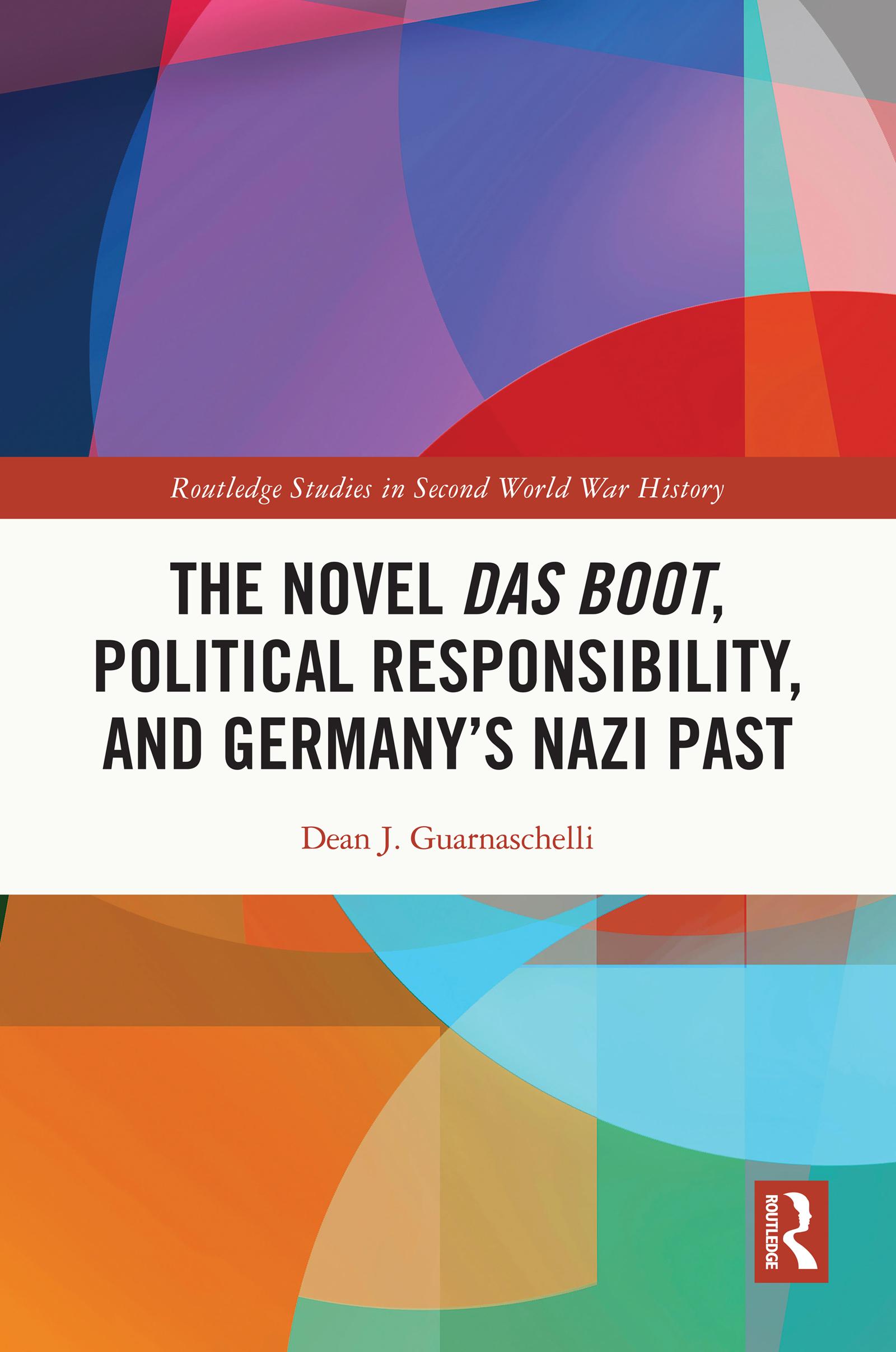
This study investigates the relationship between Lothar-Günther Buchheim (1918-2007), his bestselling 1973 novel Das Boot (The Boat), and West Germany’s Vergangenheitsbewältigung.
As a war reporter during the Battle of the Atlantic, Buchheim benefitted from distinct privileges, yet he was never in a position of power. Almost thirty years later, Buchheim confronted the duality of his own past and railed against what he perceived to be a varnished public memory of the submarine campaign. Michael Rothberg’s theory of the implicated beneficiary is used as a lens to view Buchheim and this duality. Das Boot has been retold by others worldwide because many people claim that the story bears an anti-war message. Wolfgang Petersen’s critically acclaimed 1981 film and interpretations as a comedy sketch, a theatrical play, and a streamed television sequel have followed. This trajectory of Buchheim’s personal memory reflects a process that practitioners of memory studies have described as transnational memory formation. Archival footage, interviews, and teaching materials reflect the relevance of Das Boot since its debut. Given the debates that surrounded Buchheim’s endeavors, the question now raised is whether Germany’s “mastering the past” serves as a model for other societies analyzing their own histories.
Sitting at the intersection of History, Literature and Film Studies, this is an unprecedented case study depicting how the pre- and postwar times affected writers and others caught in the middle of the drama of the era.
Betal enkelt med kort, Klarna, Apple Pay eller Google Pay. Ikke fornøyd? Du har alltid 14 dagers angrerett. Les mer i våre vilkår. Har du spørsmål, send oss en e-post på hello@memmo.org.
Memmo gjør det enklere å studere – uansett hvor du er i verden. Hos oss samler du pensumbøker og smarte studieverktøy på ett og samme sted: sammendrag, quizer, podkaster og flashcards. Og så Ted, din studiekompis som svarer på alt du lurer på. Over 50 000 studenter studerer allerede her – bygget for at du skal lære raskere og stresse mindre.