
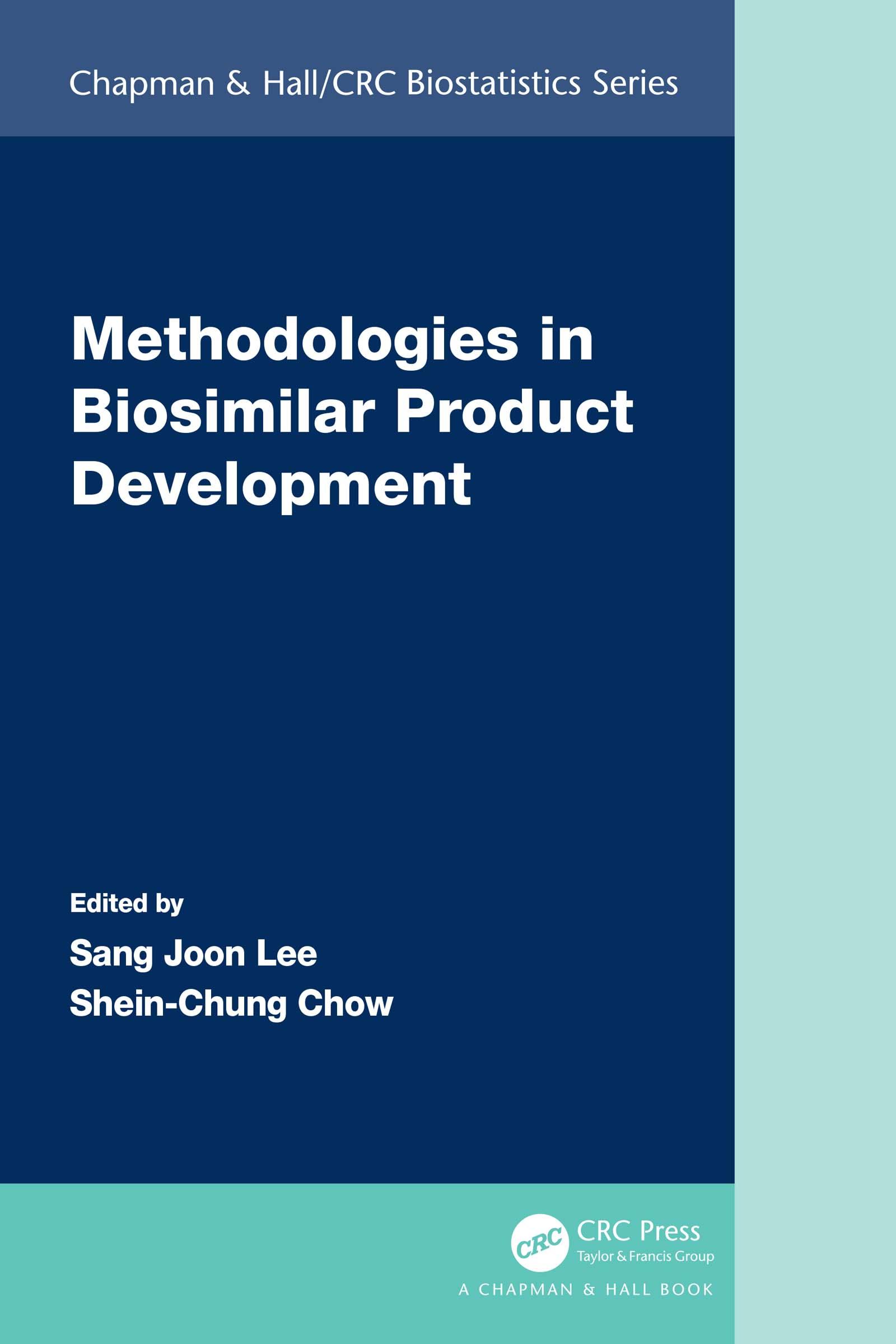
Methodologies for Biosimilar Product Development covers the practical and challenging issues that are commonly encountered during the development, review, and approval of a proposed biosimilar product. These practical and challenging issues include, but are not limited to the mix-up use of interval hypotheses testing (i.e., the use of TOST) and confidence interval approach, a risk/benefit assessment for non-inferiority/similarity margin, PK/PD bridging studies with multiple references, the detection of possible reference product change over time, design and analysis of biosimilar switching studies, the assessment of sensitivity index for assessment of extrapolation across indications without collecting data from those indications not under study, and the feasibility and validation of non-medical switch post-approval.
Key Features:
- Reviews withdrawn draft guidance on analytical similarity assessment.
- Evaluates various methods for analytical similarity evaluation based on FDA’s current guidelines.
- Provides a general approach for the use of n-of-1 trial design for assessment of interchangeability.
- Discusses the feasibility and validity of the non-medical switch studies.
- Provides innovative thinking for detection of possible reference product change over time.
This book embraces innovative thinking of design and analysis for biosimilar studies, which are required for review and approval of biosimilar regulatory submissions.
Betal enkelt med kort, Klarna, Apple Pay eller Google Pay. Ikke fornøyd? Du har alltid 14 dagers angrerett. Les mer i våre vilkår. Har du spørsmål, send oss en e-post på hello@memmo.org.
Memmo gjør det enklere å studere – uansett hvor du er i verden. Hos oss samler du pensumbøker og smarte studieverktøy på ett og samme sted: sammendrag, quizer, podkaster og flashcards. Og så Ted, din studiekompis som svarer på alt du lurer på. Over 50 000 studenter studerer allerede her – bygget for at du skal lære raskere og stresse mindre.