
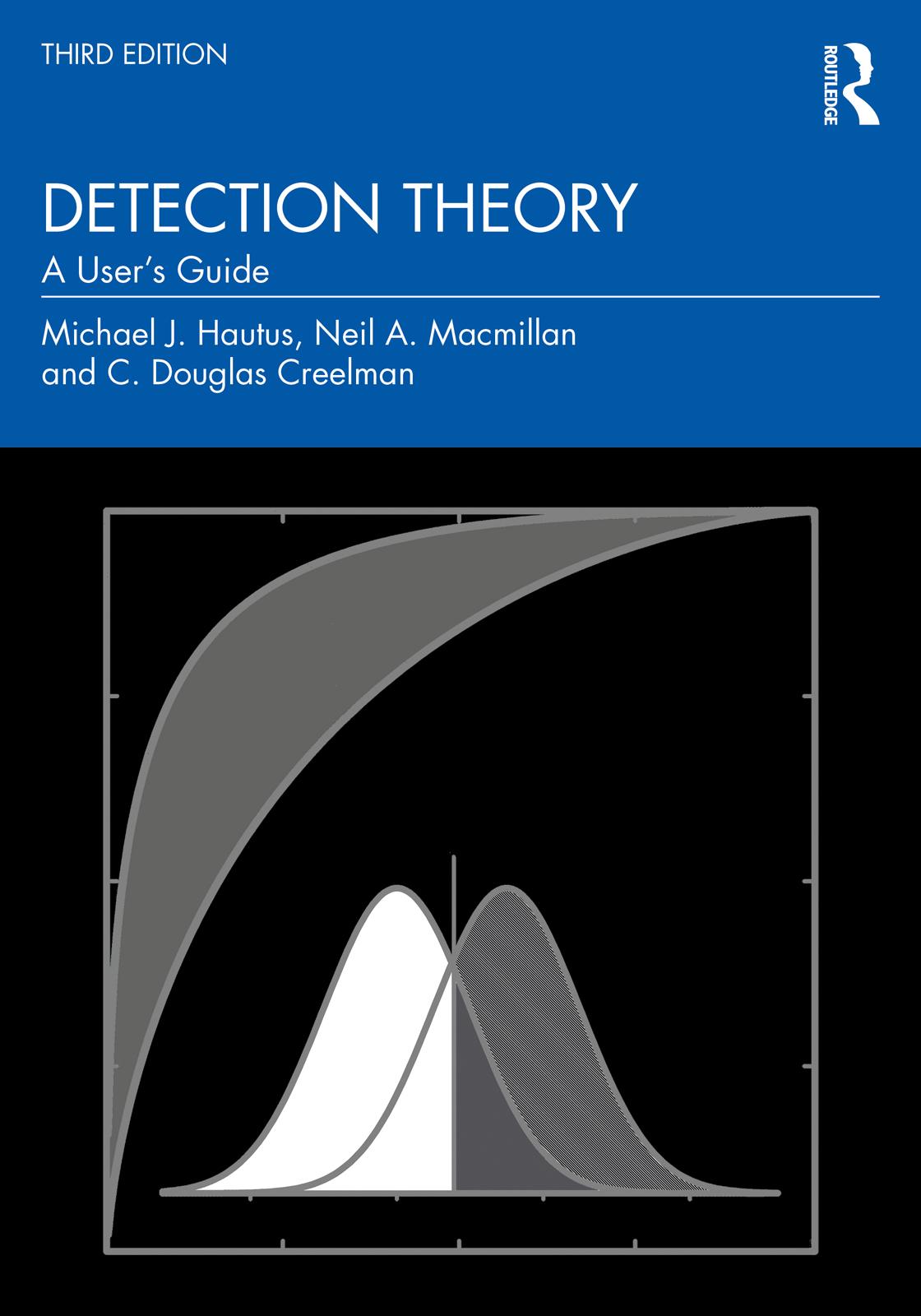
Detection Theory: A User’s Guide is an introduction to one of the most important tools for the analysis of data where choices must be made and performance is not perfect. In these cases, detection theory can transform judgments about subjective experiences, such as perceptions and memories, into quantitative data ready for analysis and modeling.
For beginners, the first three chapters introduce measuring detection and discrimination, evaluating decision criteria, and the utility of receiver operating characteristics. Later chapters cover more advanced research paradigms, including: complete tools for application, including flowcharts, tables, and software; student-friendly language; complete coverage of content area, including both one-dimensional and multidimensional models; integrated treatment of threshold and nonparametric approaches; an organized, tutorial level introduction to multidimensional detection theory; and popular discrimination paradigms presented as applications of multidimensional detection theory.
This modern summary of signal detection theory is both a self-contained reference work for users and a readable text for graduate students and researchers learning the material either in courses or on their own.
Betal enkelt med kort, Klarna, Apple Pay eller Google Pay. Ikke fornøyd? Du har alltid 14 dagers angrerett. Les mer i våre vilkår. Har du spørsmål, send oss en e-post på hello@memmo.org.
Memmo gjør det enklere å studere – uansett hvor du er i verden. Hos oss samler du pensumbøker og smarte studieverktøy på ett og samme sted: sammendrag, quizer, podkaster og flashcards. Og så Ted, din studiekompis som svarer på alt du lurer på. Over 50 000 studenter studerer allerede her – bygget for at du skal lære raskere og stresse mindre.