
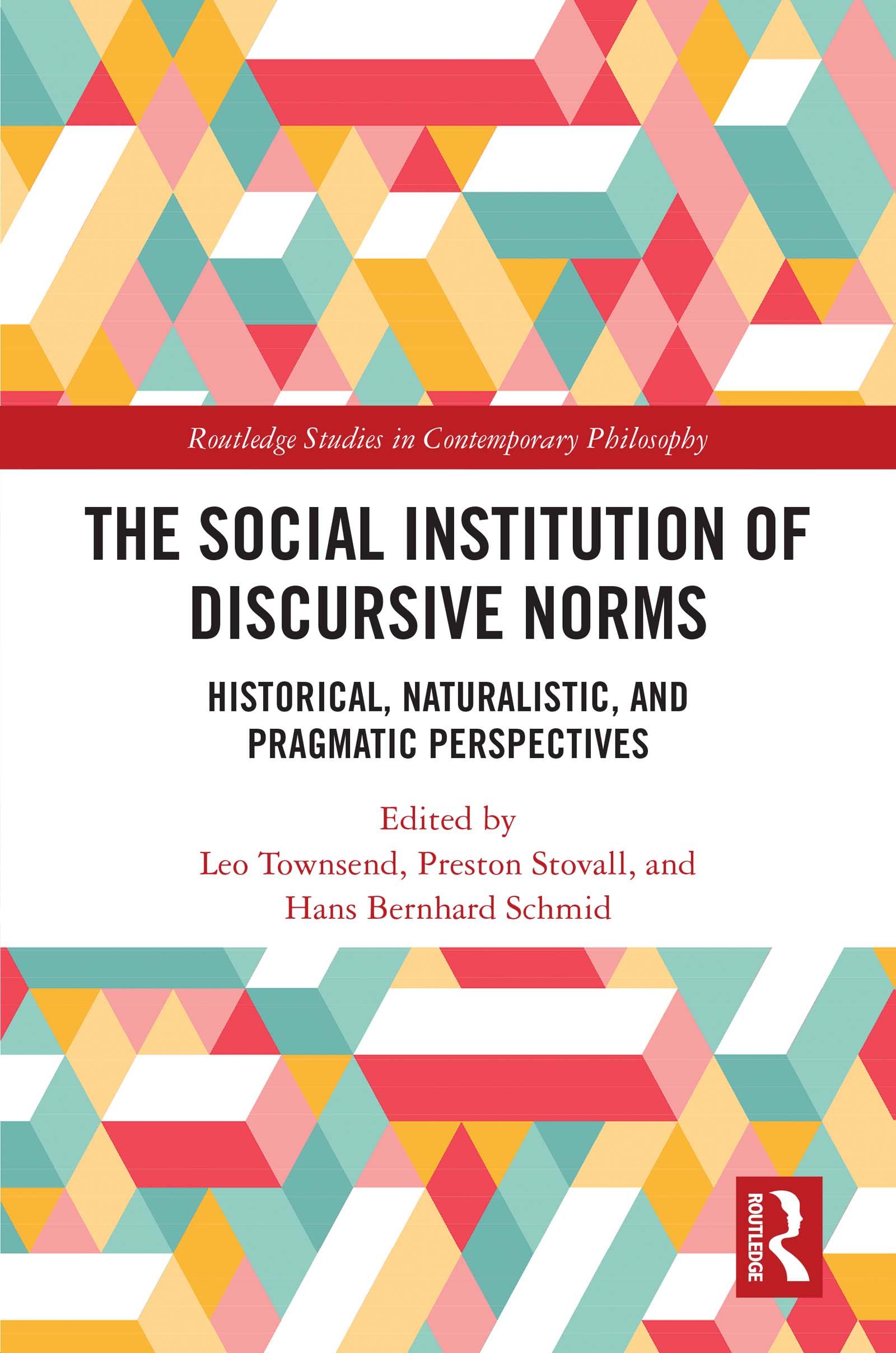
The essays in this collection explore the idea that discursive norms—the norms governing our thought and talk—are profoundly social. Not only do these norms govern and structure our social interactions, but they are sustained by a variety of social and institutional structures.
The chapters are divided into three thematic sections. The first offers historical perspectives on discursive norms, including a chapter by Robert Brandom on the way Hegel transformed Kant’s normativist approach to representation by adding both a social and a historicist dimension to it. Section II features four chapters that examine the sociality of normativity from within a broadly naturalistic framework. The third and final section focuses on the social dimension of linguistic phenomena such as online speech acts, oppressive speech, and assertions.
The Social Institution of Discursive Norms will be of interest to scholars and advanced students working in philosophy of language, philosophy of mind, and social philosophy.
Betal enkelt med kort, Klarna, Apple Pay eller Google Pay. Ikke fornøyd? Du har alltid 14 dagers angrerett. Les mer i våre vilkår. Har du spørsmål, send oss en e-post på hello@memmo.org.
Memmo gjør det enklere å studere – uansett hvor du er i verden. Hos oss samler du pensumbøker og smarte studieverktøy på ett og samme sted: sammendrag, quizer, podkaster og flashcards. Og så Ted, din studiekompis som svarer på alt du lurer på. Over 50 000 studenter studerer allerede her – bygget for at du skal lære raskere og stresse mindre.