
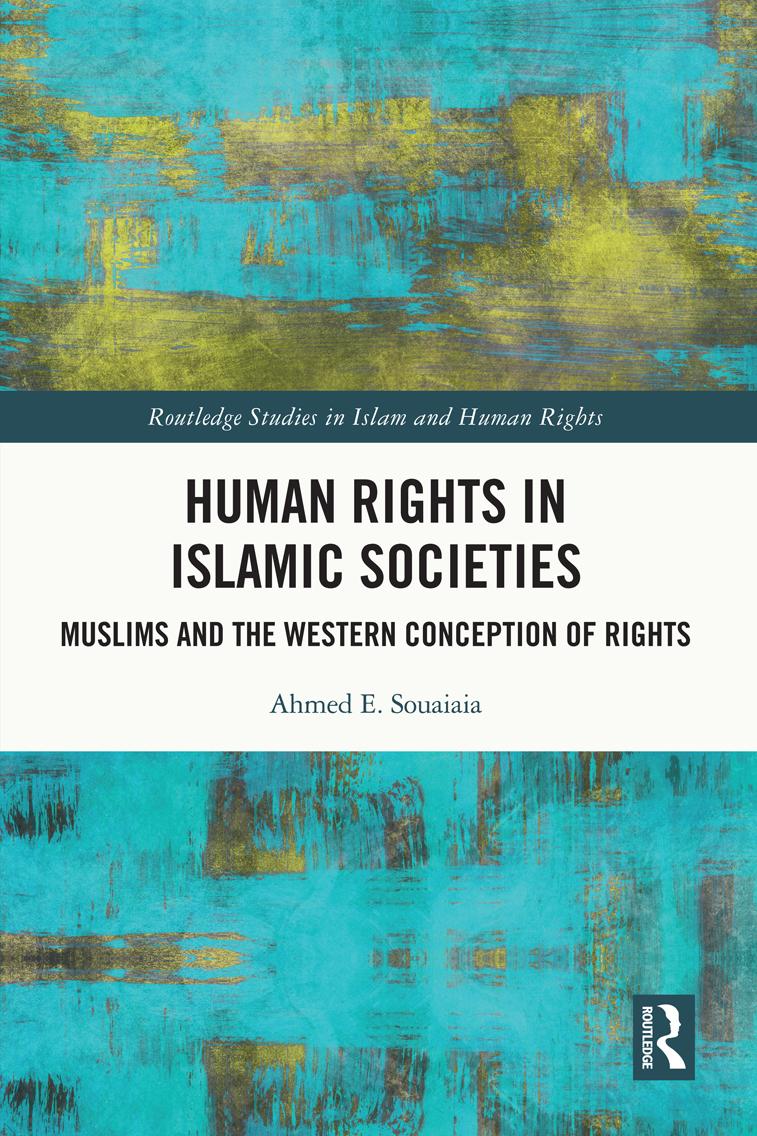
This book compares Islamic and Western ideas of human rights in order to ascertain which human rights, if any, can be considered universal. This is a profound topic with a rich history that is highly relevant within global politics and society today.
The arguments in this book are formed by bringing William Talbott’s Which Rights Should Be Universal? (2005) and Abdulaziz Sachedina’s Islam and the Challenge of Human Rights (2014) into conversation. By bridging the gap between cultural relativists and moral universalists, this book seeks to offer a new model for the understanding of human rights. It contends that human rights abuses are outcomes of complex systems by design and/or by default. Therefore, it proposes that a rigorous systems-thinking approach will contribute to addressing the challenge of human rights.
Engaging with Islamic and Western, historical and contemporary, and relativist and universalist thought, this book is a fresh take on a perennially important issue. As such, it will be a first-rate resource for any scholars working in religious studies, Islamic studies, Middle East studies, ethics, sociology, and law and religion.
Betal enkelt med kort, Klarna, Apple Pay eller Google Pay. Ikke fornøyd? Du har alltid 14 dagers angrerett. Les mer i våre vilkår. Har du spørsmål, send oss en e-post på hello@memmo.org.
Memmo gjør det enklere å studere – uansett hvor du er i verden. Hos oss samler du pensumbøker og smarte studieverktøy på ett og samme sted: sammendrag, quizer, podkaster og flashcards. Og så Ted, din studiekompis som svarer på alt du lurer på. Over 50 000 studenter studerer allerede her – bygget for at du skal lære raskere og stresse mindre.