
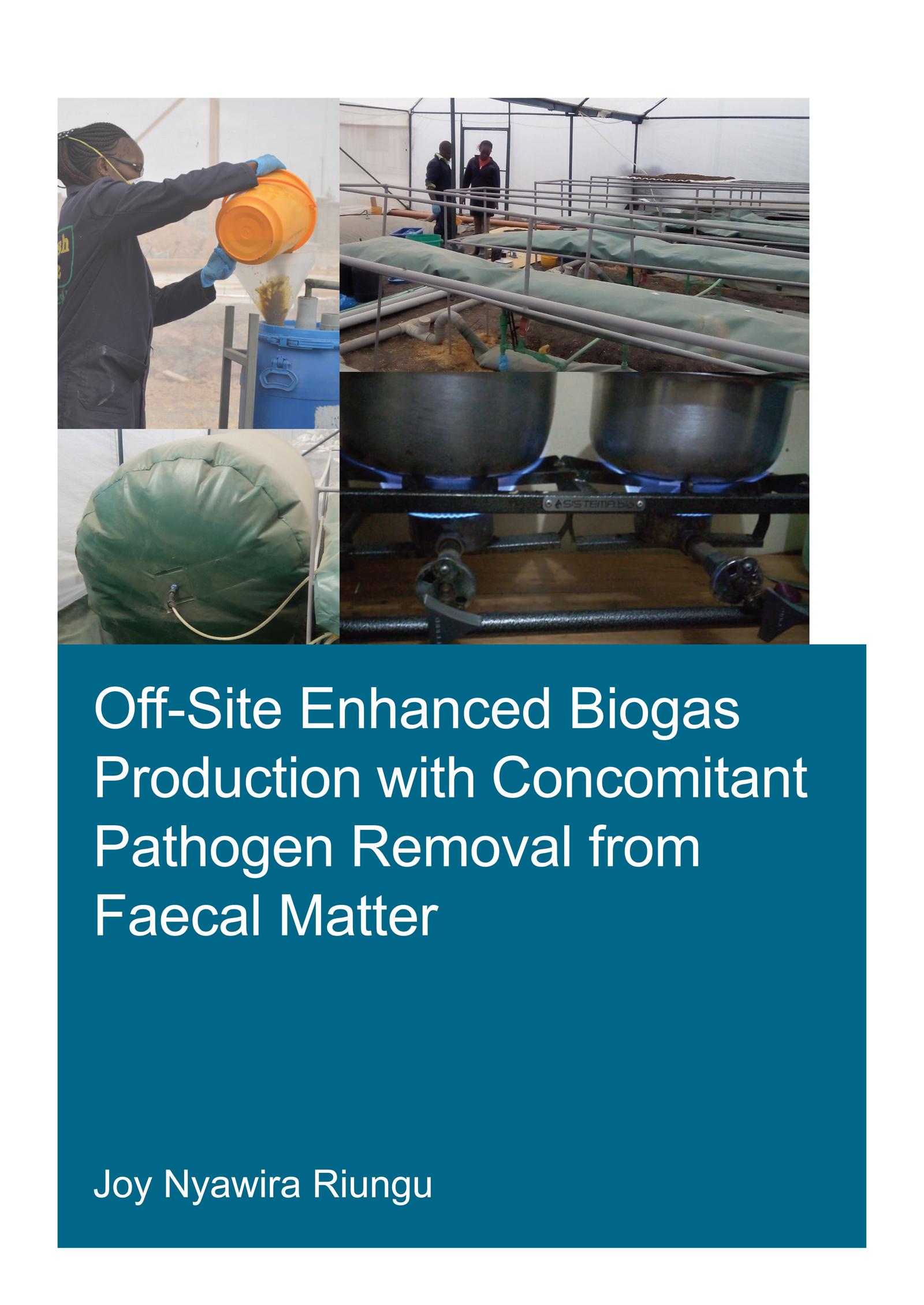
Globally, 2.7 billion people are using onsite sanitation systems, particularly in low income, high density settlements (LIHDS) in urban areas of developing countries. However, treatment technologies to manage the faecal sludge (FS) generated from these systems are often not in place, leading to high risks for environmental and public health. The development of replicable and effective technologies for FS treatment is key in addressing this challenge.
This research focused on development of an innovative FS stabilisation technology and addressed key constraints in anaerobic FS treatment: inadequate pathogen inactivation and limitations in biochemical energy recovery. The developed two-stage reactor system consists of an acidogenic reactor fed with mixtures of FS and market waste to facilitate pathogen inactivation, and a subsequent methanogenic plug-flow reactor for enhanced methane production. Due to its potential for application as an off-site FS treatment technology at any scale, receiving any type of faecal matter, collected from different types of sanitary systems, the system provides an option for FS stabilisation for LIHDS. Additionally, the research evaluated the limitations of sanitation provision in LIHDS, and proposes methods for creating an enabling environment for full-scale implementation of onsite systems. The presented results contribute to designing appropriate sanitation interventions in LIHDS.
Betal enkelt med kort, Klarna, Apple Pay eller Google Pay. Ikke fornøyd? Du har alltid 14 dagers angrerett. Les mer i våre vilkår. Har du spørsmål, send oss en e-post på hello@memmo.org.
Memmo gjør det enklere å studere – uansett hvor du er i verden. Hos oss samler du pensumbøker og smarte studieverktøy på ett og samme sted: sammendrag, quizer, podkaster og flashcards. Og så Ted, din studiekompis som svarer på alt du lurer på. Over 50 000 studenter studerer allerede her – bygget for at du skal lære raskere og stresse mindre.