
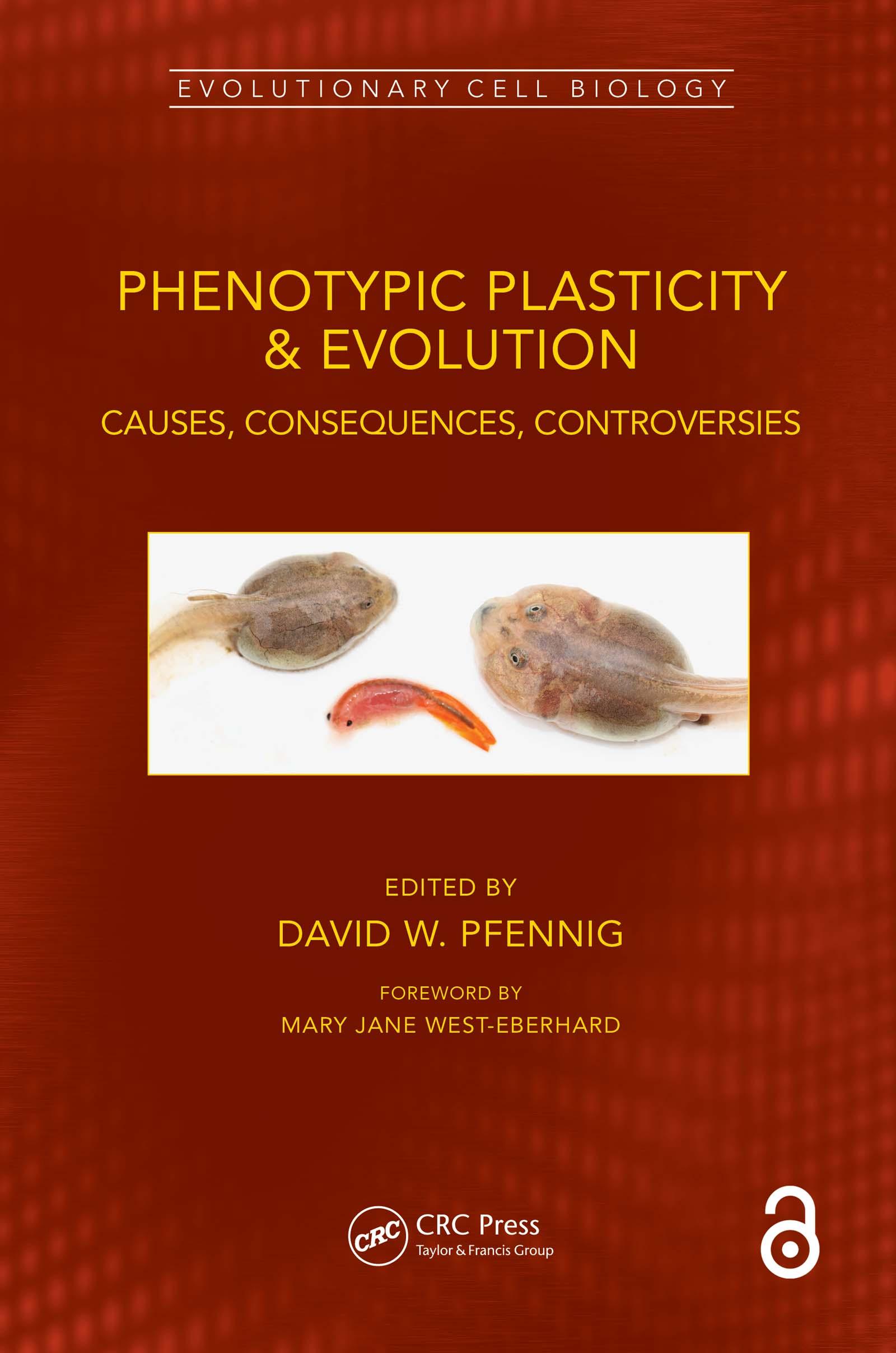
Phenotypic plasticity – the ability of an individual organism to alter its features in direct response to a change in its environment – is ubiquitous. Understanding how and why this phenomenon exists is crucial because it unites all levels of biological inquiry. This book brings together researchers who approach plasticity from diverse perspectives to explore new ideas and recent findings about the causes and consequences of plasticity. Contributors also discuss such controversial topics as how plasticity shapes ecological and evolutionary processes; whether specific plastic responses can be passed to offspring; and whether plasticity has left an important imprint on the history of life. Importantly, each chapter highlights key questions for future research. Drawing on numerous studies of plasticity in natural populations of plants and animals, this book aims to foster greater appreciation for this important, but frequently misunderstood phenomenon.
Key Features
- Written in an accessible style with numerous illustrations, including many in color
- Reviews the history of the study of plasticity, including Darwin’s views
- Most chapters conclude with recommendations for future research
Betal enkelt med kort, Klarna, Apple Pay eller Google Pay. Ikke fornøyd? Du har alltid 14 dagers angrerett. Les mer i våre vilkår. Har du spørsmål, send oss en e-post på hello@memmo.org.
Memmo gjør det enklere å studere – uansett hvor du er i verden. Hos oss samler du pensumbøker og smarte studieverktøy på ett og samme sted: sammendrag, quizer, podkaster og flashcards. Og så Ted, din studiekompis som svarer på alt du lurer på. Over 50 000 studenter studerer allerede her – bygget for at du skal lære raskere og stresse mindre.