
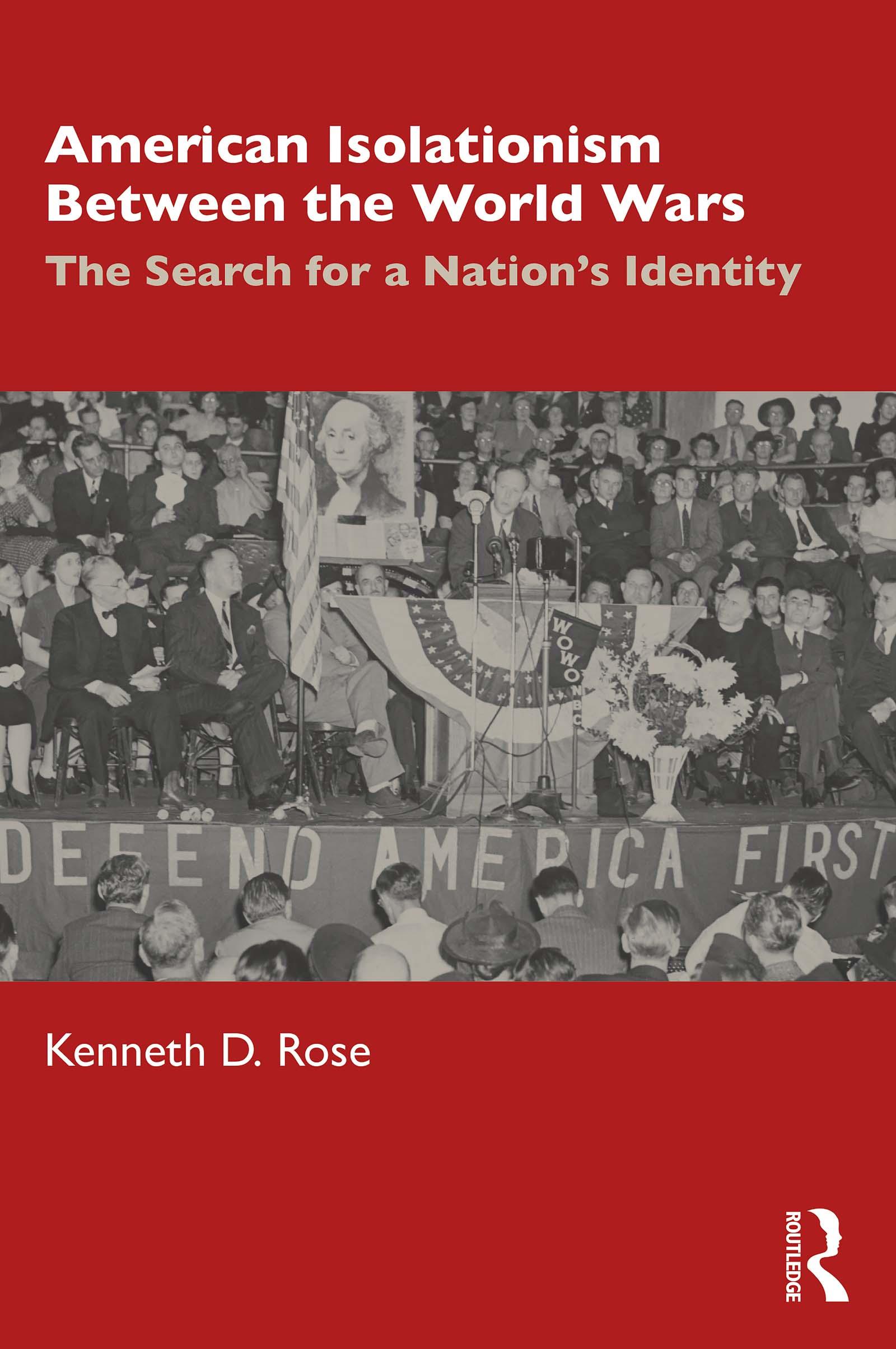
American Isolationism Between the World Wars: The Search for a Nation's Identity examines the theory of isolationism in America between the world wars, arguing that it is an ideal that has dominated the Republic since its founding.
During the interwar period, isolationists could be found among Republicans and Democrats, Catholics and Protestants, pacifists and militarists, rich and poor. While the dominant historical assessment of isolationism — that it was "provincial" and "short-sighted" — will be examined, this book argues that American isolationism between 1919 and the mid-1930s was a rational foreign policy simply because the European reversion back to politics as usual insured that the continent would remain unstable. Drawing on a wide range of newspaper and journal articles, biographies, congressional hearings, personal papers, and numerous secondary sources, Kenneth D. Rose suggests the time has come for a paradigm shift in how American isolationism is viewed. The text also offers a reflection on isolationism since the end of World War II, particularly the nature of isolationism during the Trump era.
This book will be of interest to students and scholars of U.S. Foreign Relations and twentieth-century American history.
Betal enkelt med kort, Klarna, Apple Pay eller Google Pay. Ikke fornøyd? Du har alltid 14 dagers angrerett. Les mer i våre vilkår. Har du spørsmål, send oss en e-post på hello@memmo.org.
Memmo gjør det enklere å studere – uansett hvor du er i verden. Hos oss samler du pensumbøker og smarte studieverktøy på ett og samme sted: sammendrag, quizer, podkaster og flashcards. Og så Ted, din studiekompis som svarer på alt du lurer på. Over 50 000 studenter studerer allerede her – bygget for at du skal lære raskere og stresse mindre.