
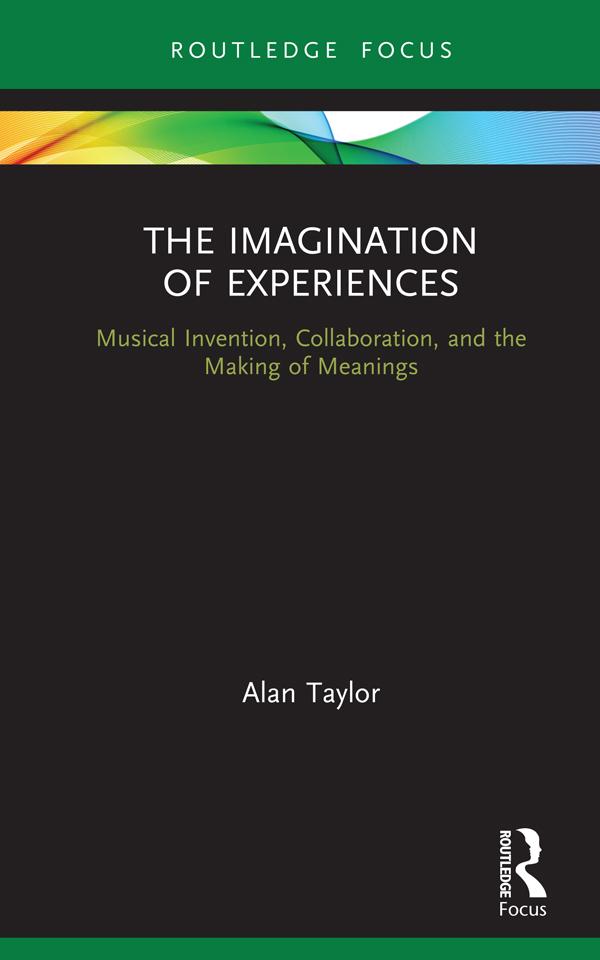
Aimed at lay, student, and academic readers alike, this book concerns the imagination and, specifically, imagination in music. It opens with a discussion of the invalidity of the idea of the creative genius and the connected view that ideas originate just in the individual mind. An alternative view of the imaginative process is then presented, that ideas spring from a subconscious dialogue activated by engagement in the world around. Ideas are therefore never just of our own making. This view is supported by evidence from many studies and corresponds with descriptions by artists of their experience of imagining. The third subject is how imaginations can be shared when musicians work with other artists, and the way the constraints imposed by trying to share subconscious imagining result in clearly distinct forms of joint working. The final chapter covers the use of the musical imagination in making meanings from music. The evidence is that music does not communicate meanings directly, and so composers or performers cannot be looked to as authorities on its meaning. Instead, music is commonly heard as analogous to human experience, and listeners who perceive such analogies may then imagine their own meanings from the music.
Betal enkelt med kort, Klarna, Apple Pay eller Google Pay. Ikke fornøyd? Du har alltid 14 dagers angrerett. Les mer i våre vilkår. Har du spørsmål, send oss en e-post på hello@memmo.org.
Memmo gjør det enklere å studere – uansett hvor du er i verden. Hos oss samler du pensumbøker og smarte studieverktøy på ett og samme sted: sammendrag, quizer, podkaster og flashcards. Og så Ted, din studiekompis som svarer på alt du lurer på. Over 50 000 studenter studerer allerede her – bygget for at du skal lære raskere og stresse mindre.