
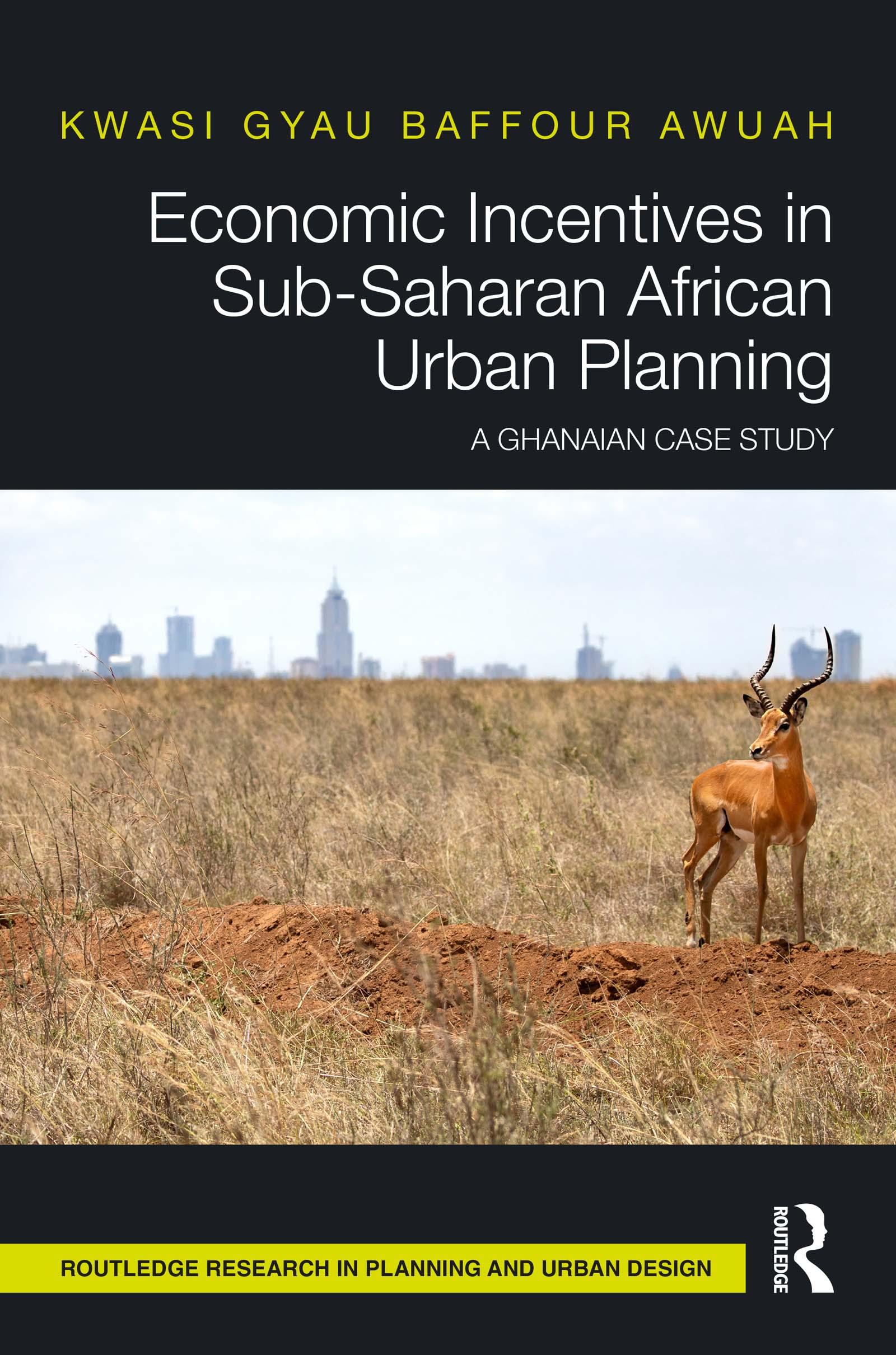
This book explores incentives capable of enhancing the effectiveness of urban planning systems in Sub-Saharan Africa using economic theory as a framework. It argues that urban planning is fundamental to the achievement of sustainable and resilient cities, but against the backdrop of rising levels of urbanisation and growth, poverty, informal development, and climate change, such systems are failing to be promoted and successfully maintained in the region.
Across ten chapters, it analyses the connection between urban planning and socio-economic development, indicators of effective urban planning systems, and the role and influence of incentives with real-world evidence. It develops quantitative models to estimate the costs and benefits of urban planning systems, focussing on the developing world where organised data is less accessible. Using Ghana as a case study, it demonstrates a step-by-step approach on how to implement the quantitative models discussed.
Economic Incentives in Sub-Saharan African Urban Planning will be useful reading for researchers, policy-makers, development agencies, and students in urban planning, sustainable development, and economics.
Betal enkelt med kort, Klarna, Apple Pay eller Google Pay. Ikke fornøyd? Du har alltid 14 dagers angrerett. Les mer i våre vilkår. Har du spørsmål, send oss en e-post på hello@memmo.org.
Memmo gjør det enklere å studere – uansett hvor du er i verden. Hos oss samler du pensumbøker og smarte studieverktøy på ett og samme sted: sammendrag, quizer, podkaster og flashcards. Og så Ted, din studiekompis som svarer på alt du lurer på. Over 50 000 studenter studerer allerede her – bygget for at du skal lære raskere og stresse mindre.