
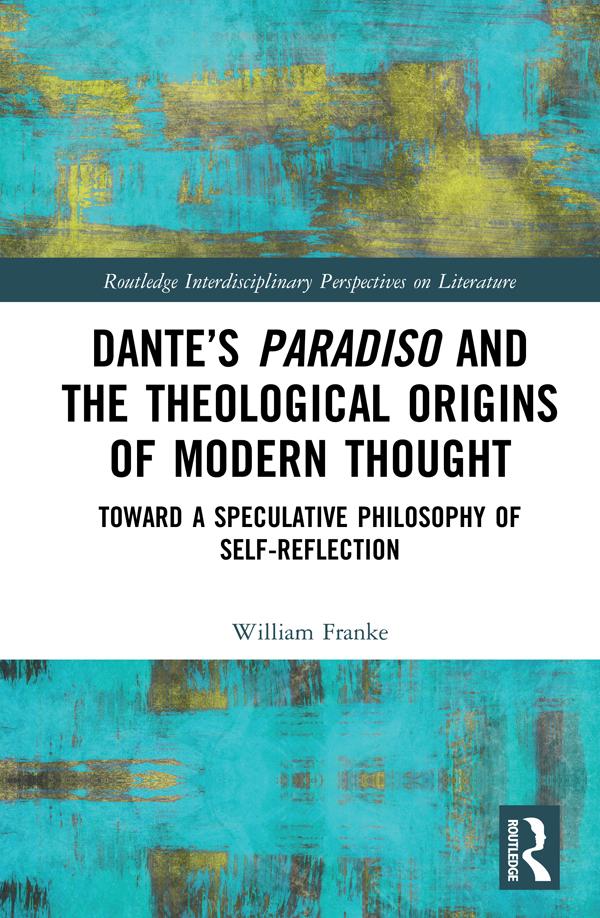
Self-reflection, as the hallmark of the modern age, originates more profoundly with Dante than with Descartes. This book rewrites modern intellectual history, taking Dante’s lyrical language in Paradiso as enacting a Trinitarian self-reflexivity that gives a theological spin to the birth of the modern subject already with the Troubadours. The ever more intense self-reflexivity that has led to our contemporary secular world and its technological apocalypse can lead also to the poetic vision of other worlds such as those experienced by Dante. Facing the same nominalist crisis as Duns Scotus, his exact contemporary and the precursor of scientific method, Dante’s thought and work indicate an alternative modernity along the path not taken. This other way shows up in Nicholas of Cusa’s conjectural science and in Giambattista Vico’s new science of imagination as alternatives to the exclusive reign of positive empirical science. In continuity with Dante’s vision, they contribute to a reappropriation of self-reflection for the humanities.
Betal enkelt med kort, Klarna, Apple Pay eller Google Pay. Ikke fornøyd? Du har alltid 14 dagers angrerett. Les mer i våre vilkår. Har du spørsmål, send oss en e-post på hello@memmo.org.
Memmo gjør det enklere å studere – uansett hvor du er i verden. Hos oss samler du pensumbøker og smarte studieverktøy på ett og samme sted: sammendrag, quizer, podkaster og flashcards. Og så Ted, din studiekompis som svarer på alt du lurer på. Over 50 000 studenter studerer allerede her – bygget for at du skal lære raskere og stresse mindre.