
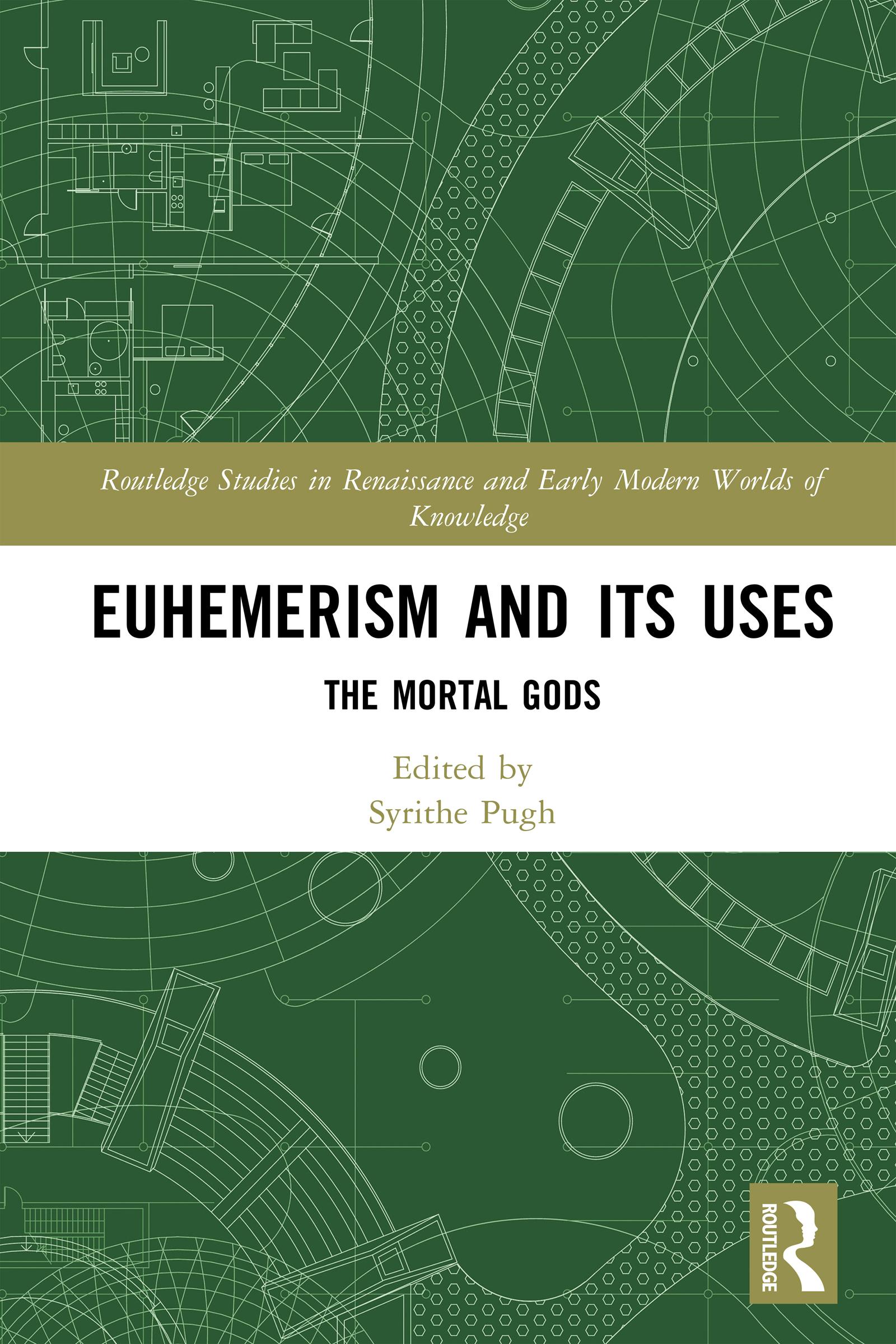
Euhemerism and Its Uses offers the first interdisciplinary, focussed, and all-round view of the long history of an important but understudied phenomenon in European intellectual and cultural history.
Euhemerism – the claim that the Greek gods were historically mortal men and women – originated in the early third century BCE, in an enigmatic and now fragmentary text by the otherwise unknown author Euhemeros. This work, the Sacred Inscription, has been read variously as a theory of religion, an atheist’s manifesto, as justifying or satirizing ruler-worship, as a fantasy travel-narrative, and as an early ‘utopia’. Influencing Hellenistic and Roman literature and religious and political thought, and appropriated by early Christians to debunk polytheism while simultaneously justifying the continued study of classical literature, euhemerism was widespread in the middle ages and Renaissance, and its reverberations continue to be felt in modern myth-theory. Yet, though frequently invoked as a powerful and pervasive tradition across several disciplines, it is still under-examined and poorly understood.
Filling an important gap in the history of ideas, this volume will appeal to scholars and students of classical reception, mediaeval and Renaissance literature, historiography, and theories of myth and religion.
Betal enkelt med kort, Klarna, Apple Pay eller Google Pay. Ikke fornøyd? Du har alltid 14 dagers angrerett. Les mer i våre vilkår. Har du spørsmål, send oss en e-post på hello@memmo.org.
Memmo gjør det enklere å studere – uansett hvor du er i verden. Hos oss samler du pensumbøker og smarte studieverktøy på ett og samme sted: sammendrag, quizer, podkaster og flashcards. Og så Ted, din studiekompis som svarer på alt du lurer på. Over 50 000 studenter studerer allerede her – bygget for at du skal lære raskere og stresse mindre.