
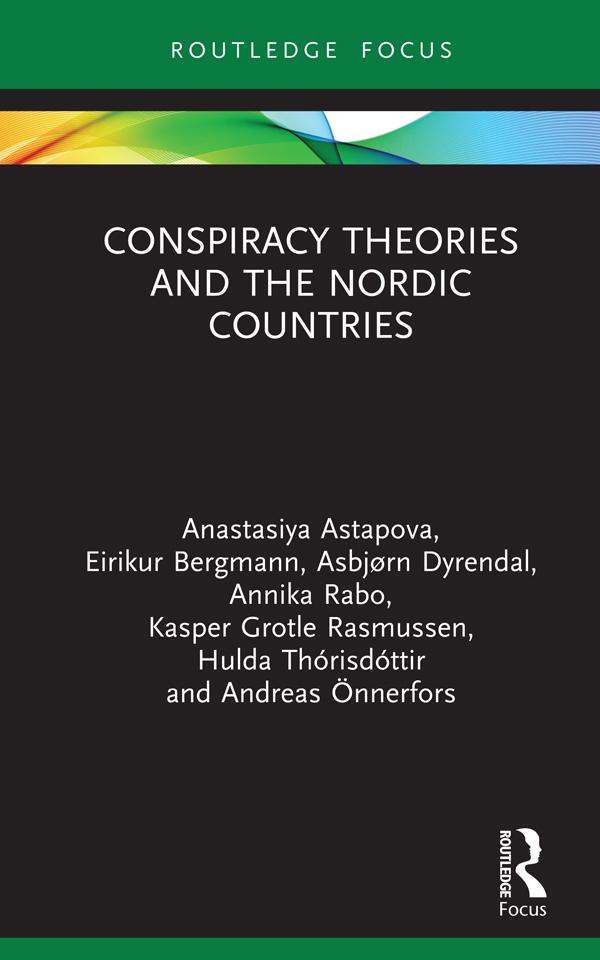
This book explores the relevance of conspiracy theories in the modern social and political history of the Nordic countries.
The Nordic countries have traditionally imagined themselves as stable, wealthy, egalitarian welfare states. Conspiracy theories, mistrust and disunity, the argument goes, happened elsewhere in Europe (especially Eastern Europe), the Middle East or in the United States. This book paints a different picture by demonstrating that conspiracy theories have always existed in the Nordic region, both as a result of structural tensions between different groups and in the aftermath of traumatic events, but seem to have become more prominent over the last 30 or 40 years. While the book covers events and developments in each of the Nordic countries (Sweden, Norway, Denmark, Iceland and Finland), it is not a comparative country analysis. Rather, the book focuses on conspiracy theories in and about the Nordic region as a region, arguing that similarities in the trajectories of conspiratorial thinking are interesting to examine in cultural, social, and political terms. The book takes a thematic approach, including looking at states and elites; family, gender and sexuality; migration and the outside view on the Nordic region; conspiracy theories about the Nordic countries; and Nordic noir.
This book will be of great interest to researchers on extremism, conspiracy theories and the politics of the Nordic countries.
Betal enkelt med kort, Klarna, Apple Pay eller Google Pay. Ikke fornøyd? Du har alltid 14 dagers angrerett. Les mer i våre vilkår. Har du spørsmål, send oss en e-post på hello@memmo.org.
Memmo gjør det enklere å studere – uansett hvor du er i verden. Hos oss samler du pensumbøker og smarte studieverktøy på ett og samme sted: sammendrag, quizer, podkaster og flashcards. Og så Ted, din studiekompis som svarer på alt du lurer på. Over 50 000 studenter studerer allerede her – bygget for at du skal lære raskere og stresse mindre.