
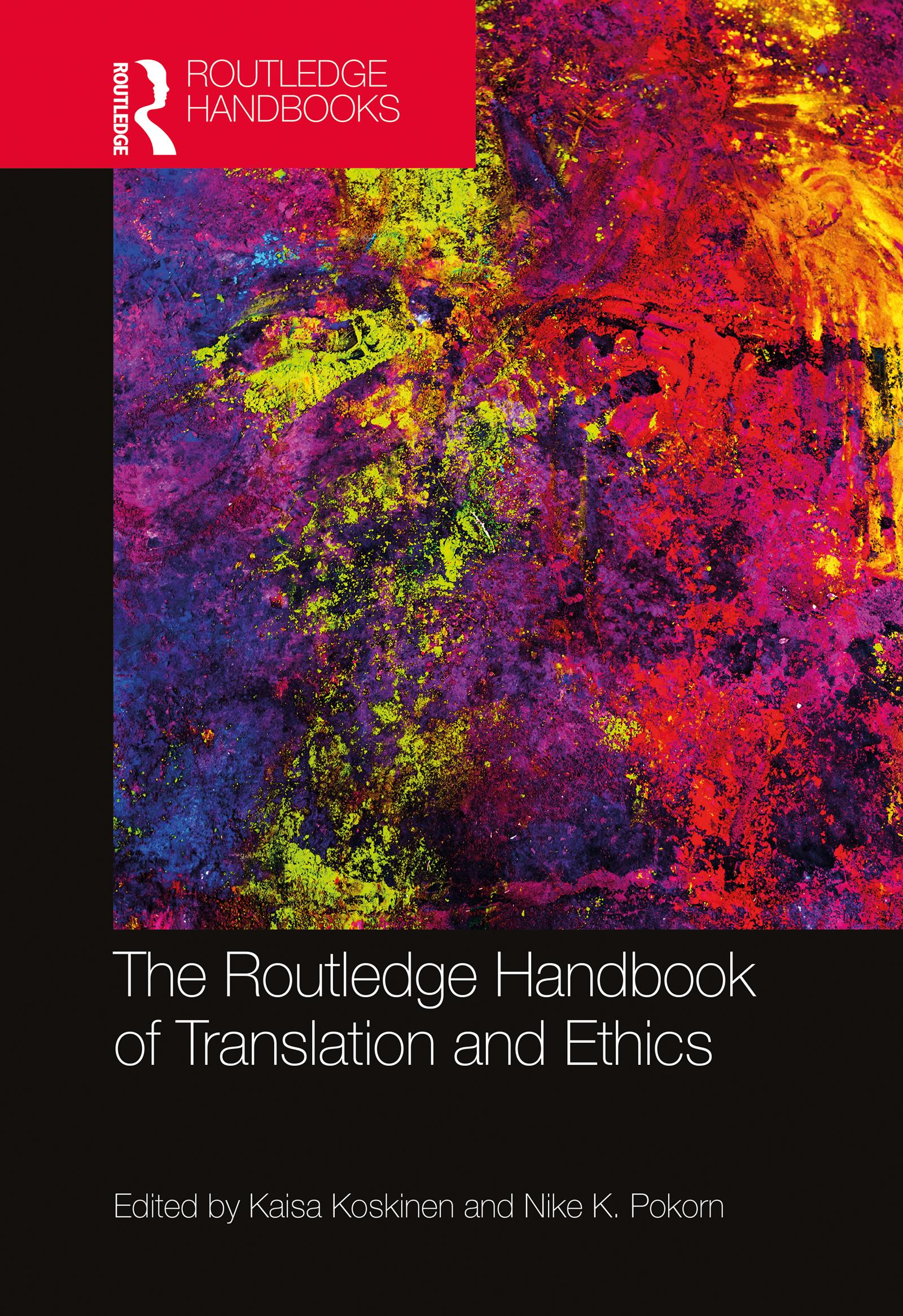
The Routledge Handbook of Translation and Ethics offers a comprehensive overview of issues surrounding ethics in translating and interpreting. The chapters chart the philosophical and theoretical underpinnings of ethical thinking in Translation Studies and analyze the ethical dilemmas of various translatorial actors, including translation trainers and researchers.
Authored by leading scholars and new voices in the field, the 31 chapters present a wide coverage of emerging issues such as increasing technologization of translation, posthumanism, volunteering and activism, accessibility and linguistic human rights. Many chapters provide the first extensive overview of the topic or present new takes on established areas. The book is divided into four parts, with the first covering the most influential ethical theories. Part II takes the perspective of agents in different contexts and the ethical dilemmas they face, while Part III takes a critical look at central institutions structuring and controlling ethical behaviour. Finally, Part IV focuses on special issues and new challenges, and signals new directions for further study.
This handbook is an indispensable resource for all students and researchers of translation and ethics within translation and interpreting studies, multilingualism and comparative literature.
Betal enkelt med kort, Klarna, Apple Pay eller Google Pay. Ikke fornøyd? Du har alltid 14 dagers angrerett. Les mer i våre vilkår. Har du spørsmål, send oss en e-post på hello@memmo.org.
Memmo gjør det enklere å studere – uansett hvor du er i verden. Hos oss samler du pensumbøker og smarte studieverktøy på ett og samme sted: sammendrag, quizer, podkaster og flashcards. Og så Ted, din studiekompis som svarer på alt du lurer på. Over 50 000 studenter studerer allerede her – bygget for at du skal lære raskere og stresse mindre.