
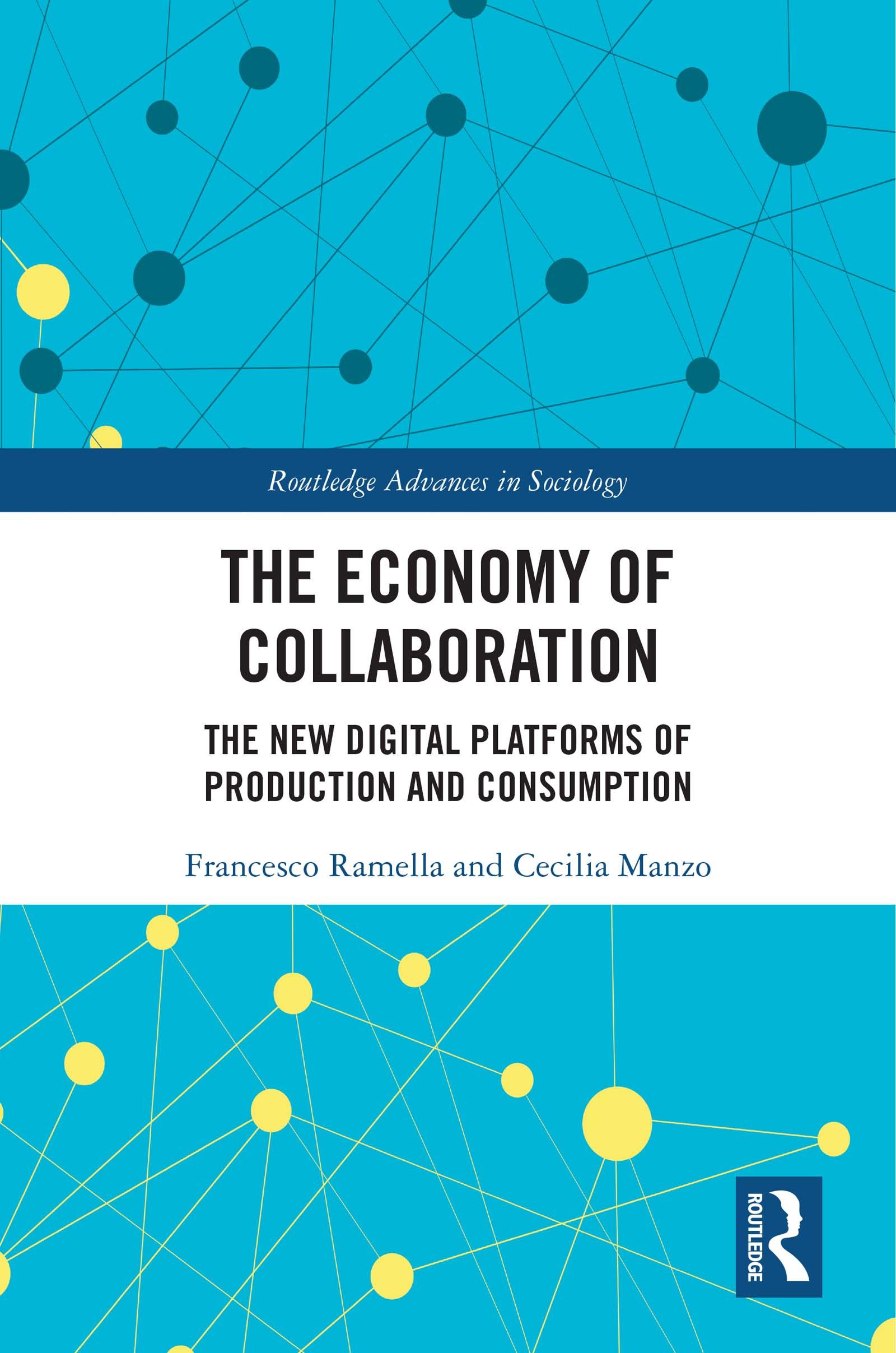
Over the past few decades, the world economy has undergone radical transformations, in part connected to the expansion of the ‘digital economy’, in part to the growing interconnection via the internet of the world of objects and physical processes. This ‘great transformation’ poses the dilemma on the capitalism’s ability to reconcile economic and social value, keeping together economic well-being, social cohesion and political freedom.
The Economy of Collaboration can offer a contribution in this direction but requires courageous policies to mediate the various interests at stake, as well as to rethink and make more sustainable its development, by increasing the benefits not only for businesses but also for workers and consumers. In short, to create shared value.
This book refers to a mode of organizing the production, distribution and consumption of goods and services based on cooperative relations. The main reference is to activities linked to the digital economy, since they are the emerging forms of a definitely older phenomenon, but which is expanding on an ever-wider scale thanks to new technologies. These collaborative activities can be regulated differently, along a continuum that ranges from the pole of market exchanges to that of generalized reciprocity, with various intermediate mixed forms.
Betal enkelt med kort, Klarna, Apple Pay eller Google Pay. Ikke fornøyd? Du har alltid 14 dagers angrerett. Les mer i våre vilkår. Har du spørsmål, send oss en e-post på hello@memmo.org.
Memmo gjør det enklere å studere – uansett hvor du er i verden. Hos oss samler du pensumbøker og smarte studieverktøy på ett og samme sted: sammendrag, quizer, podkaster og flashcards. Og så Ted, din studiekompis som svarer på alt du lurer på. Over 50 000 studenter studerer allerede her – bygget for at du skal lære raskere og stresse mindre.