
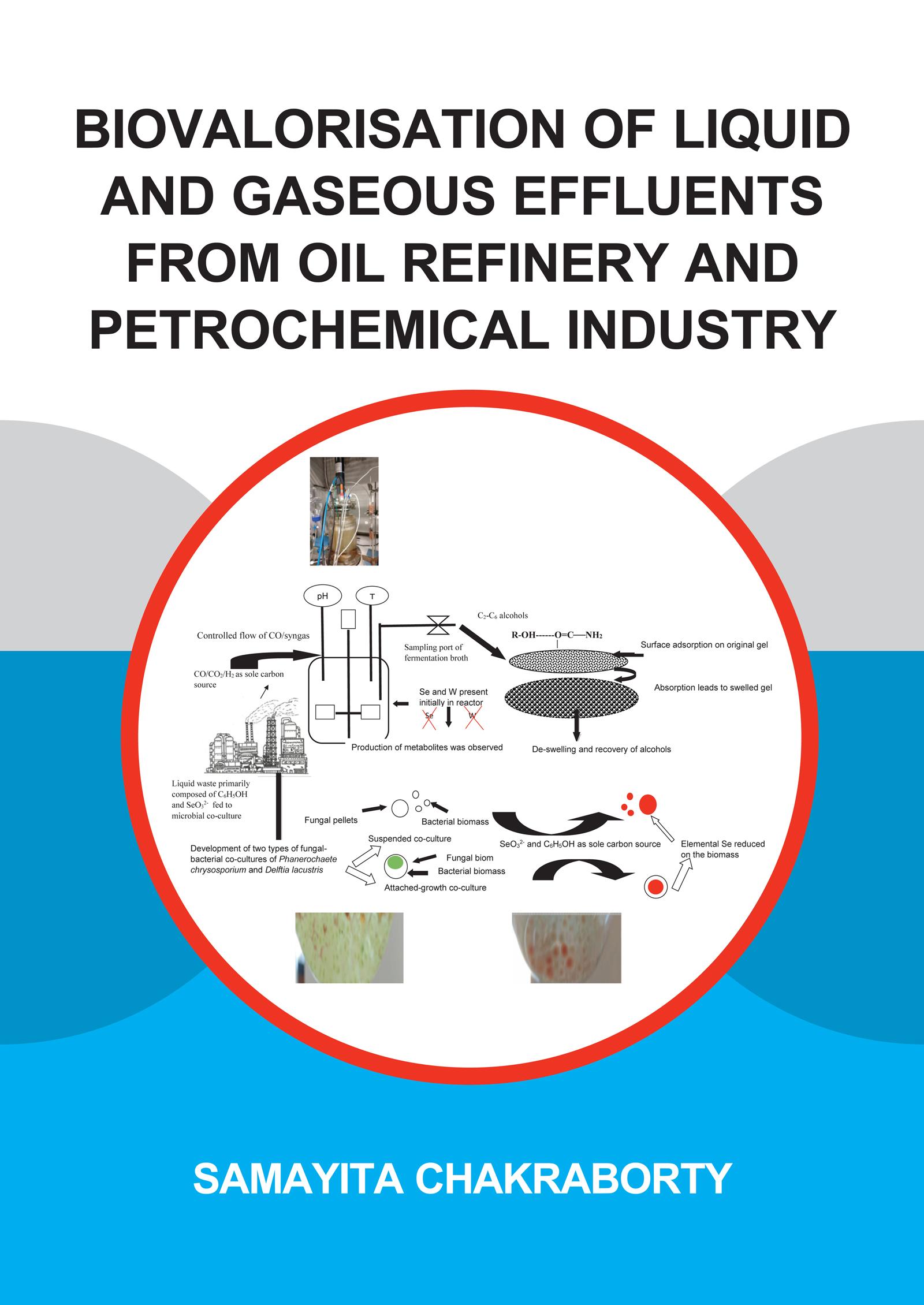
A bidirectional approach of detoxifying the liquid and gaseous effluents of oil refineries is elucidated in this thesis. Liquid effluents of oil refineries contain selenium oxyanions and phenol, while gaseous effluents contain CO/syngas. To remove the phenol and simultaneously reduce the selenite oxyanions, a fungal-bacterial co-culture of Phanerochaete chrysosporium and Delftia lacustris was developed. Two modes of co-cultures of the fungus and the bacterium were developed. Both cultures were investigated for phenol degradation and selenite reduction. In order to valorize the CO/syngas by bioconversion techniques. an anaerobic methanogenic sludge was acclimatized to use CO as the sole carbon substrate to produce acetic acid, butyric acid, and hexanoic acid. Later, the acids were metabolized at lower pH, producing alcohols ethanol, butanol and hexanol, confirming the successful enrichment strategy. The next experiment focused on the absence of the trace element tungsten, and consecutively selenium on the previously CO acclimatized sludge under the same operating conditions. An in-situ synthesized co-polymeric gel of N-ter-butyl-acrylamide and acrylic acid was used to recover ethanol, propanol and butanol from a synthetic fermentation broth. The scope of repeated use of the gel for alcohol recovery was investigated and 98% alcohol was recovered.
Betal enkelt med kort, Klarna, Apple Pay eller Google Pay. Ikke fornøyd? Du har alltid 14 dagers angrerett. Les mer i våre vilkår. Har du spørsmål, send oss en e-post på hello@memmo.org.
Memmo gjør det enklere å studere – uansett hvor du er i verden. Hos oss samler du pensumbøker og smarte studieverktøy på ett og samme sted: sammendrag, quizer, podkaster og flashcards. Og så Ted, din studiekompis som svarer på alt du lurer på. Over 50 000 studenter studerer allerede her – bygget for at du skal lære raskere og stresse mindre.