
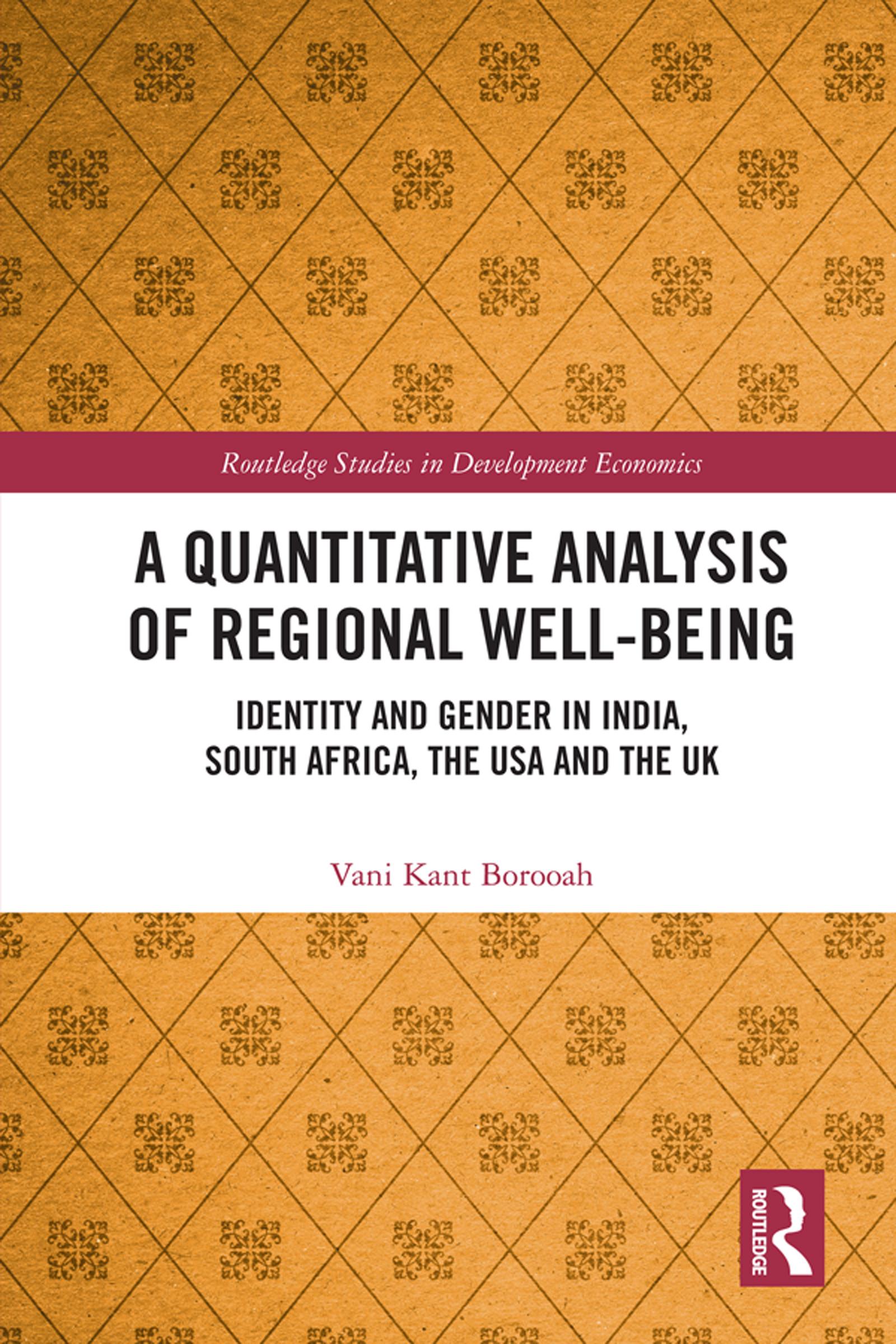
Using data from the World Values Survey, this book sheds light on the link between happiness and the social group to which one belongs. The work is based on a rigorous statistical analysis of differences in the probability of happiness and life satisfaction between the predominant social group and subordinate groups.
The cases of India and South Africa receive deep attention in dedicated chapters on cast and race, with other chapters considering issues such as cultural bias, religion, patriarchy, and gender. An additional chapter offers a global perspective. On top of this, the longitudinal nature of the data facilitates an examination of how world happiness has evolved between 1994 and 2014.
This book will be a valuable reference for advanced students, scholars and policymakers involved in development economics, well-being, development geography, and sociology.
Betal enkelt med kort, Klarna, Apple Pay eller Google Pay. Ikke fornøyd? Du har alltid 14 dagers angrerett. Les mer i våre vilkår. Har du spørsmål, send oss en e-post på hello@memmo.org.
Memmo gjør det enklere å studere – uansett hvor du er i verden. Hos oss samler du pensumbøker og smarte studieverktøy på ett og samme sted: sammendrag, quizer, podkaster og flashcards. Og så Ted, din studiekompis som svarer på alt du lurer på. Over 50 000 studenter studerer allerede her – bygget for at du skal lære raskere og stresse mindre.