
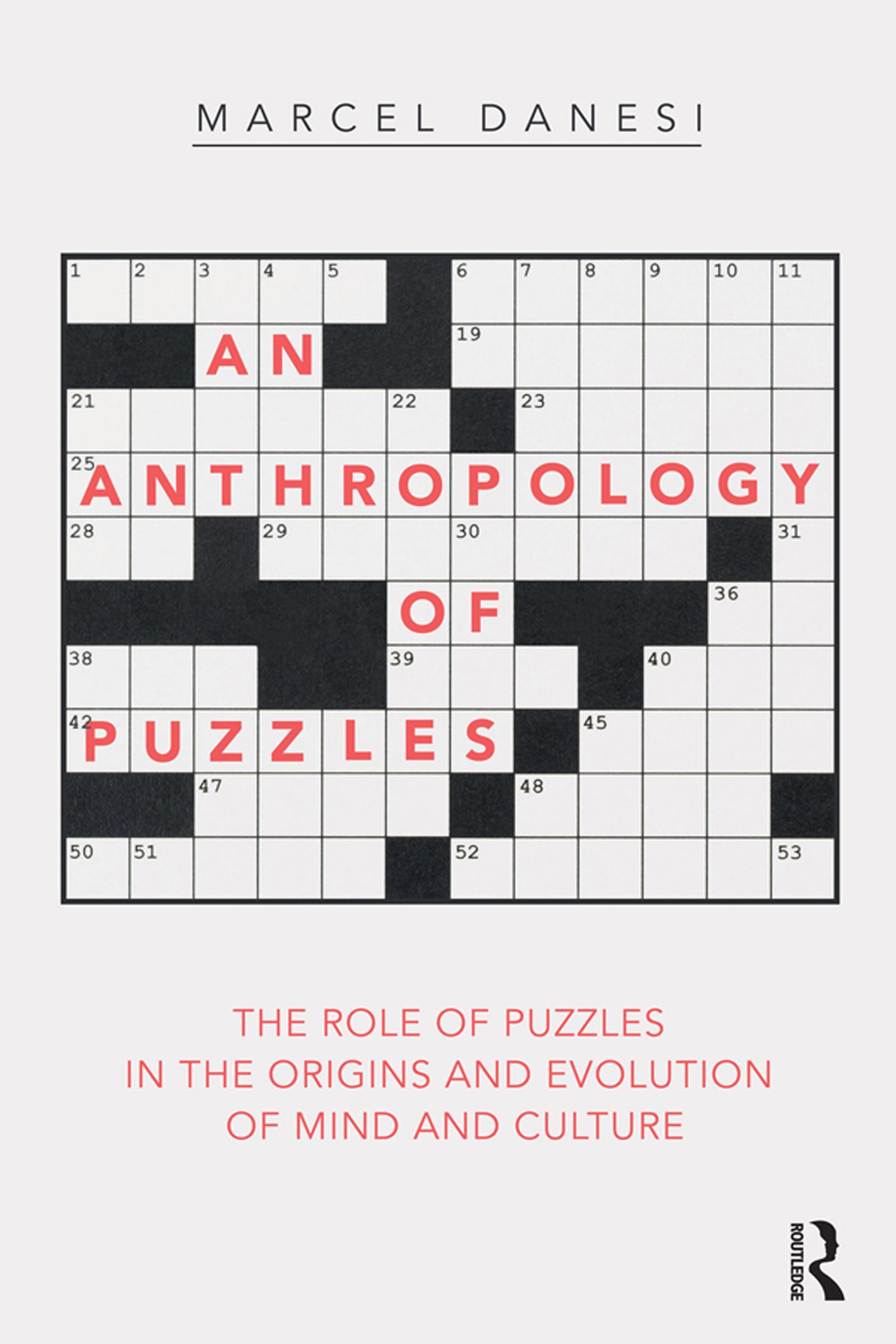
An Anthropology of Puzzles argues that the human brain is a "puzzling organ" which allows humans to literally solve their own problems of existence through puzzle format. Noting the presence of puzzles everywhere in everyday life, Marcel Danesi looks at puzzles in society since the dawn of history, showing how their presence has guided large sections of human history, from discoveries in mathematics to disquisitions in philosophy. Danesi examines the cognitive processes that are involved in puzzle making and solving, and connects them to the actual physical manifestations of classic puzzles. Building on a concept of puzzles as based on Jungian archetypes, such as the river crossing image, the path metaphor, and the journey, Danesi suggests this could be one way to understand the public fascination with puzzles. As well as drawing on underlying mental archetypes, the act of solving puzzles also provides an outlet to move beyond biological evolution, and Danesi shows that puzzles could be the product of the same basic neural mechanism that produces language and culture. Finally, Danesi explores how understanding puzzles can be a new way of understanding our human culture.
Betal enkelt med kort, Klarna, Apple Pay eller Google Pay. Ikke fornøyd? Du har alltid 14 dagers angrerett. Les mer i våre vilkår. Har du spørsmål, send oss en e-post på hello@memmo.org.
Memmo gjør det enklere å studere – uansett hvor du er i verden. Hos oss samler du pensumbøker og smarte studieverktøy på ett og samme sted: sammendrag, quizer, podkaster og flashcards. Og så Ted, din studiekompis som svarer på alt du lurer på. Over 50 000 studenter studerer allerede her – bygget for at du skal lære raskere og stresse mindre.
Du vil kanskje også like
Kjøp boken0