
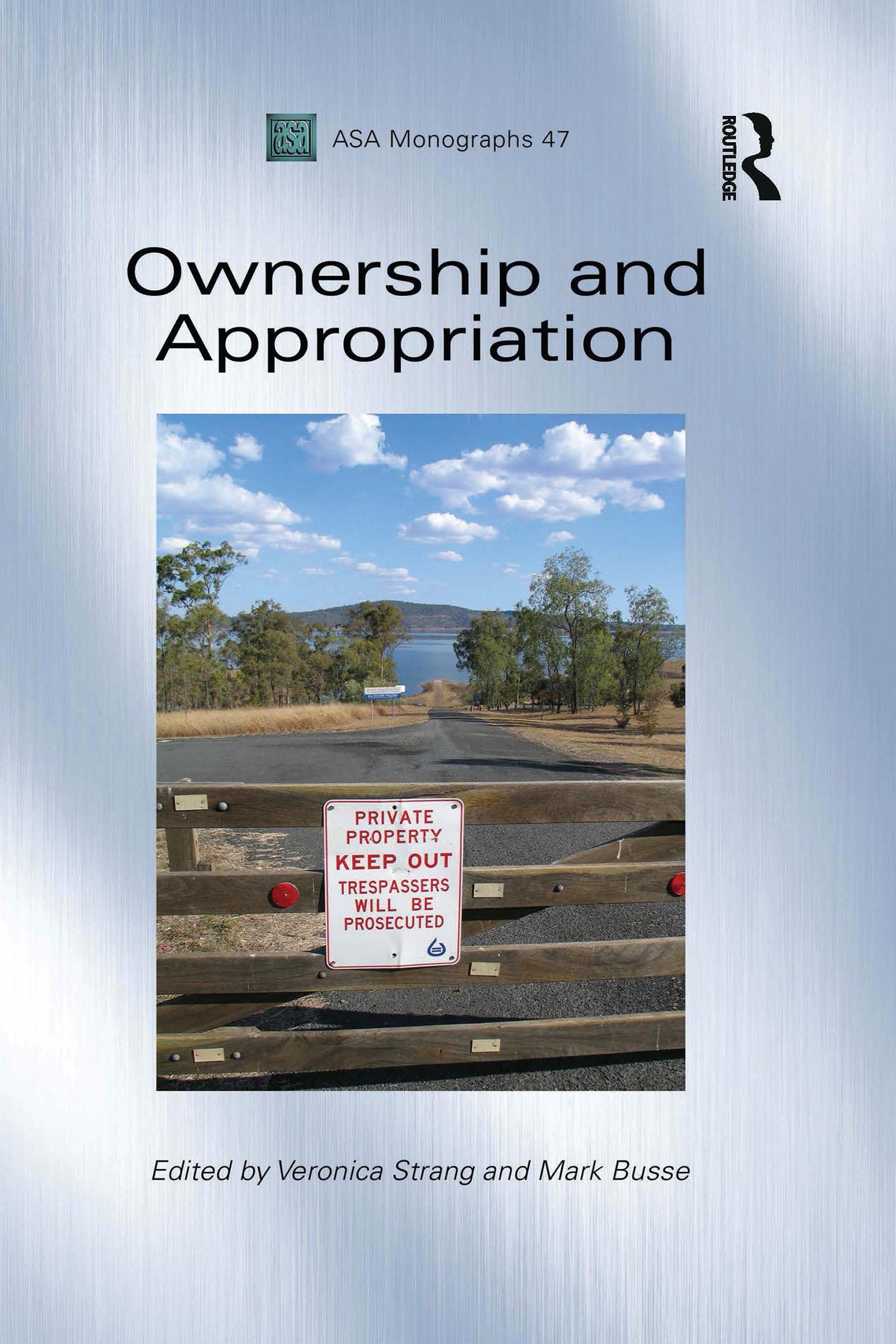
In a world of finite resources, expanding populations and widening structural inequalities, the ownership of things is increasingly contested. Not only are the commons being rapidly enclosed and privatized, but the very idea of what can be owned is expanding, generating conflicts over the ownership of resources, ideas, culture, people, and even parts of people. Understanding processes of ownership and appropriation is not only central to anthropological theorizing but also has major practical applications, for policy, legislative development and conflict resolution.Ownership and Appropriation significantly extends anthropology's long-term concern with property by focusing on everyday notions and acts of owning and appropriating. The chapters document the relationship between ownership, subjectivities and personhood; they demonstrate the critical consequences of materiality and immateriality on what is owned; and they examine the social relations of property. By approaching ownership as social communication and negotiation, the text points to a more dynamic and processual understanding of property, ownership and appropriation.
Betal enkelt med kort, Klarna, Apple Pay eller Google Pay. Ikke fornøyd? Du har alltid 14 dagers angrerett. Les mer i våre vilkår. Har du spørsmål, send oss en e-post på hello@memmo.org.
Memmo gjør det enklere å studere – uansett hvor du er i verden. Hos oss samler du pensumbøker og smarte studieverktøy på ett og samme sted: sammendrag, quizer, podkaster og flashcards. Og så Ted, din studiekompis som svarer på alt du lurer på. Over 50 000 studenter studerer allerede her – bygget for at du skal lære raskere og stresse mindre.
Du vil kanskje også like
Kjøp boken0