
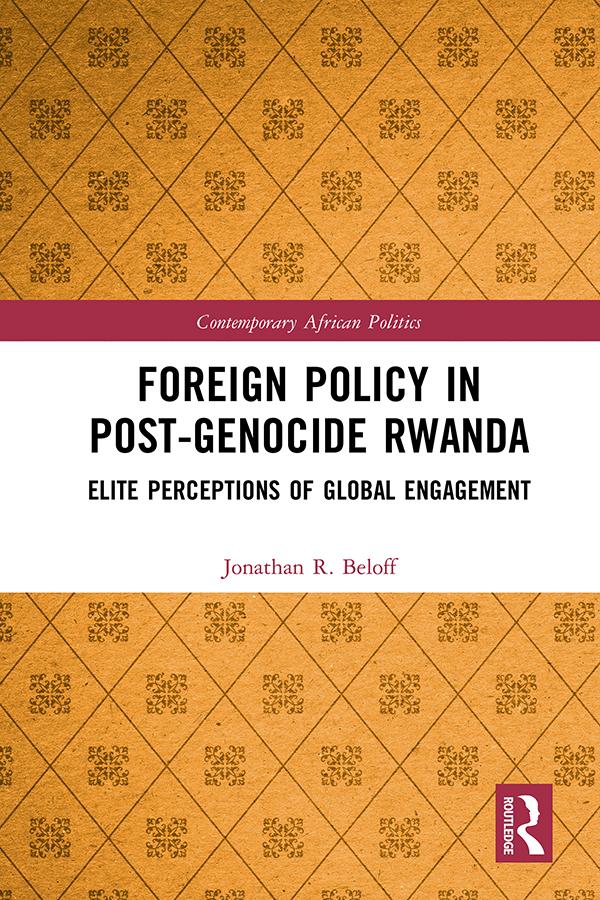
This book examines how Rwandan elites within the government, private sector and civil society perceive the nation’s political and economic relationship with the international community. Using testimonies and interviews of Rwandan political, military and economic leaders, and bureaucrats, this book examines the intersubjective beliefs that formulate how Rwanda engages with the international community. The book presents and analyses three primary intersubjective themes: historical and possible future abandonment of Rwanda; implementing an ideology of agaciro to promote self-respect, dignity and self-reliance for state security and economic development; and the belief in the government’s obligation to promote human security for those who identify as ‘Rwandan’. These perceptions help us understand how post-genocide Rwanda engages with the international community in the pursuit of state security, economic development and to prevent a future genocide. This book will be of interest to students and scholars of African politics and international relations as well as the politics of post-genocide states.
Betal enkelt med kort, Klarna, Apple Pay eller Google Pay. Ikke fornøyd? Du har alltid 14 dagers angrerett. Les mer i våre vilkår. Har du spørsmål, send oss en e-post på hello@memmo.org.
Memmo gjør det enklere å studere – uansett hvor du er i verden. Hos oss samler du pensumbøker og smarte studieverktøy på ett og samme sted: sammendrag, quizer, podkaster og flashcards. Og så Ted, din studiekompis som svarer på alt du lurer på. Over 50 000 studenter studerer allerede her – bygget for at du skal lære raskere og stresse mindre.