
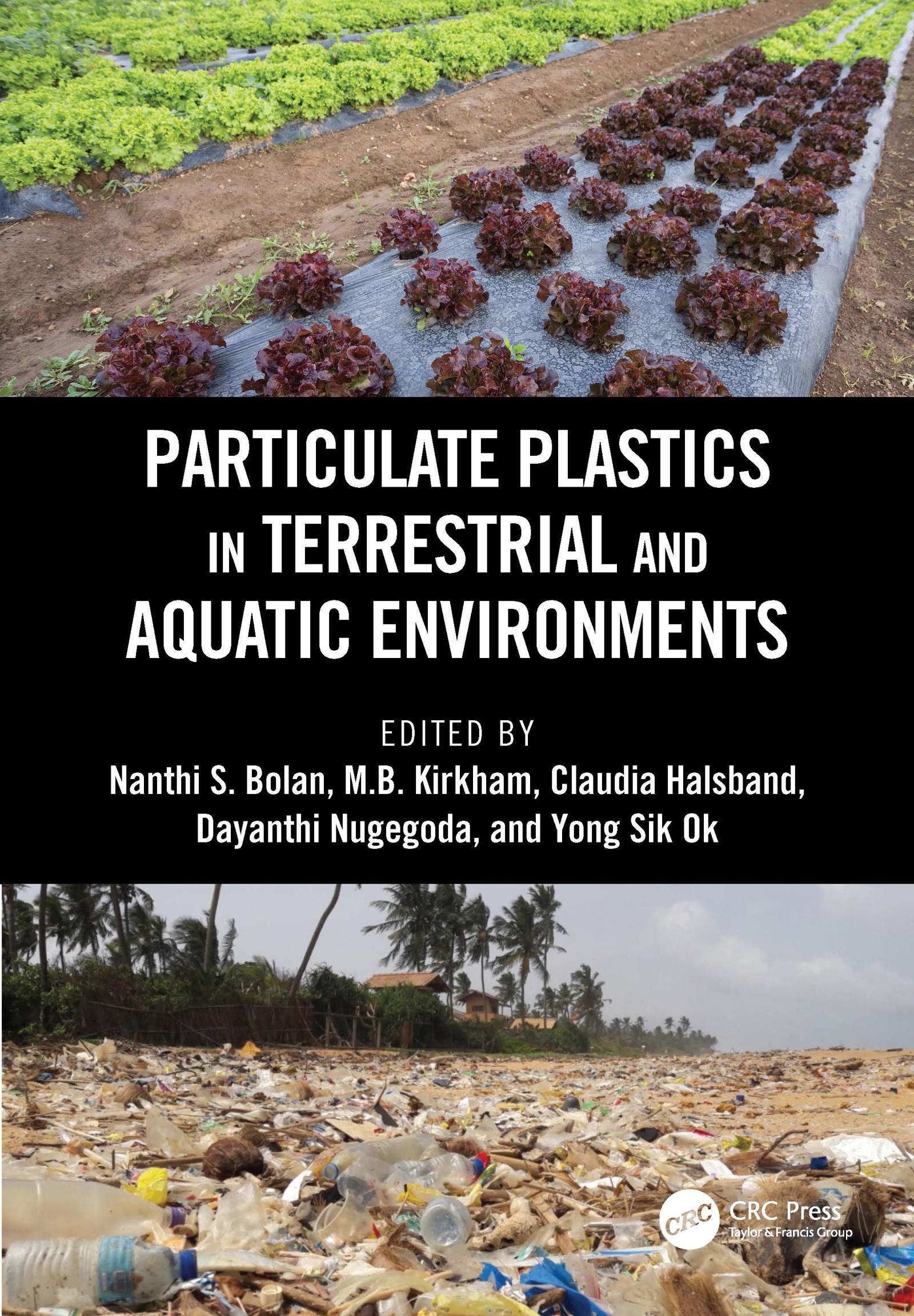
The manufacture of plastic as well as its indiscriminate disposal and destruction by incineration pollutes atmospheric, terrestrial, and aquatic ecosystems. Synthetic plastics do not break down; they accumulate in the environment as macro-, micro-, and nanoplastics. These particulate plastics are a major source of pollutants in soil and marine ecosystems. Particulate Plastics in Terrestrial and Aquatic Environments provides a fundamental understanding of the sources of these plastics and the threats they pose to the environment. The book demonstrates the ecotoxicity of particulate plastics using case studies and offers management practices to mitigate particulate plastic contamination in the environment.
Features
· Describes physical and chemical properties of particulate plastics in terrestrial and aquatic ecosystems
· Presents information on characteristics of particulate plastics as impacted by weathering processes
· Provides numerous approaches for managing particulate plastic contamination
· Identifies sources of particulate plastics in the environment; distribution and characteristics of particulate plastics; and management strategies of particulate plastics
Written by a global team of scientists, this book is for researchers in the fields of environmental safety and waste management or individuals interested in the impact of particulate plastics on environmental health.
Betal enkelt med kort, Klarna, Apple Pay eller Google Pay. Ikke fornøyd? Du har alltid 14 dagers angrerett. Les mer i våre vilkår. Har du spørsmål, send oss en e-post på hello@memmo.org.
Memmo gjør det enklere å studere – uansett hvor du er i verden. Hos oss samler du pensumbøker og smarte studieverktøy på ett og samme sted: sammendrag, quizer, podkaster og flashcards. Og så Ted, din studiekompis som svarer på alt du lurer på. Over 50 000 studenter studerer allerede her – bygget for at du skal lære raskere og stresse mindre.