
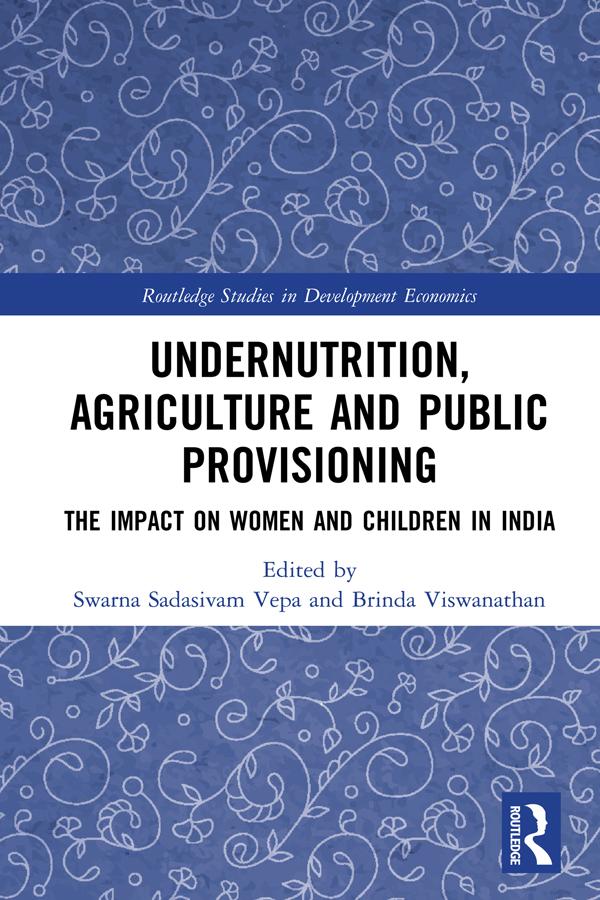
Using quantitative techniques, this volume provides empirical evidence on the crucial role of public provisioning of food, water, sanitation and health care in reducing undernutrition among women and children in India. The linkages are cogently explored and connected to the sustainable development goals.
Key data comes from recent large secondary sources at district, household and individual levels and the econometric methodologies are clearly explained. Taken as a whole, it highlights the effects of public provisioning on malnutrition and identifies the relative importance of agricultural growth in resolving the nutrition problems in rural and semi-urban areas of India.
This edited volume will be valuable reading for advanced graduate students, researchers and practitioners in development economics, development studies, and nutrition and public health.
Betal enkelt med kort, Klarna, Apple Pay eller Google Pay. Ikke fornøyd? Du har alltid 14 dagers angrerett. Les mer i våre vilkår. Har du spørsmål, send oss en e-post på hello@memmo.org.
Memmo gjør det enklere å studere – uansett hvor du er i verden. Hos oss samler du pensumbøker og smarte studieverktøy på ett og samme sted: sammendrag, quizer, podkaster og flashcards. Og så Ted, din studiekompis som svarer på alt du lurer på. Over 50 000 studenter studerer allerede her – bygget for at du skal lære raskere og stresse mindre.