
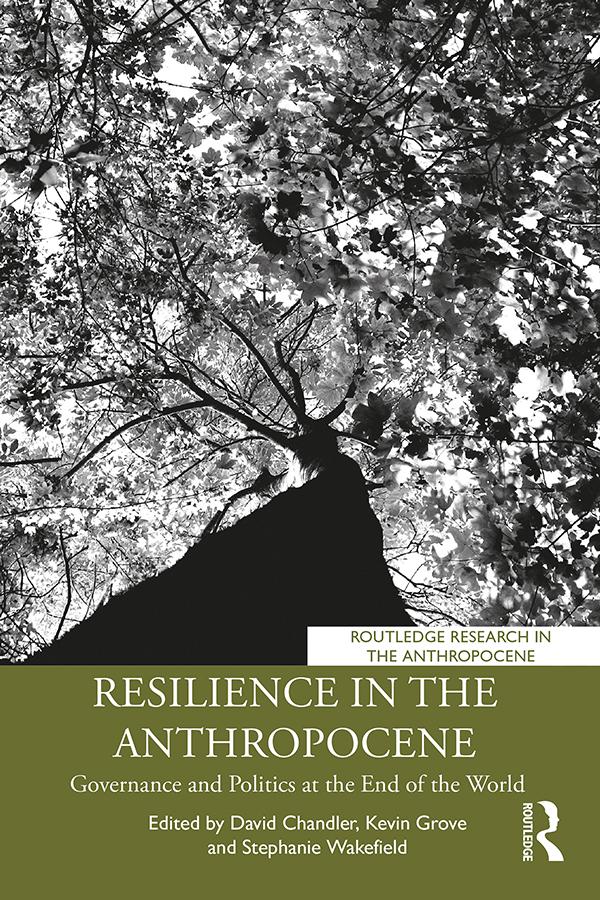
This book offers the first critical, multi-disciplinary study of how the concepts of resilience and the Anthropocene have combined to shape contemporary thought and governmental practice.
Faced with the climate catastrophe of the Anthropocene, theorists and policymakers are increasingly turning to ‘sustainable’, ‘creative’ and ‘bottom-up’ imaginaries of governance. The book brings together cutting-edge insights from leading geographers, international relations scholars and philosophers to explore how the concepts of resilience and the Anthropocene challenge and transform prevailing understandings of Earth, space, time and knowledge, and how these transformations reshape governance, ethics and critique today. This book examines how the Anthropocene calls into question established categories through which modern societies have tended to make sense of the world and engage in critical reflection and analysis. It also considers how resilience approaches attempt to re-stabilize these categories – and the ethical and political effects that result from these resilience-based efforts.
Offering innovative insights into the problem of how environmental change is known and governed in the Anthropocene, this book will be of interest to students in fields such as geography, international relations, anthropology, science and technology studies, sociology, and the environmental humanities.
Betal enkelt med kort, Klarna, Apple Pay eller Google Pay. Ikke fornøyd? Du har alltid 14 dagers angrerett. Les mer i våre vilkår. Har du spørsmål, send oss en e-post på hello@memmo.org.
Memmo gjør det enklere å studere – uansett hvor du er i verden. Hos oss samler du pensumbøker og smarte studieverktøy på ett og samme sted: sammendrag, quizer, podkaster og flashcards. Og så Ted, din studiekompis som svarer på alt du lurer på. Over 50 000 studenter studerer allerede her – bygget for at du skal lære raskere og stresse mindre.