
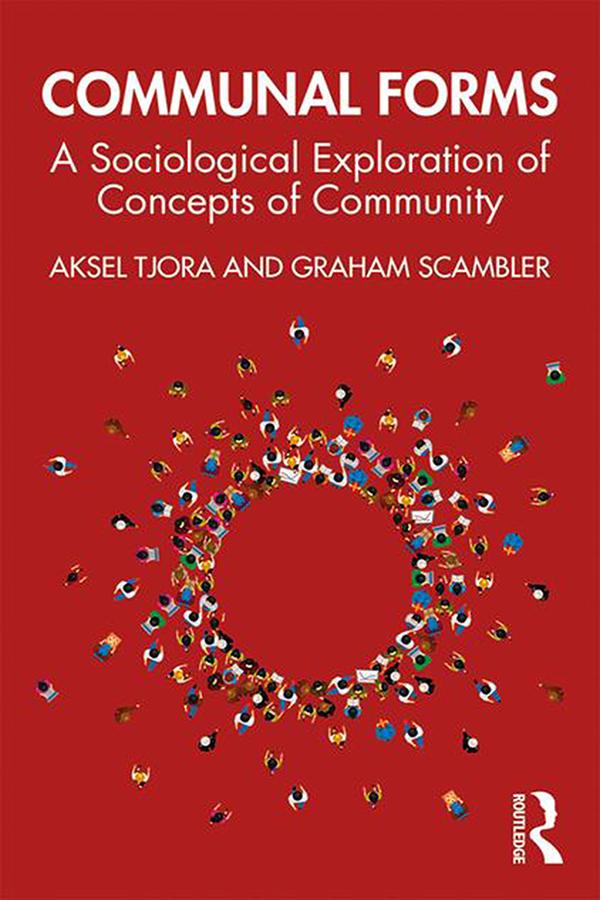
Drawing on a wide range of social theory, as well as empirical inputs from studies of work, neighbourhoods, events, meeting places and online self-help groups, this book suggests that communal forms are constructed on the basis of communicative, material, biographic-cultural, practice-based, and situational layers. The concept of community has long provided an important point of departure for the discipline of sociology, with the conflicting conceptions of community before and into modernity embodied in Ferdinand Tönnies’ Gemeinschaft and Gesellschaft and in Emile Dürkheim’s Mechanical and Organic Solidarity, providing the focus for debate. Other contributors have maintained an interest in communities as communions, interactional competencies, symbolic identification, tribal connection, and more recently communication. Drawing on such theoretical contributions, as well as empirical inputs, the authors develop a more nuanced concept of community, based on the notion that it is constructed from several different layers. This concept is then presented as a sociological toolbox with which to fuel approaches to examining societal challenges and change. Providing a fresh approach to a core sociological question that also has a wider societal relevance, Communal Forms will be of interest to scholars and students concerned with social issues, and for those with a more general interest in community, society and its development over time.
Betal enkelt med kort, Klarna, Apple Pay eller Google Pay. Ikke fornøyd? Du har alltid 14 dagers angrerett. Les mer i våre vilkår. Har du spørsmål, send oss en e-post på hello@memmo.org.
Memmo gjør det enklere å studere – uansett hvor du er i verden. Hos oss samler du pensumbøker og smarte studieverktøy på ett og samme sted: sammendrag, quizer, podkaster og flashcards. Og så Ted, din studiekompis som svarer på alt du lurer på. Over 50 000 studenter studerer allerede her – bygget for at du skal lære raskere og stresse mindre.