
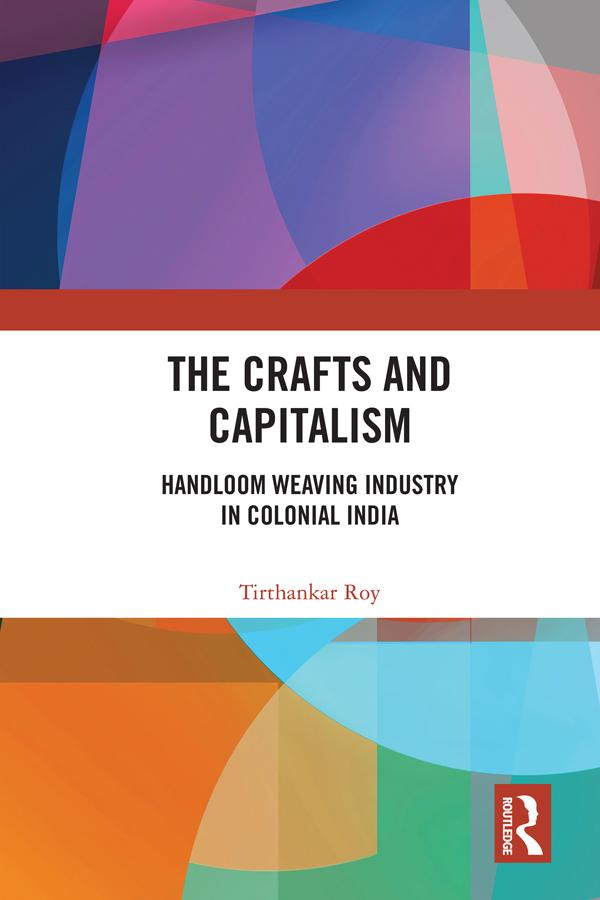
This book presents a comprehensive history of handloom weaving industry in India to challenge and revise the view that competition from machine-produced textiles destroyed the country’s handicrafts as claimed by historians until recently. It shows that skill-intensive handmade textiles survived the competition on a large scale, and that handmade goods and high-quality manual labour played a positive role in the making of modern India. Rich in archival material, The Crafts and Capitalism explores themes such as the historiography of craft technologies; statistical work on nineteenth-century cotton cloth production trends; narratives of merchants, the social leaders, the factory-owners; tools and techniques; and, shift from handloom to power loom. The book argues that changes in the handloom industry were central to the consolidation of new forms of capitalism in India.
An important intervention in Indian economic history, this book will be useful to scholars and researchers of Indian history, economic history, colonial history, modern history, political history, labour history and political economy. It will also interest nongovernmental organizations, textile historians, and design specialists.
Betal enkelt med kort, Klarna, Apple Pay eller Google Pay. Ikke fornøyd? Du har alltid 14 dagers angrerett. Les mer i våre vilkår. Har du spørsmål, send oss en e-post på hello@memmo.org.
Memmo gjør det enklere å studere – uansett hvor du er i verden. Hos oss samler du pensumbøker og smarte studieverktøy på ett og samme sted: sammendrag, quizer, podkaster og flashcards. Og så Ted, din studiekompis som svarer på alt du lurer på. Over 50 000 studenter studerer allerede her – bygget for at du skal lære raskere og stresse mindre.