
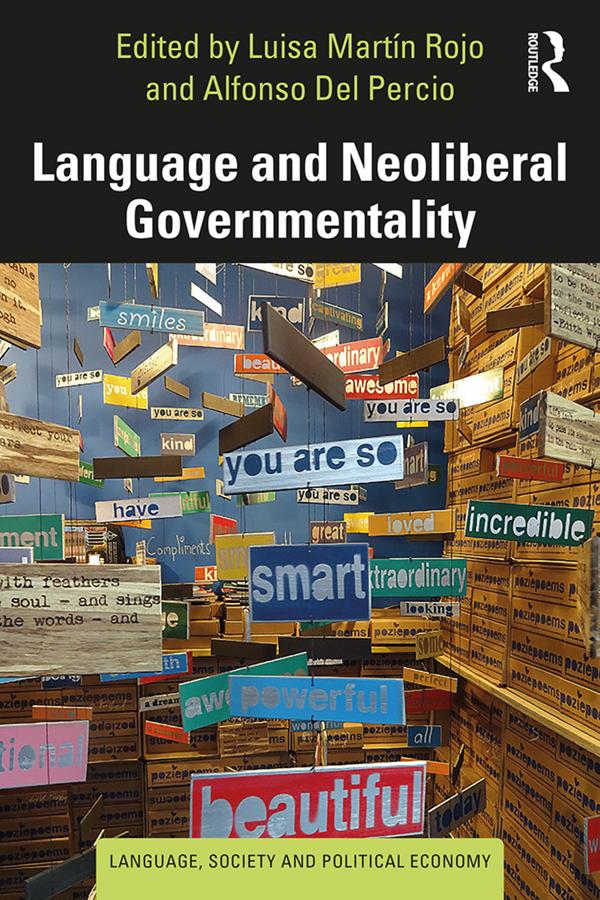
Against a background of the ongoing crisis of global capitalism and the fracturing of the neoliberal project, this book provides a detailed account of the ways in which language is profoundly imbricated in the neoliberalising of the fabric of social life.
With chapters from a cast list of international scholars covering topics such as the commodification of education and language, unemployment, and the governmentality of the self, and discussion chapters from Monica Heller and Jackie Urla bringing the various strands together, the book ultimately helps us to understand how language is part of political economy and the everyday making and remaking of society and individuals. It provides both a theoretical framework and a significant methodological "tool-box" to critically detect, understand, and resist the impact of neoliberalism on everyday social spheres, particularly in relation to language.
Presenting richly empirical studies that expand our understanding of how neoliberalism as a regime of truth and as a practice of governance performs within the terrain of language, this book is an essential resource for researchers and graduate students in English language, sociolinguistics, applied linguistics, linguistic anthropology, and related areas.
Betal enkelt med kort, Klarna, Apple Pay eller Google Pay. Ikke fornøyd? Du har alltid 14 dagers angrerett. Les mer i våre vilkår. Har du spørsmål, send oss en e-post på hello@memmo.org.
Memmo gjør det enklere å studere – uansett hvor du er i verden. Hos oss samler du pensumbøker og smarte studieverktøy på ett og samme sted: sammendrag, quizer, podkaster og flashcards. Og så Ted, din studiekompis som svarer på alt du lurer på. Over 50 000 studenter studerer allerede her – bygget for at du skal lære raskere og stresse mindre.