
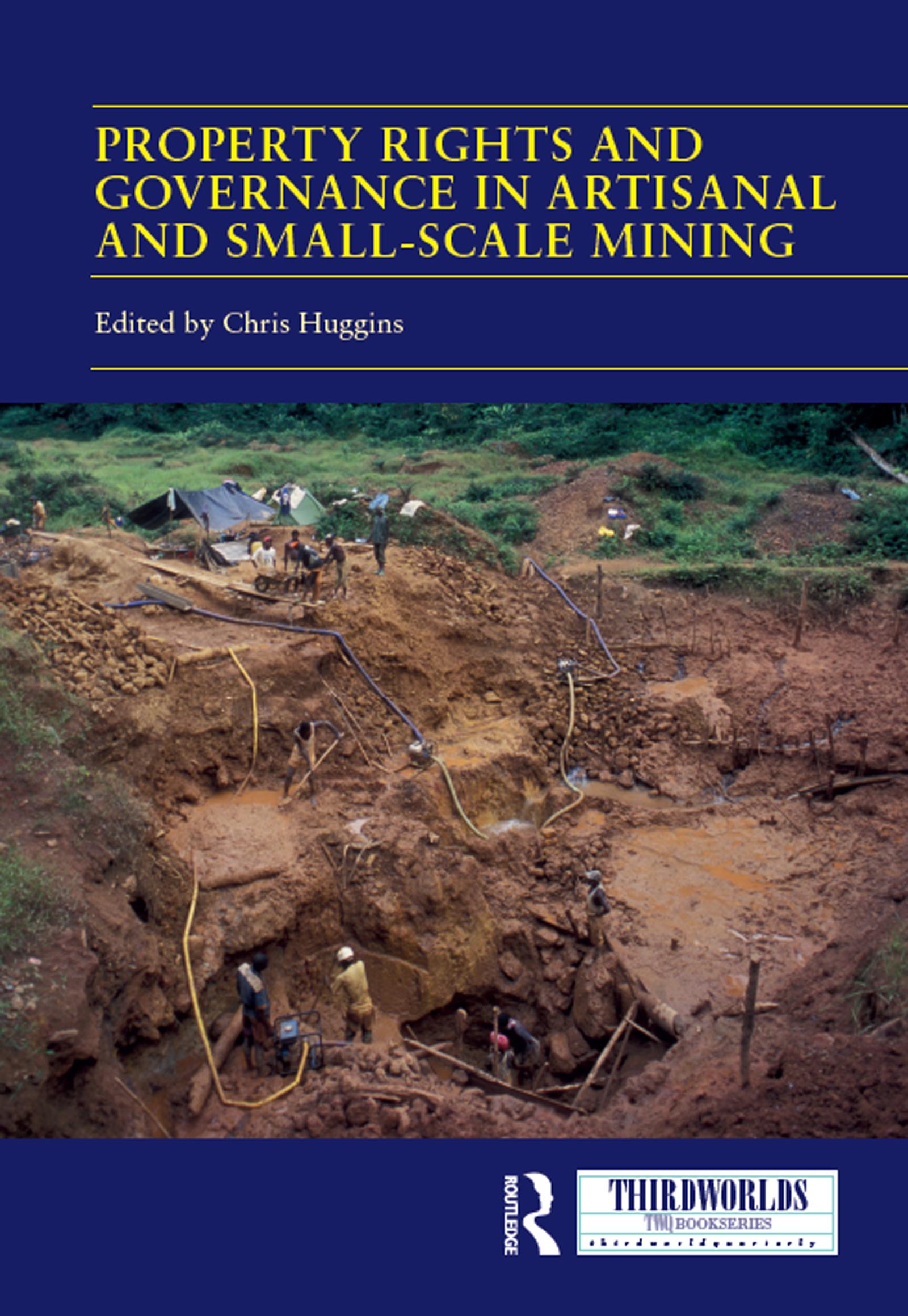
Disputes and dispossession of property rights in the mining sector are causes of injustice, violence, and forced resettlement around the world. This comprehensive volume examines mining, particularly what is often called ‘Artisanal and Small-Scale Mining’, from a perspective of governance and rights. It focuses on rights to land, natural resources, and other forms of material ‘property’. Many projects, policies, and laws targeting artisanal and small-scale mining are embedded in problematic conceptual and institutional frameworks that implicitly stigmatise and discipline artisanal and small-scale miners. This collection takes a critical look at notions of property to destabilise some of these frameworks.
The chapters in this book are notable for their recognition of the agency of artisanal miners and ‘local communities’ within the uneven hierarchies in which they are embedded, and their acknowledgement of the difficulties of state regulation of such a complex set of issues. The authors use a variety of theoretical tools, engaging with political economy, political ecology, classical economic theory, and socio-cultural concepts derived from ethnographic methods.
This book includes insightful case studies from Colombia, Democratic Republic of Congo, Ghana, Mongolia, South Africa, and Zambia, and is an important resource for academics, development practitioners, and policy-makers. It was originally published online as a special issue of Third World Thematics.
Betal enkelt med kort, Klarna, Apple Pay eller Google Pay. Ikke fornøyd? Du har alltid 14 dagers angrerett. Les mer i våre vilkår. Har du spørsmål, send oss en e-post på hello@memmo.org.
Memmo gjør det enklere å studere – uansett hvor du er i verden. Hos oss samler du pensumbøker og smarte studieverktøy på ett og samme sted: sammendrag, quizer, podkaster og flashcards. Og så Ted, din studiekompis som svarer på alt du lurer på. Over 50 000 studenter studerer allerede her – bygget for at du skal lære raskere og stresse mindre.