
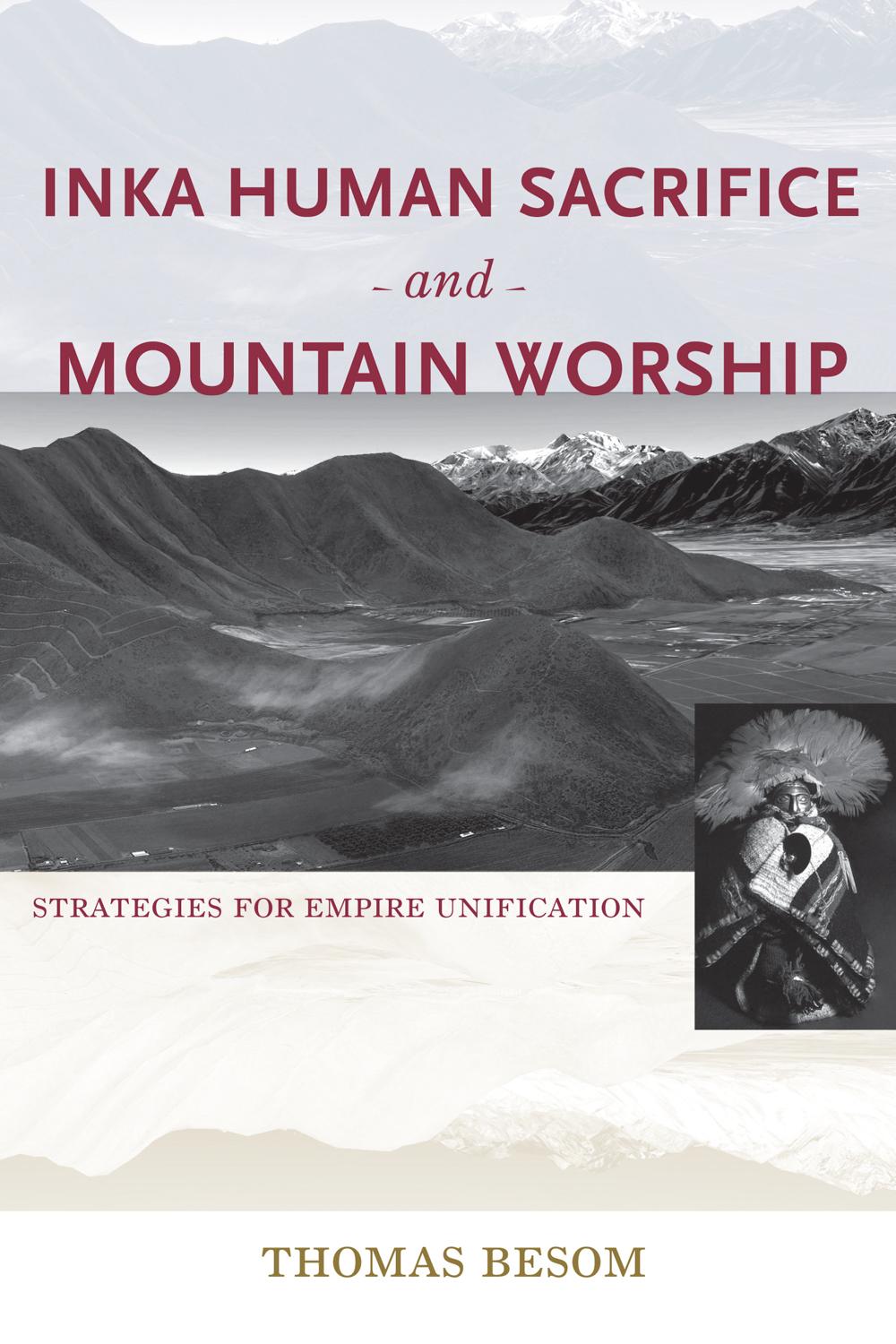
The Inka empire was the largest pre-Columbian polity in the New World. Its vast expanse, its ethnic diversity, and the fact that the empire may have been consolidated in less than a century have prompted much scholarly interest in its creation. In this study, Besom explores the ritual practices of human sacrifice and the worship of mountains, attested in both archaeological investigations and ethnohistorical sources, as tools in the establishment and preservation of political power.
Besom examines the relationship between symbols, ideology, ritual, and power to demonstrate how the Cuzqueños could have used rituals to manipulate common Andean symbols to uphold their authority over subjugated peoples. He considers ethnohistoric accounts of the categories of human sacrifice to gain insights into related rituals and motives, and reviews the ethnohistoric evidence of mountain worship to predict locations as well as motives. He also analyzes specific archaeological sites and assemblages, theorizing that they were the locations of sacrifices designed to assimilate subject peoples, bind conquered lands to the state, and/or justify the extraction of local resources.
Betal enkelt med kort, Klarna, Apple Pay eller Google Pay. Ikke fornøyd? Du har alltid 14 dagers angrerett. Les mer i våre vilkår. Har du spørsmål, send oss en e-post på hello@memmo.org.
Memmo gjør det enklere å studere – uansett hvor du er i verden. Hos oss samler du pensumbøker og smarte studieverktøy på ett og samme sted: sammendrag, quizer, podkaster og flashcards. Og så Ted, din studiekompis som svarer på alt du lurer på. Over 50 000 studenter studerer allerede her – bygget for at du skal lære raskere og stresse mindre.