
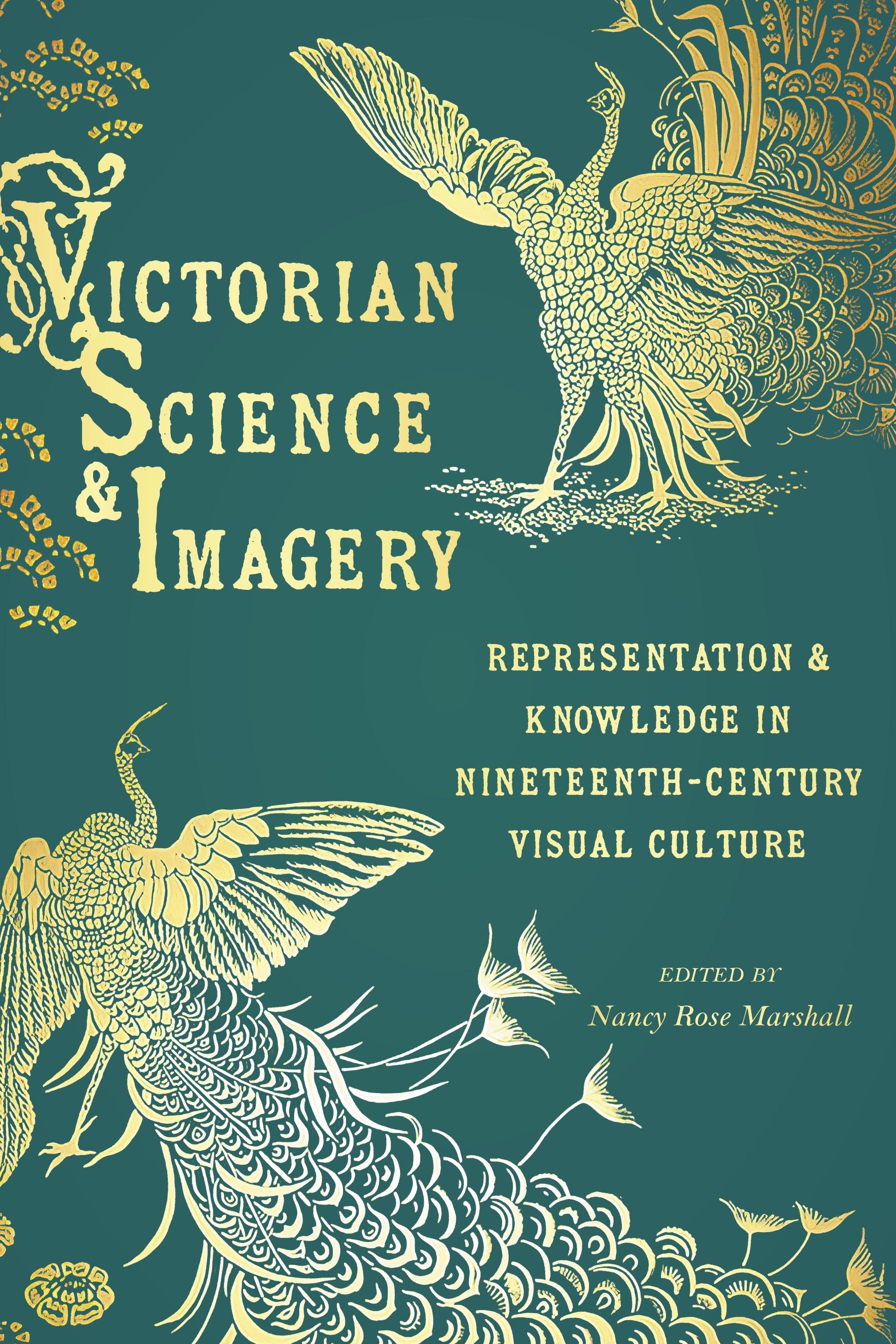
The nineteenth century was a period of science and imagery: when scientific theories and discoveries challenged longstanding boundaries between animal, plant, and human, and when art and visual culture produced new notions about the place of the human in the natural world. Just as scientists relied on graphic representation to conceptualize their ideas, artists moved seamlessly between scientific debate and creative expression to support or contradict popular scientific theories—such as Darwin’s theory of evolution and sexual selection—deliberately drawing on concepts in ways that allowed them to refute popular claims or disrupt conventional knowledges.
Focusing on the close kinship between the arts and sciences during the Victorian period, the art historians contributing to this volume reveal the unique ways in which nineteenth-century British and American visual culture participated in making science, and in which science informed art at a crucial moment in the history of the development of the modern world. Together, they explore topics in geology, meteorology, medicine, anatomy, evolution, and zoology, as well as a range of media from photography to oil painting. They remind us that science and art are not tightly compartmentalized, separate influences. Rather, these are fields that share forms, manifest as waves, layers, lines, or geometries; that invest in the idea of the evolution of form; and that generate surprisingly kindred responses, such as pain, pleasure, empathy, and sympathy.
Focusing on the close kinship between the arts and sciences during the Victorian period, the art historians contributing to this volume reveal the unique ways in which nineteenth-century British and American visual culture participated in making science, and in which science informed art at a crucial moment in the history of the development of the modern world. Together, they explore topics in geology, meteorology, medicine, anatomy, evolution, and zoology, as well as a range of media from photography to oil painting. They remind us that science and art are not tightly compartmentalized, separate influences. Rather, these are fields that share forms, manifest as waves, layers, lines, or geometries; that invest in the idea of the evolution of form; and that generate surprisingly kindred responses, such as pain, pleasure, empathy, and sympathy.
Betal enkelt med kort, Klarna, Apple Pay eller Google Pay. Ikke fornøyd? Du har alltid 14 dagers angrerett. Les mer i våre vilkår. Har du spørsmål, send oss en e-post på hello@memmo.org.
Memmo gjør det enklere å studere – uansett hvor du er i verden. Hos oss samler du pensumbøker og smarte studieverktøy på ett og samme sted: sammendrag, quizer, podkaster og flashcards. Og så Ted, din studiekompis som svarer på alt du lurer på. Over 50 000 studenter studerer allerede her – bygget for at du skal lære raskere og stresse mindre.
Du vil kanskje også like
Kjøp boken0