
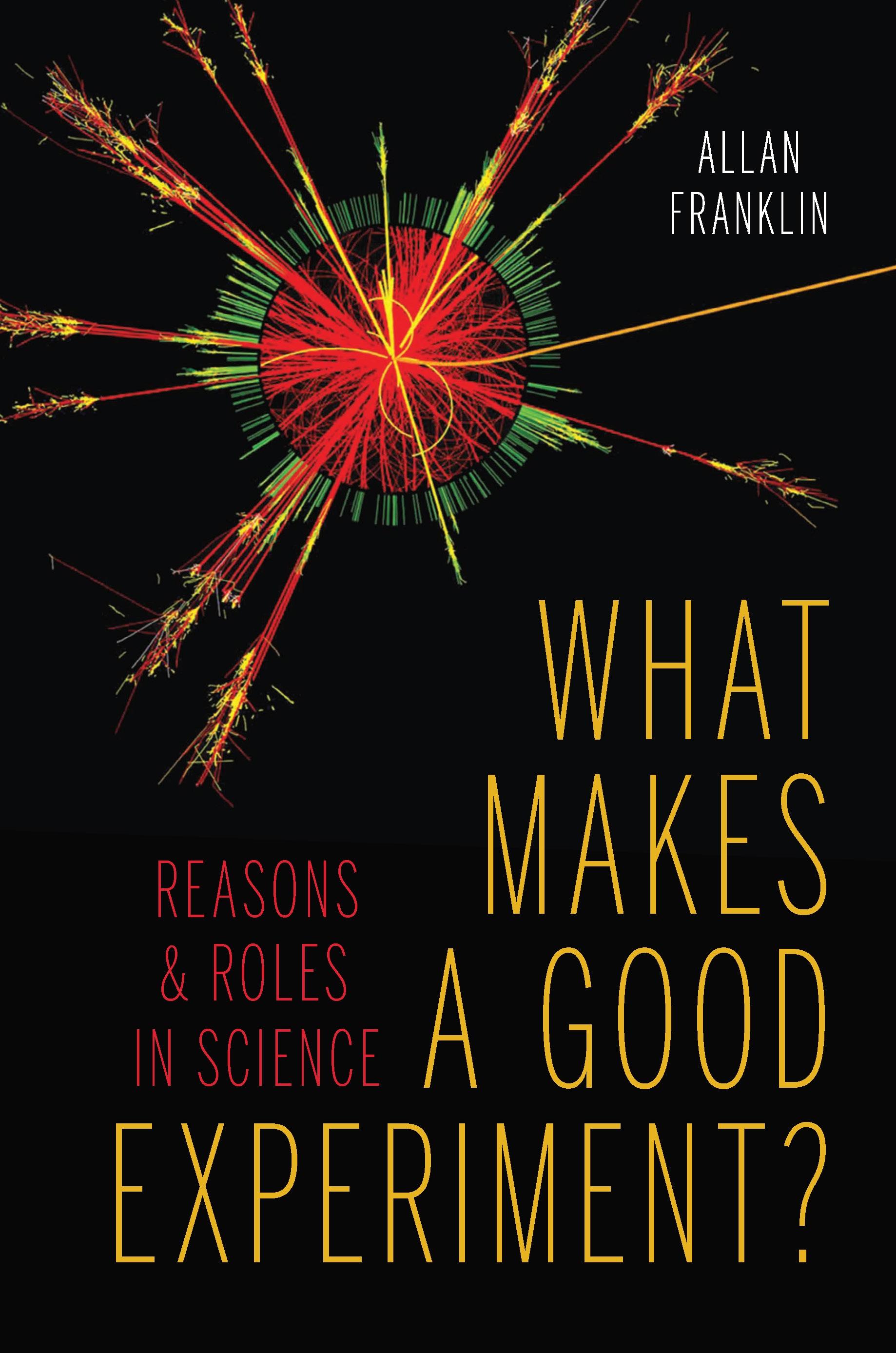
What makes a good experiment? Although experimental evidence plays an essential role in science, as Franklin argues, there is no algorithm or simple set of criteria for ranking or evaluating good experiments, and therefore no definitive answer to the question. Experiments can, in fact, be good in any number of ways: conceptually good, methodologically good, technically good, and pedagogically important. And perfection is not a requirement: even experiments with incorrect results can be good, though they must, he argues, be methodologically good, providing good reasons for belief in their results. Franklin revisits the same important question he posed in his 1981 article in the British Journal for the Philosophy of Science, when it was generally believed that the only significant role of experiment in science was to test theories. But experiments can actually play a lot of different roles in science—they can, for example, investigate a subject for which a theory does not exist, help to articulate an existing theory, call for a new theory, or correct incorrect or misinterpreted results. This book provides details of good experiments, with examples from physics and biology, illustrating the various ways they can be good and the different roles they can play.
Kategori: Vetenskapsteori och forskningsmetod
e-ISBN: 9780822981008
Betal enkelt med kort, Klarna, Apple Pay eller Google Pay. Ikke fornøyd? Du har alltid 14 dagers angrerett. Les mer i våre vilkår. Har du spørsmål, send oss en e-post på hello@memmo.org.
Memmo gjør det enklere å studere – uansett hvor du er i verden. Hos oss samler du pensumbøker og smarte studieverktøy på ett og samme sted: sammendrag, quizer, podkaster og flashcards. Og så Ted, din studiekompis som svarer på alt du lurer på. Over 50 000 studenter studerer allerede her – bygget for at du skal lære raskere og stresse mindre.
Du vil kanskje også like
Kjøp boken0