
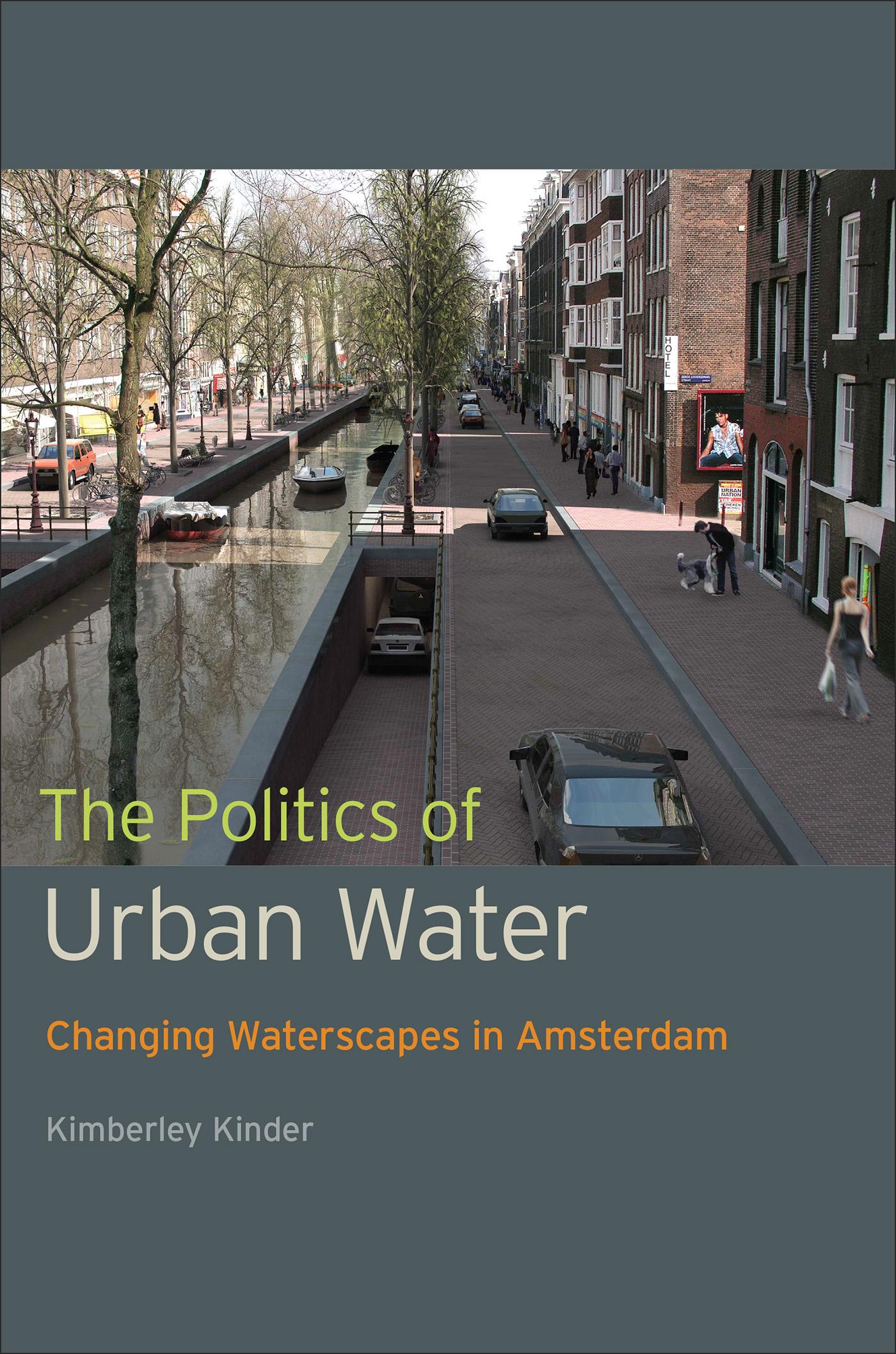
Fifty years ago, urban waterfronts were industrial, polluted, and diseased. Today, luxury homes and shops line riverbanks, harbors, and lakes across Europe and North America. The visual drama of physical reconstruction makes this transition look swift and decisive, but reimaging water is a slow process, punctuated by small cultural shifts and informal spatial seizures that change the meaning of wet urban spaces. In The Politics of Urban Water, Kimberley Kinder explores how active residents in Amsterdam deployed their cityscape when rallying around these concerns, turning space into a vehicle for social reform.
While market dynamics certainly contributed to the transformation of Amsterdam’s shorelines, squatters, partiers, artists, historians, environmentalists, tourists, reporters, and government officials also played crucial roles in bringing waterscapes to life. Their interventions pulled water in new directions, connecting it to political discussions about affordable housing, cultural tolerance, climate change, and national identity. Over time, these political valences have become embedded in laws, norms, symbols, markets, and landscapes, bringing rich undercurrents of friction to urban shores. Amsterdam’s development serves as both an inspiration and a cautionary tale for cities across Europe and North America where rapid new growth creates similar pressures and anxieties.
Betal enkelt med kort, Klarna, Apple Pay eller Google Pay. Ikke fornøyd? Du har alltid 14 dagers angrerett. Les mer i våre vilkår. Har du spørsmål, send oss en e-post på hello@memmo.org.
Memmo gjør det enklere å studere – uansett hvor du er i verden. Hos oss samler du pensumbøker og smarte studieverktøy på ett og samme sted: sammendrag, quizer, podkaster og flashcards. Og så Ted, din studiekompis som svarer på alt du lurer på. Over 50 000 studenter studerer allerede her – bygget for at du skal lære raskere og stresse mindre.