
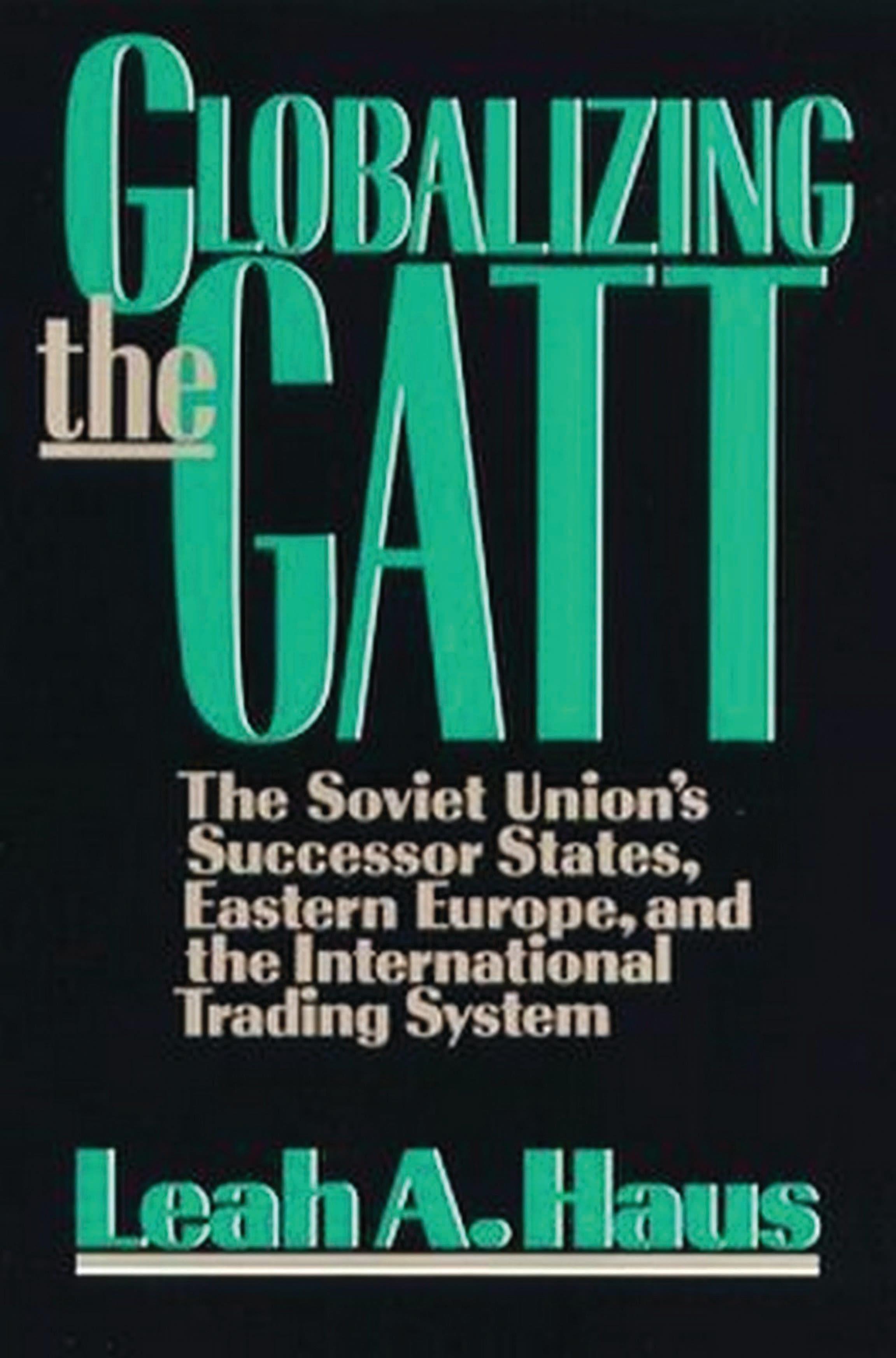
The explosive events in Eastern Europe and the dissolution of the Soviet Union have dramatically changed the political landscape that had existed for decades. The West must now develop new policies that are suitable for addressing the opportunities and challenges of the post-cold war world. Globalizing the GATT describes the task of integrating the Soviet Union's successor states and Eastern European counties into the global economy and focuses on their participation in the international trade participation in the international trade institution, the General Agreement on Tariffs and Trade (GATT). Through a comparative analysis of the history of negotiations between the former Eastern European countries and the GATT, Leah Haus explains the current policy problems that must be addressed.
Drawing on documentary sources and extensive interviews with former and current officials from the European Community, the GATT secretariat, Hungary, Poland, and the Untied States, the author traces the historical origins and evolution of the Soviet and Eastern European countries' relations with the GATT from the 1940s to the present.
Haus demonstrates that economic issues have been less relevant to these negotiations than might be expected, because Western political-security concerns have predominated in the past. Strategic political objectives have driven Western policies when determining whether an eastern European country could affiliate with the GATT.
Haus shows that trade policy issues generally surfaced when strategic political objectives dictated cooperation with an eastern European country, and in these cases the negotiations became enmeshed in broader West-West conflicts over multilateral and bilateral trade practices.
Drawing on documentary sources and extensive interviews with former and current officials from the European Community, the GATT secretariat, Hungary, Poland, and the Untied States, the author traces the historical origins and evolution of the Soviet and Eastern European countries' relations with the GATT from the 1940s to the present.
Haus demonstrates that economic issues have been less relevant to these negotiations than might be expected, because Western political-security concerns have predominated in the past. Strategic political objectives have driven Western policies when determining whether an eastern European country could affiliate with the GATT.
Haus shows that trade policy issues generally surfaced when strategic political objectives dictated cooperation with an eastern European country, and in these cases the negotiations became enmeshed in broader West-West conflicts over multilateral and bilateral trade practices.
Sider: 180
Kategori: Ekonomi & Utveckling
e-ISBN: 9780815716211
Fraktvekt: 1.2 kg
Sendes innen: 1-2 dager
Betal enkelt med kort, Klarna, Apple Pay eller Google Pay. Ikke fornøyd? Du har alltid 14 dagers angrerett. Les mer i våre vilkår. Har du spørsmål, send oss en e-post på hello@memmo.org.
Memmo gjør det enklere å studere – uansett hvor du er i verden. Hos oss samler du pensumbøker og smarte studieverktøy på ett og samme sted: sammendrag, quizer, podkaster og flashcards. Og så Ted, din studiekompis som svarer på alt du lurer på. Over 50 000 studenter studerer allerede her – bygget for at du skal lære raskere og stresse mindre.