
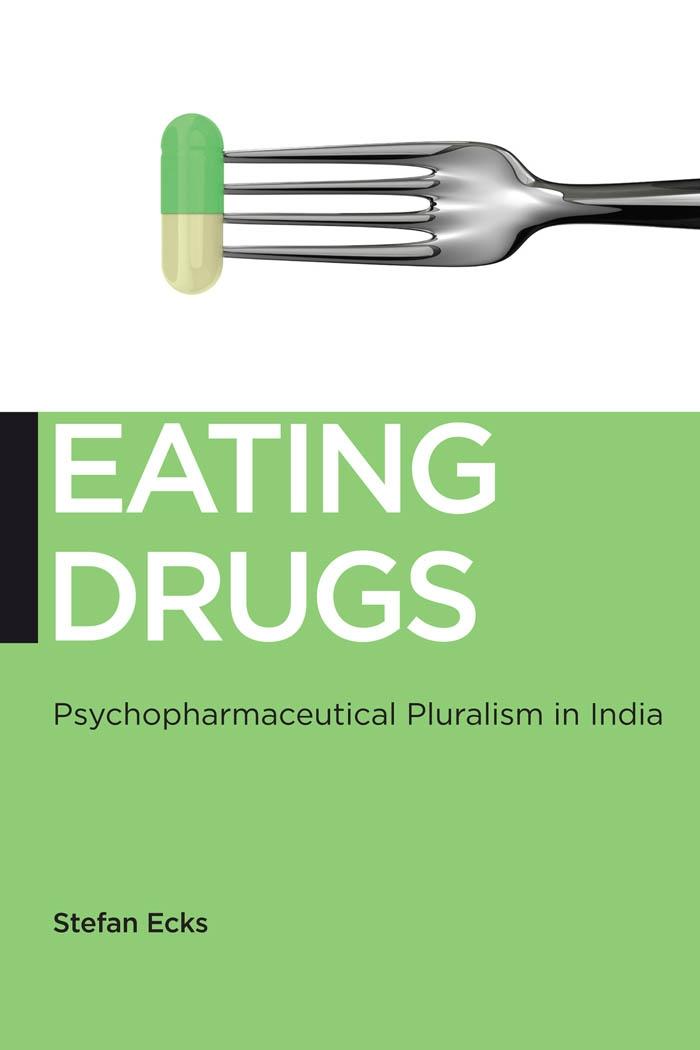
A Hindu monk in Calcutta refuses to take his psychotropic medications. His psychiatrist explains that just as his body needs food, the drugs are nutrition for his starved mind. Does it matter how—or whether—patients understand their prescribed drugs?
Millions of people in India are routinely prescribed mood medications. Pharmaceutical companies give doctors strong incentives to write as many prescriptions as possible, with as little awkward questioning from patients as possible. Without a sustained public debate on psychopharmaceuticals in India, patients remain puzzled by the notion that drugs can cure disturbances of the mind. While biomedical psychopharmaceuticals are perceived with great suspicion, many non-biomedical treatments are embraced.
Stefan Ecks illuminates how biomedical, Ayurvedic, and homeopathic treatments are used in India, and argues that pharmaceutical pluralism changes popular ideas of what drugs do. Based on several years of research on pharmaceutical markets, Ecks shows how doctors employ a wide range of strategies to make patients take the remedies prescribed. Yet while metaphors such as "mind food" may succeed in getting patients to accept the prescriptions, they also obscure a critical awareness of drug effects.
This rare ethnography of pharmaceuticals will be of key interest to those in the anthropology and sociology of medicine, pharmacology, mental health, bioethics, global health, and South Asian studies.
Betal enkelt med kort, Klarna, Apple Pay eller Google Pay. Ikke fornøyd? Du har alltid 14 dagers angrerett. Les mer i våre vilkår. Har du spørsmål, send oss en e-post på hello@memmo.org.
Memmo gjør det enklere å studere – uansett hvor du er i verden. Hos oss samler du pensumbøker og smarte studieverktøy på ett og samme sted: sammendrag, quizer, podkaster og flashcards. Og så Ted, din studiekompis som svarer på alt du lurer på. Over 50 000 studenter studerer allerede her – bygget for at du skal lære raskere og stresse mindre.