
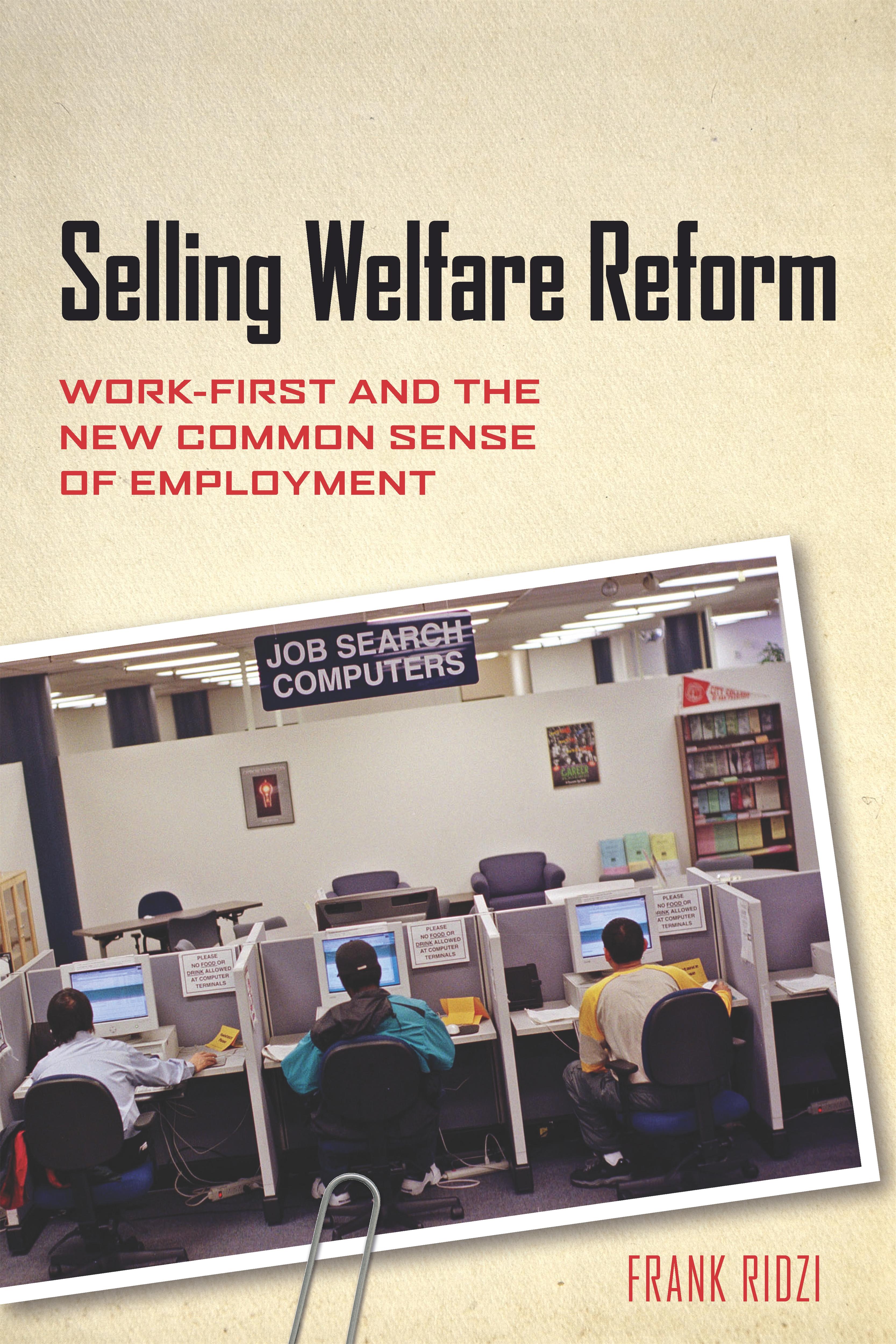
The 1996 Welfare Reform Act promised to end welfare as we knew it. In Selling Welfare Reform, Frank Ridzi uses rich ethnographic detail to examine how new welfare-to-work policies, time limits, and citizenship documentation radically changed welfare, revealing what really goes on at the front lines of the reformed welfare system. Selling Welfare Reform chronicles how entrepreneurial efforts ranging from front-line caseworkers to high-level administrators set the pace for restructuring a resistant bureaucracy. At the heart of this remarkable institutional transformation is a market-centered approach to human services that re-framed the definition of success to include diversion from the present system, de-emphasis of legal protections and behavioral conditioning of poor parents to accommodate employers. Ridzi draws a compelling portrait of how welfare staff and their clients negotiate the complexities of the low wage labor market in an age of global competition, exposing the realities of how the new "common sense" of poverty is affecting the lives of poor and vulnerable Americans.
Betal enkelt med kort, Klarna, Apple Pay eller Google Pay. Ikke fornøyd? Du har alltid 14 dagers angrerett. Les mer i våre vilkår. Har du spørsmål, send oss en e-post på hello@memmo.org.
Memmo gjør det enklere å studere – uansett hvor du er i verden. Hos oss samler du pensumbøker og smarte studieverktøy på ett og samme sted: sammendrag, quizer, podkaster og flashcards. Og så Ted, din studiekompis som svarer på alt du lurer på. Over 50 000 studenter studerer allerede her – bygget for at du skal lære raskere og stresse mindre.