
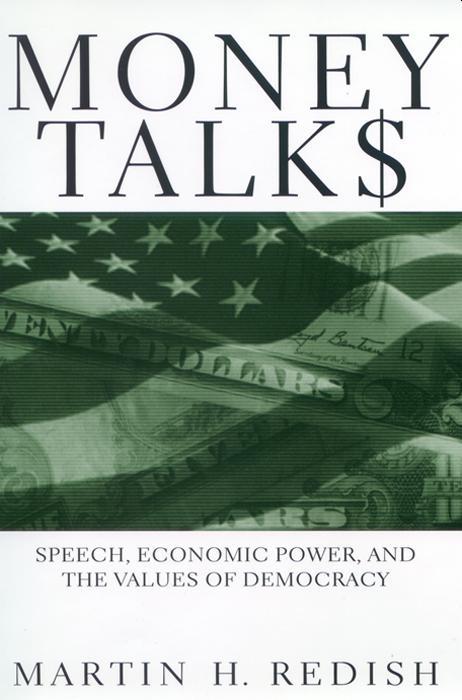
Many have argued that soft money and special interests are destroying the American electoral system. And yet the clarion call for campaign finance reform only touches on the more general belief that money and economic power have a disastrous impact on both free expression and American democracy. The nation's primary sources of communication, the argument goes, are increasingly controlled by vast corporate empires whose primary, or even exclusive motive is the maximization of profit. And these conglomerates should simply not be granted the same constitutional protection as, say, an individual protester.
And yet neither the expenditure of money for expressive purposes nor an underlying motive of profit maximization detracts from the values fostered by such activity, claims Martin H. Redish. In fact, given the modern economic realities that dictate that effective expression virtually requires the expenditure of capital, any restriction of such capital for expressive purposes will necessarily reduce the sum total of available expression. Further, Redish here illustrates, the underlying motive of those who wish to restrict corporate expression is disagreement with the nature of the views they express.
Confronting head-on one of the sacred cows of American reformist politics, Martin H. Redish here once again lives up to his reputation as one of America's most original and counterintuitive legal minds.
Betal enkelt med kort, Klarna, Apple Pay eller Google Pay. Ikke fornøyd? Du har alltid 14 dagers angrerett. Les mer i våre vilkår. Har du spørsmål, send oss en e-post på hello@memmo.org.
Memmo gjør det enklere å studere – uansett hvor du er i verden. Hos oss samler du pensumbøker og smarte studieverktøy på ett og samme sted: sammendrag, quizer, podkaster og flashcards. Og så Ted, din studiekompis som svarer på alt du lurer på. Over 50 000 studenter studerer allerede her – bygget for at du skal lære raskere og stresse mindre.