
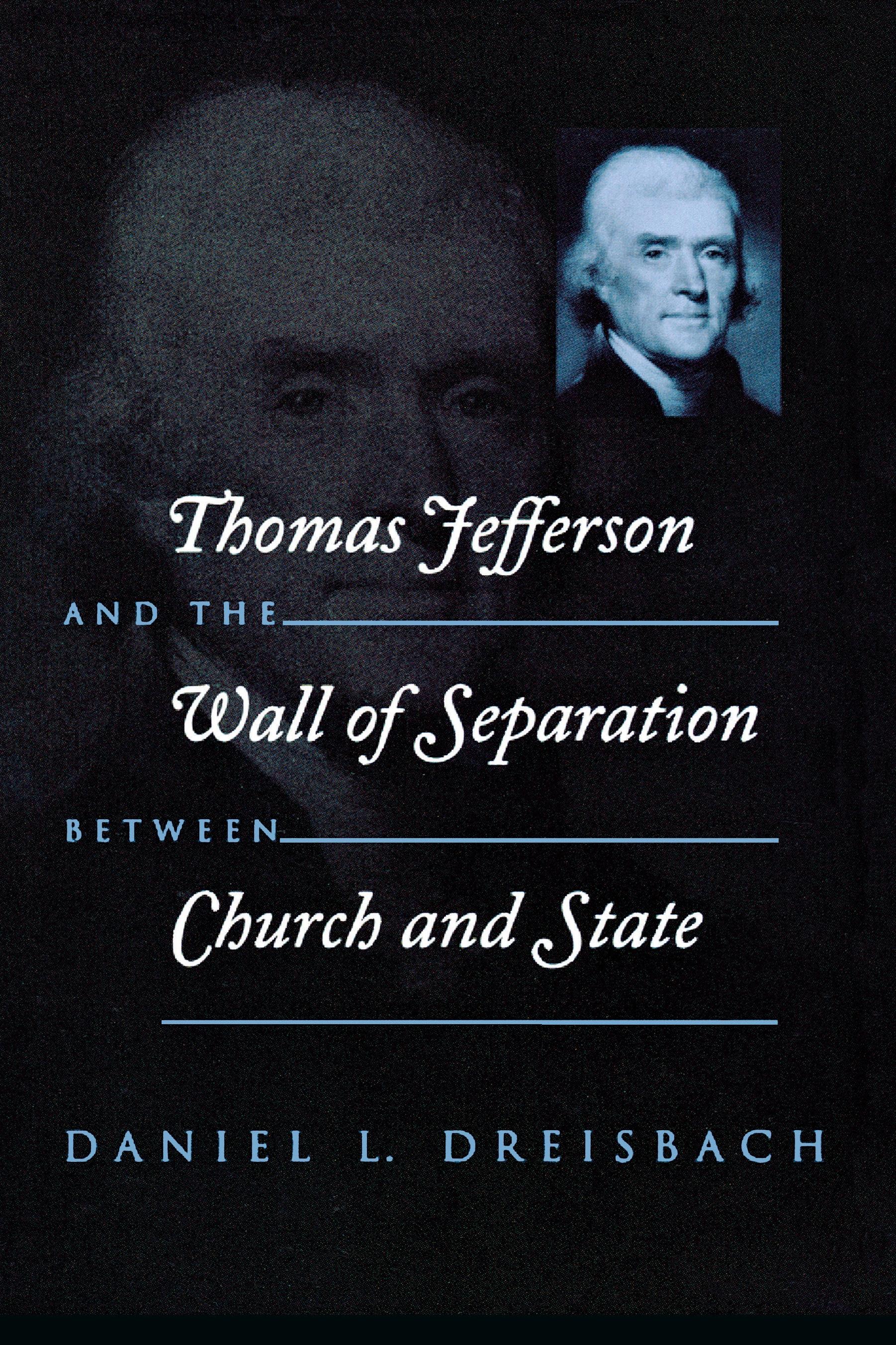
The origins, controversial uses, and competing interpretations of Jefferson's famous remark—"wall of separation between church and state"
No phrase in American letters has had a more profound influence on church-state law, policy, and discourse than Thomas Jefferson’s “wall of separation between church and state,” and few metaphors have provoked more passionate debate. Introduced in an 1802 letter to the Danbury, Connecticut Baptist Association, Jefferson’s “wall” is accepted by many Americans as a concise description of the U.S. Constitution’s church-state arrangement and conceived as a virtual rule of constitutional law.
Despite the enormous influence of the “wall” metaphor, almost no scholarship has investigated the text of the Danbury letter, the context in which it was written, or Jefferson’s understanding of his famous phrase. Thomas Jefferson and the Wall of Separation Between Church and State offers an in-depth examination of the origins, controversial uses, and competing interpretations of this powerful metaphor in law and public policy.
Betal enkelt med kort, Klarna, Apple Pay eller Google Pay. Ikke fornøyd? Du har alltid 14 dagers angrerett. Les mer i våre vilkår. Har du spørsmål, send oss en e-post på hello@memmo.org.
Memmo gjør det enklere å studere – uansett hvor du er i verden. Hos oss samler du pensumbøker og smarte studieverktøy på ett og samme sted: sammendrag, quizer, podkaster og flashcards. Og så Ted, din studiekompis som svarer på alt du lurer på. Over 50 000 studenter studerer allerede her – bygget for at du skal lære raskere og stresse mindre.