
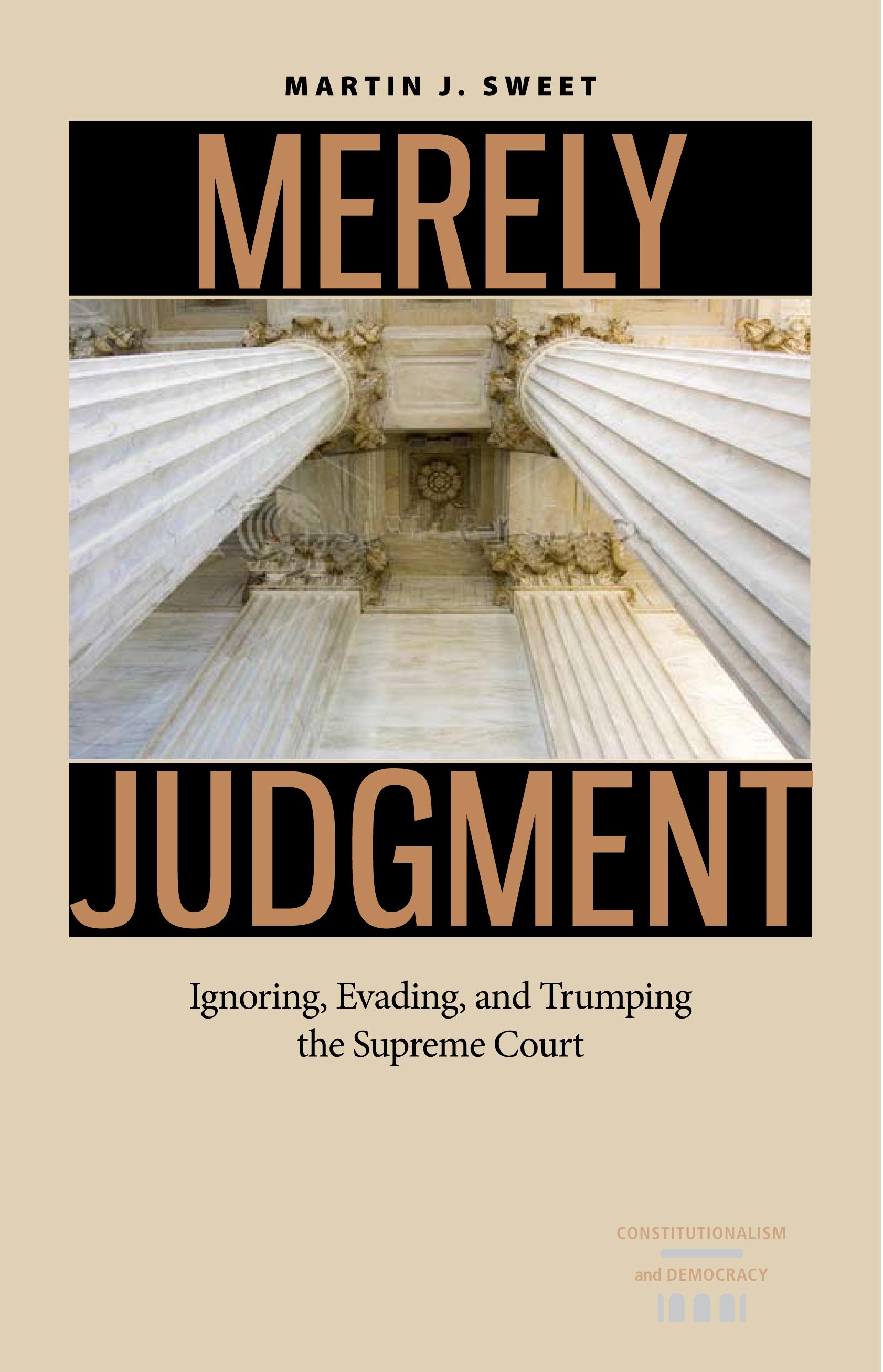
Merely Judgment uses affirmative action in government contracting, legislative vetoes, flag burning, hate speech, and school prayer as windows for understanding how Supreme Court decisions send signals regarding the Court’s policy preferences to institutions and actors (such as lower courts, legislatures, executive branches, and interest groups), and then traces the responses of these same institutions and actors to Court decisions. The lower courts nearly always abide by Supreme Court precedent, but, to a surprising degree, elected branches and other institutions avoid complying with Supreme Court decisions. To explain the persistence of unconstitutional policies and legislation, Sweet isolates the ability of institutions to derail the litigation process. Merely Judgment explores the mechanisms by which litigants and their peers have escaped from the clutches of litigation and thus effectively ignored, evaded, and trumped the Supreme Court.
Betal enkelt med kort, Klarna, Apple Pay eller Google Pay. Ikke fornøyd? Du har alltid 14 dagers angrerett. Les mer i våre vilkår. Har du spørsmål, send oss en e-post på hello@memmo.org.
Memmo gjør det enklere å studere – uansett hvor du er i verden. Hos oss samler du pensumbøker og smarte studieverktøy på ett og samme sted: sammendrag, quizer, podkaster og flashcards. Og så Ted, din studiekompis som svarer på alt du lurer på. Over 50 000 studenter studerer allerede her – bygget for at du skal lære raskere og stresse mindre.