
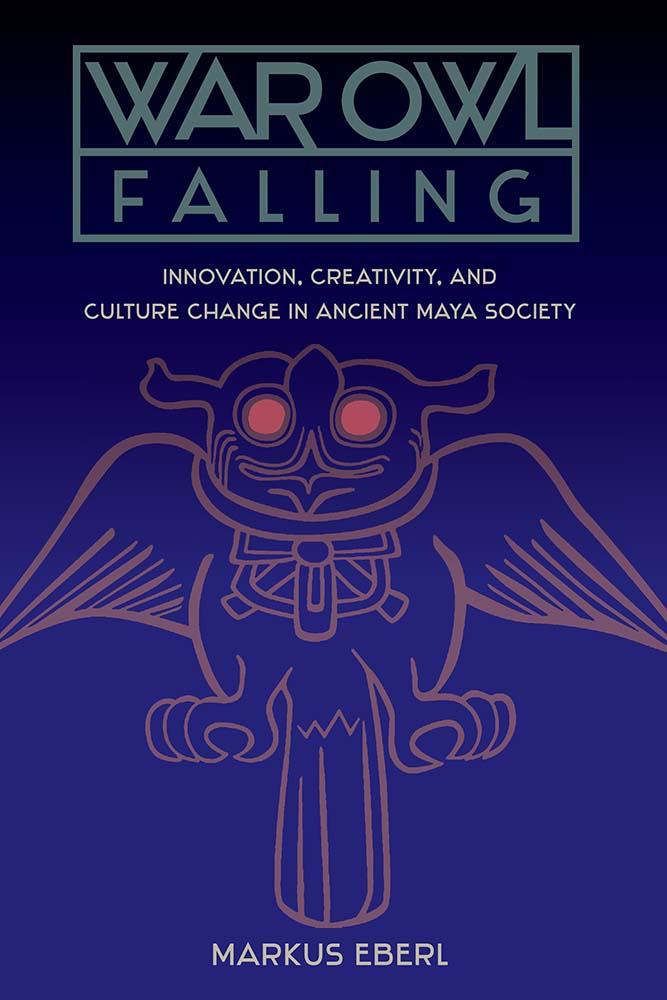
An archaeological exploration of the role of creativity and invention in the ancient Maya civilization
Drawing on archaeological findings from the Maya lowlands, War Owl Falling shows how innovation and creativity led to social change in ancient societies. Markus Eberl discusses the ways eighth-century Maya (and Maya commoners in particular) reinvented objects and signs that were associated with nobility, including scepters, ceramic vessels, ballgame equipment, and the symbol of the owl. These innovations, he argues, reflect assertions of independence and a redistribution of power that contributed to the Maya collapse in the Late Classic period.
Eberl emphasizes that decision-making—the ability to imagine alternate worlds and to act on that vision—plays a large role in changing social structure over time. Contextualizing these decisions in his “Garden of Forking Paths” model, Eberl shows how innovators were those individuals who imagined an array of possible futures and negotiated power to reach desirable outcomes. He dissects the social underpinning of Maya creativity by illustrating their situated method of learning via observation and imitation, stressing that societal constraints or opportunities dictated whether members’ ideas were realized. Pinpointing where and when Maya inventions emerged, how individuals adopted them and why, War Owl Falling connects technological and social change in a novel way.
Betal enkelt med kort, Klarna, Apple Pay eller Google Pay. Ikke fornøyd? Du har alltid 14 dagers angrerett. Les mer i våre vilkår. Har du spørsmål, send oss en e-post på hello@memmo.org.
Memmo gjør det enklere å studere – uansett hvor du er i verden. Hos oss samler du pensumbøker og smarte studieverktøy på ett og samme sted: sammendrag, quizer, podkaster og flashcards. Og så Ted, din studiekompis som svarer på alt du lurer på. Over 50 000 studenter studerer allerede her – bygget for at du skal lære raskere og stresse mindre.