
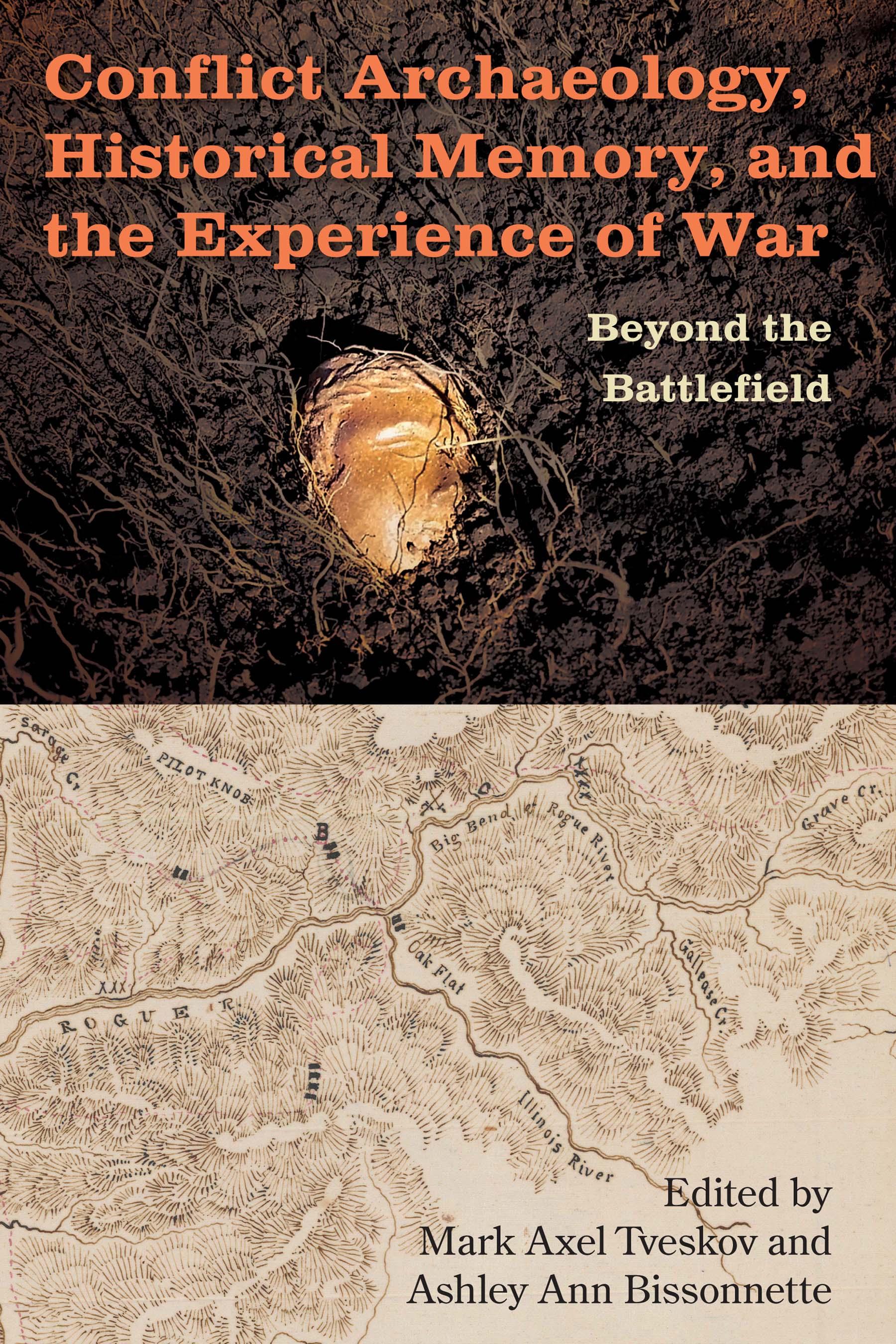
Countering dominant narratives of conflict through attention to memory and trauma
This volume presents approaches to the archaeology of war that move beyond the forensic analysis of battlefields, fortifications, and other sites of conflict to consider the historical memory, commemoration, and social experience of war. Leading scholars offer critical insights that challenge the dominant narratives about landscapes of war from throughout the history of North American settler colonialism.
Grounded in the empirical study of fields of conflict, these essays extend their scope to include a commitment to engaging local Indigenous and other descendant communities and to illustrating how public memories of war are actively and politically constructed. Contributors examine conflicts including the battle of Chikasha, King Philip’s War, the 1694 battle at Guadalupe Mesa, the Rogue River War, the Dakota-U.S. War of 1862, and a World War II battle on the island of Saipan. Studies also investigate the site of the Schenectady Massacre of 1690 and colonial posts staffed by Black soldiers.
Chapters discuss how prevailing narratives often minimized the complexity of these conflicts, smoothed over the contradictions and genocidal violence of colonialism, and erased the diversity of the participants. This volume demonstrates that the collaborative practice of conflict archaeology has the potential to reveal the larger meanings, erased voices, and lingering traumas of war.
Betal enkelt med kort, Klarna, Apple Pay eller Google Pay. Ikke fornøyd? Du har alltid 14 dagers angrerett. Les mer i våre vilkår. Har du spørsmål, send oss en e-post på hello@memmo.org.
Memmo gjør det enklere å studere – uansett hvor du er i verden. Hos oss samler du pensumbøker og smarte studieverktøy på ett og samme sted: sammendrag, quizer, podkaster og flashcards. Og så Ted, din studiekompis som svarer på alt du lurer på. Over 50 000 studenter studerer allerede her – bygget for at du skal lære raskere og stresse mindre.