
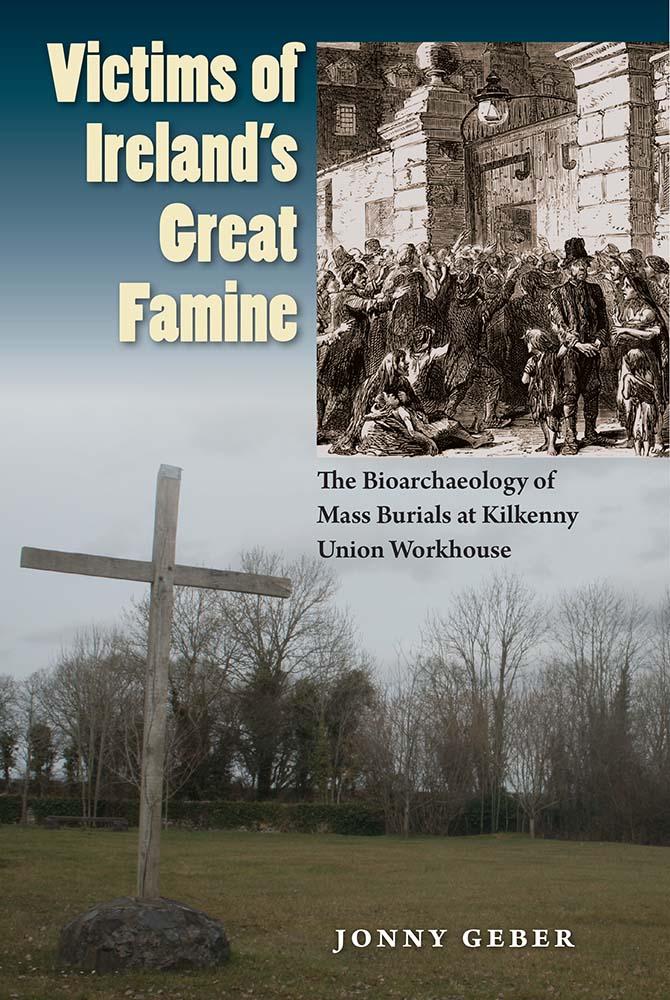
With one million dead, and just as many forced to emigrate, the Irish Famine (1845-52) is among the worst health calamities in history. Because historical records of the Victorian period in Ireland were generally written by the middle and upper classes, relatively little has been known about those who suffered the most, the poor and destitute. But in 2006, archaeologists excavated an until then completely unknown intramural mass burial containing the remains of nearly 1,000 Kilkenny Union Workhouse inmates. In the first bioarchaeological study of Great Famine victims, Jonny Geber uses skeletal analysis to tell the story of how and why the Famine decimated the lowest levels of nineteenth century Irish society.
Seeking help at the workhouse was an act of desperation by people who were severely malnourished and physically exhausted. Overcrowded, it turned into a hotspot of infectious disease--as did many other union workhouses in Ireland during the Famine. Geber reveals how medical officers struggled to keep people alive, as evidenced by cases of amputations but also craniotomies. Still, mortality rates increased and the city cemeteries filled up, until there was eventually no choice but to resort to intramural burials. Deceased inmates were buried in shrouds and coffins--an attempt by the Board of Guardians of the workhouse to maintain a degree of dignity towards these victims. By examining the physical conditions of the inmates that might have contributed to their institutionalization, as well as to the resulting health consequences, Geber sheds new and unprecedented light on Ireland’s Great Hunger.
Betal enkelt med kort, Klarna, Apple Pay eller Google Pay. Ikke fornøyd? Du har alltid 14 dagers angrerett. Les mer i våre vilkår. Har du spørsmål, send oss en e-post på hello@memmo.org.
Memmo gjør det enklere å studere – uansett hvor du er i verden. Hos oss samler du pensumbøker og smarte studieverktøy på ett og samme sted: sammendrag, quizer, podkaster og flashcards. Og så Ted, din studiekompis som svarer på alt du lurer på. Over 50 000 studenter studerer allerede her – bygget for at du skal lære raskere og stresse mindre.
Du vil kanskje også like
Kjøp boken0