
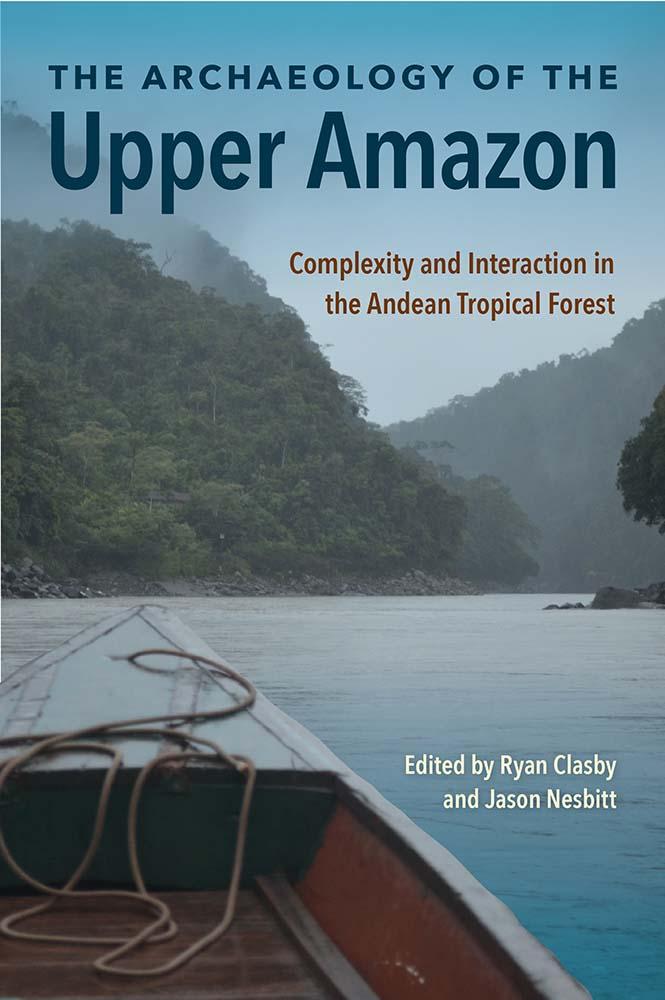
This volume brings together archaeologists working in Ecuador, Peru, and Bolivia to construct a new prehistory of the Upper Amazon, outlining cultural developments from the late third millennium B.C. to the Inca Empire of the sixteenth century A.D. Encompassing the forested tropical slopes of the eastern Andes as well as Andean drainage systems that connect to the Amazon River basin, this vast region has been unevenly studied due to the restrictions of national borders, remote site locations, and limited interpretive models.
The Archaeology of the Upper Amazon unites and builds on recent field investigations that have found evidence of extensive interaction networks along the major rivers—Santiago, Marañon, Huallaga, and Ucayali. Chapters detail how these rivers facilitated the movement of people, resources, and ideas between the Andean highlands and the Amazonian lowlands. Contributors demonstrate that the Upper Amazon was not a peripheral zone but a locus for complex societal developments. Reaching across geographical, cultural, and political boundaries, this volume shows that the trajectory of Andean civilization cannot be fully understood without a nuanced perspective on the region’s diverse patterns of interaction with the Upper Amazon.
Contributors: Ryan Hechler | Kenneth R. Young | J. Scott Raymond | Warren Deboer | Inge Schjellerup | Charles Hastings | Atsushi Yamamoto | Bebel Ibarra Asencios | Francisco Valdez | Jason Nesbitt | Warren B. Church | Sonia Alconini | Rachel Johnson | Ryan Clasby | Estanislao Pazmino
Betal enkelt med kort, Klarna, Apple Pay eller Google Pay. Ikke fornøyd? Du har alltid 14 dagers angrerett. Les mer i våre vilkår. Har du spørsmål, send oss en e-post på hello@memmo.org.
Memmo gjør det enklere å studere – uansett hvor du er i verden. Hos oss samler du pensumbøker og smarte studieverktøy på ett og samme sted: sammendrag, quizer, podkaster og flashcards. Og så Ted, din studiekompis som svarer på alt du lurer på. Over 50 000 studenter studerer allerede her – bygget for at du skal lære raskere og stresse mindre.