
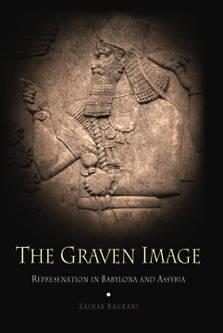
Mesopotamia, the world's earliest literate culture, developed a rich philosophical conception of representation in which the world was saturated with signs. Instead of imitating the natural world, representation—both in writing and in visual images—was thought to participate in the world and to have an effect upon it in natural, magical, and supernatural ways. The Graven Image is the first book to explore this tradition, which developed prior to, and apart from, the Greek understanding of representation.
The classical Greek system, based on the notion of mimesis, or copy, is the one with which we are most familiar today. The Assyro-Babylonian ontology presented here by Zainab Bahrani opens up fresh avenues for thinking about the concept of representation in general, and her reading of the ancient Mesopotamian textual and visual record in its own ontological context develops an entirely new approach to understanding Babylonian and Assyrian arts in particular.
The Graven Image describes, for the first time, rituals and wars involving images; the relationship of divination, the organic body, and representation; and the use of images as a substitute for the human form, integrating this ancient material into contemporary debates in critical theory. Bahrani challenges current methodologies in the study of Near Eastern archaeology and art history, introducing a new way to appreciate the unique contributions of Assyrian and Babylonian culture and their complex relationships to the past and present.
Betal enkelt med kort, Klarna, Apple Pay eller Google Pay. Ikke fornøyd? Du har alltid 14 dagers angrerett. Les mer i våre vilkår. Har du spørsmål, send oss en e-post på hello@memmo.org.
Memmo gjør det enklere å studere – uansett hvor du er i verden. Hos oss samler du pensumbøker og smarte studieverktøy på ett og samme sted: sammendrag, quizer, podkaster og flashcards. Og så Ted, din studiekompis som svarer på alt du lurer på. Over 50 000 studenter studerer allerede her – bygget for at du skal lære raskere og stresse mindre.