
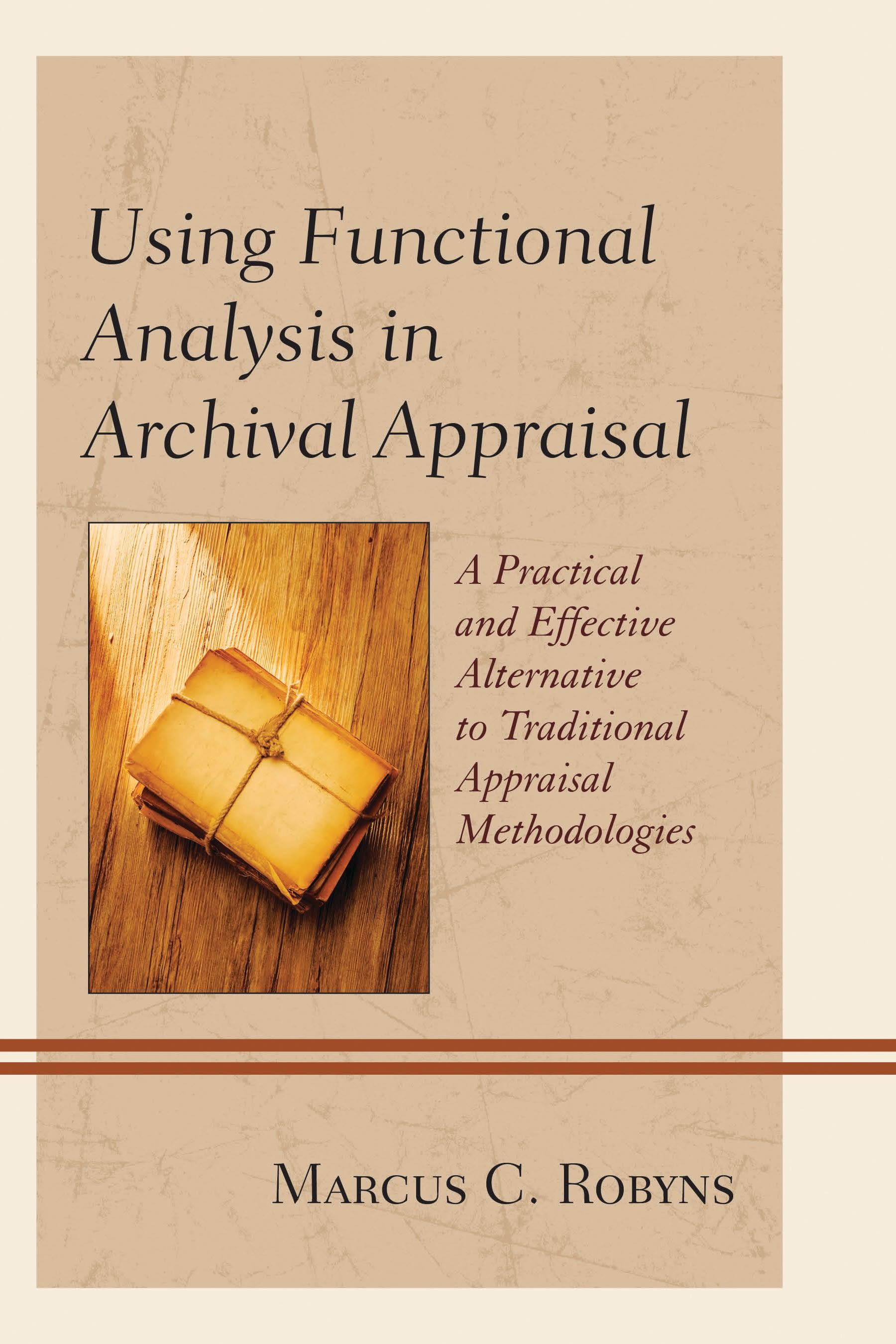
The identification of recorded information with continuing value that documents corporate and cultural memory is one of the archivist’s primary tasks, and he/she accomplishes this mission, in part, through the process of appraisal. But does traditional archival appraisal, based on the concepts of primary and evidential values, effectively serve the needs of institutional archivists and records managers? In an age of scarcity and the challenge of electronic records, can archivists and records managers continue to rely upon a methodology essentially unchanged since the early 1950s?
Using Functional Analysis in Archival Appraisal: A Practical and Effective Alternative to Traditional Appraisal Methodologies shows how archivists in other countries are already using functional analysis, which offers a better, more effective, and imminently more practical alternative to traditional appraisal methodologies that rely upon an analysis of the records themselves.
From this book, information professionals will learn
what functional analysis is and how it is already used around the world;its useful application for a variety of record types and media, including print, non-textual, electronic, and “born-digital” records;how functional analysis provides an alternative to a hierarchical arrangement scheme based upon record groups, sub-groups, and series that mimics the structure of an institution or organization; a recommended process for the practical and effective implementation of functional analysis.
Using Functional Analysis in Archival Appraisal: A Practical and Effective Alternative to Traditional Appraisal Methodologies shows how archivists in other countries are already using functional analysis, which offers a better, more effective, and imminently more practical alternative to traditional appraisal methodologies that rely upon an analysis of the records themselves.
From this book, information professionals will learn
what functional analysis is and how it is already used around the world;its useful application for a variety of record types and media, including print, non-textual, electronic, and “born-digital” records;how functional analysis provides an alternative to a hierarchical arrangement scheme based upon record groups, sub-groups, and series that mimics the structure of an institution or organization; a recommended process for the practical and effective implementation of functional analysis.
Betal enkelt med kort, Klarna, Apple Pay eller Google Pay. Ikke fornøyd? Du har alltid 14 dagers angrerett. Les mer i våre vilkår. Har du spørsmål, send oss en e-post på hello@memmo.org.
Memmo gjør det enklere å studere – uansett hvor du er i verden. Hos oss samler du pensumbøker og smarte studieverktøy på ett og samme sted: sammendrag, quizer, podkaster og flashcards. Og så Ted, din studiekompis som svarer på alt du lurer på. Over 50 000 studenter studerer allerede her – bygget for at du skal lære raskere og stresse mindre.