
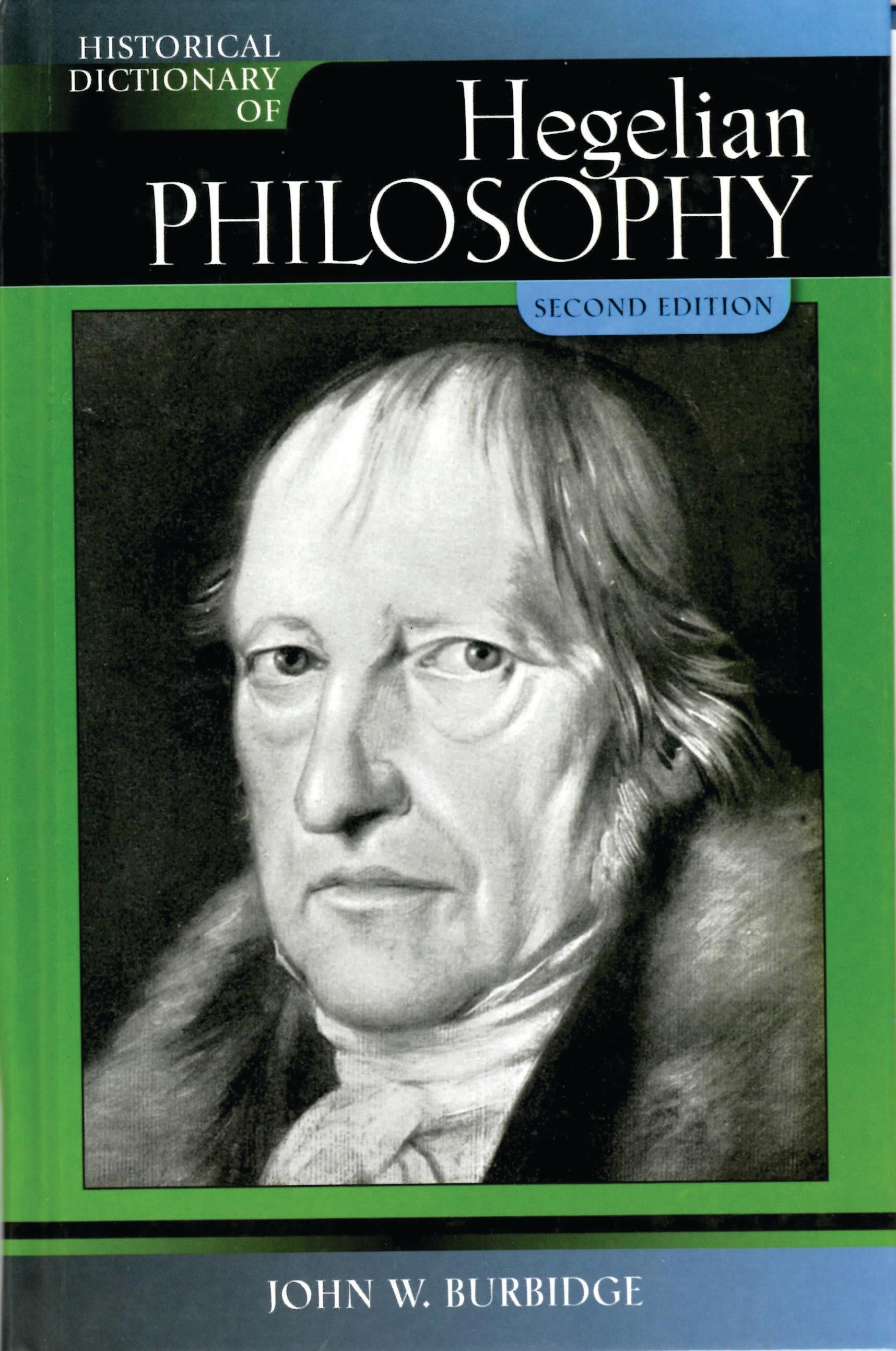
George Wilhelm Friedrich Hegel evoked passionate discipleship, as well as equally passionate opposition. He was praised by the likes of Karl Marx and John Dewey but scorned by Karl Popper and Bertrand Russell. He has been charged with being a proponent of an authoritarian state by some, and he has been accused of instigating the dissolution of the state by others. Notoriously difficult to understand, Hegel's keen insights continue his legacy today.
The second edition of the Historical Dictionary of Hegelian Philosophy covers all aspects of Hegel's thought. It discusses his students and colleagues, as well as key figures who either adopted (and adapted) his thought or attempted to explicate it for later generations. This is done through a chronology, an introductory essay, a glossary of German terms, a bibliography, and over 500 cross-referenced dictionary entries.
The second edition of the Historical Dictionary of Hegelian Philosophy covers all aspects of Hegel's thought. It discusses his students and colleagues, as well as key figures who either adopted (and adapted) his thought or attempted to explicate it for later generations. This is done through a chronology, an introductory essay, a glossary of German terms, a bibliography, and over 500 cross-referenced dictionary entries.
Betal enkelt med kort, Klarna, Apple Pay eller Google Pay. Ikke fornøyd? Du har alltid 14 dagers angrerett. Les mer i våre vilkår. Har du spørsmål, send oss en e-post på hello@memmo.org.
Memmo gjør det enklere å studere – uansett hvor du er i verden. Hos oss samler du pensumbøker og smarte studieverktøy på ett og samme sted: sammendrag, quizer, podkaster og flashcards. Og så Ted, din studiekompis som svarer på alt du lurer på. Over 50 000 studenter studerer allerede her – bygget for at du skal lære raskere og stresse mindre.