
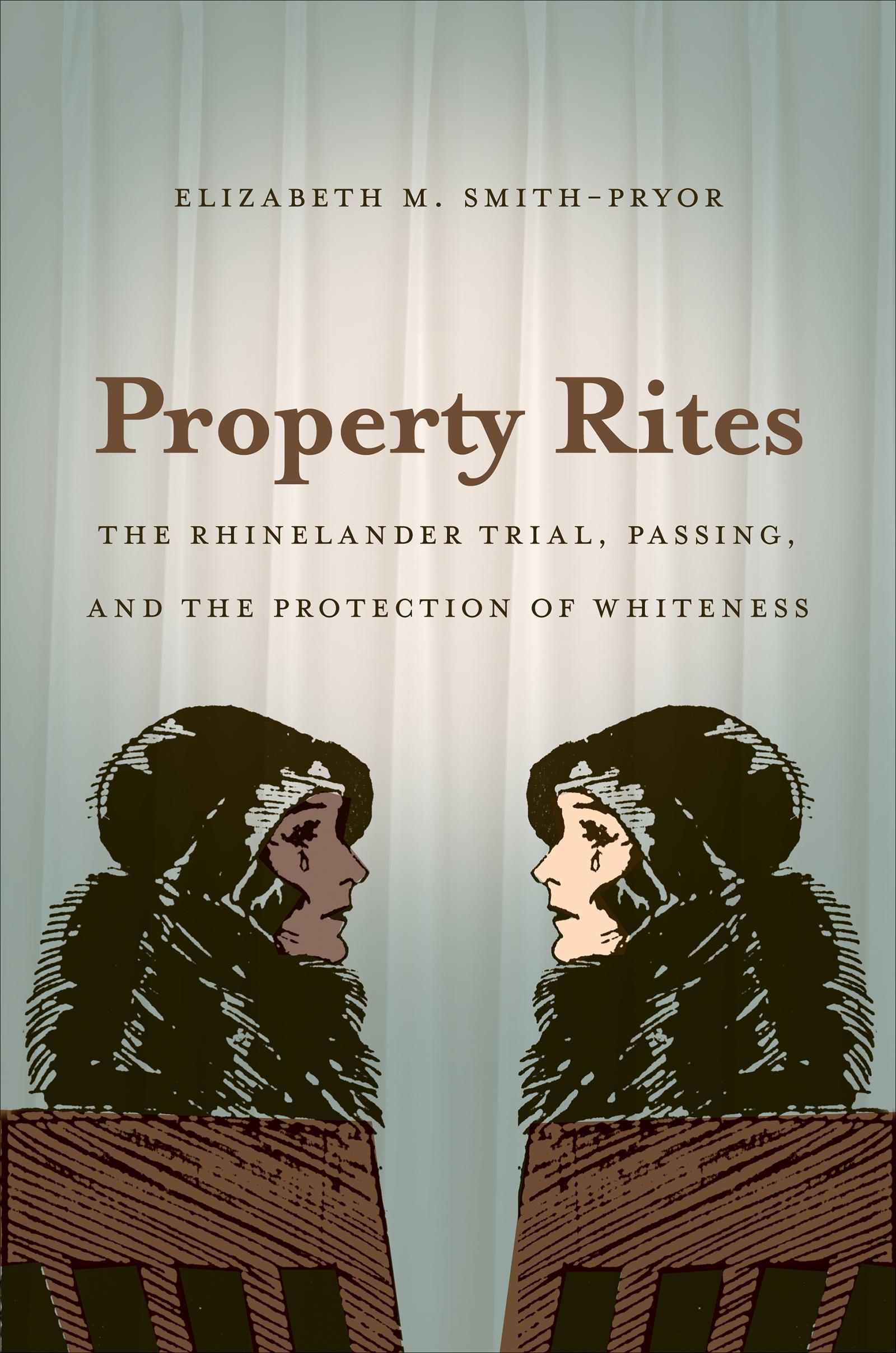
In 1925 Leonard Rhinelander, the youngest son of a wealthy New York society family, sued to end his marriage to Alice Jones, a former domestic servant and the daughter of a “colored” cabman. After being married only one month, Rhinelander pressed for the dissolution of his marriage on the grounds that his wife had lied to him about her racial background. The subsequent marital annulment trial became a massive public spectacle, not only in New York but across the nation — despite the fact that the state had never outlawed interracial marriage.
Elizabeth Smith-Pryor makes extensive use of trial transcripts, in addition to contemporary newspaper coverage and archival sources, to explore why Leonard Rhinelander was allowed his day in court. She moves fluidly between legal history, a day-by-day narrative of the trial itself, and analyses of the trial’s place in the culture of the 1920s North to show how notions of race, property, and the law were — and are — inextricably intertwined.
Elizabeth Smith-Pryor makes extensive use of trial transcripts, in addition to contemporary newspaper coverage and archival sources, to explore why Leonard Rhinelander was allowed his day in court. She moves fluidly between legal history, a day-by-day narrative of the trial itself, and analyses of the trial’s place in the culture of the 1920s North to show how notions of race, property, and the law were — and are — inextricably intertwined.
Betal enkelt med kort, Klarna, Apple Pay eller Google Pay. Ikke fornøyd? Du har alltid 14 dagers angrerett. Les mer i våre vilkår. Har du spørsmål, send oss en e-post på hello@memmo.org.
Memmo gjør det enklere å studere – uansett hvor du er i verden. Hos oss samler du pensumbøker og smarte studieverktøy på ett og samme sted: sammendrag, quizer, podkaster og flashcards. Og så Ted, din studiekompis som svarer på alt du lurer på. Over 50 000 studenter studerer allerede her – bygget for at du skal lære raskere og stresse mindre.
Du vil kanskje også like
Kjøp boken0