
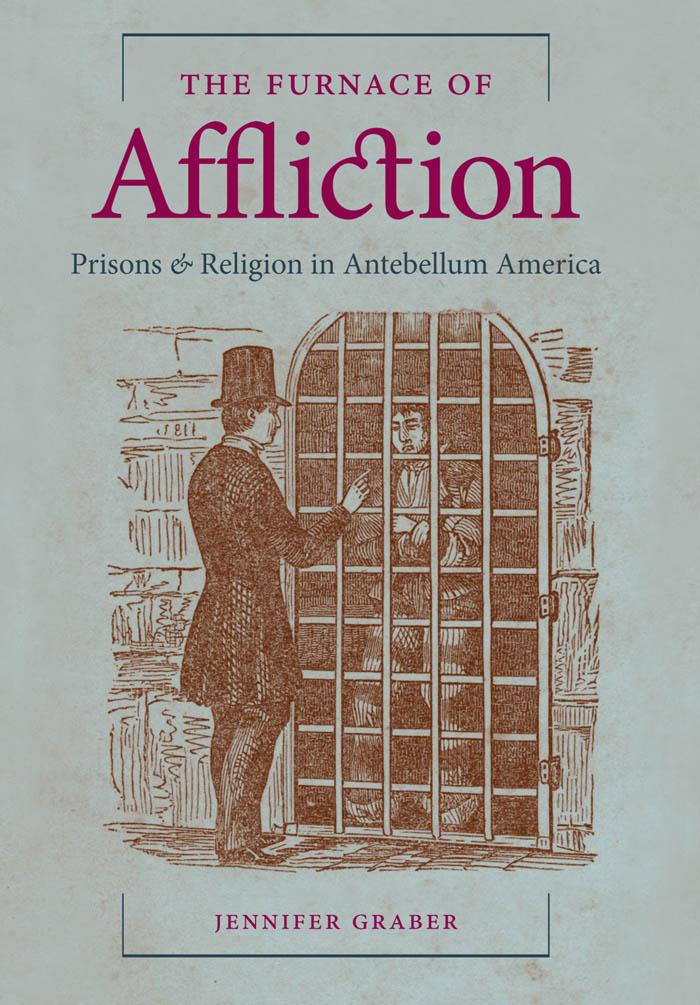
Focusing on the intersection of Christianity and politics in the American penitentiary system, Jennifer Graber explores evangelical Protestants' efforts to make religion central to emerging practices and philosophies of prison discipline from the 1790s through the 1850s.
Initially, state and prison officials welcomed Protestant reformers' and ministers' recommendations, particularly their ideas about inmate suffering and redemption. Over time, however, officials proved less receptive to the reformers' activities, and inmates also opposed them. Ensuing debates between reformers, officials, and inmates revealed deep disagreements over religion’s place in prisons and in the wider public sphere as the separation of church and state took hold and the nation’s religious environment became more diverse and competitive. Examining the innovative New York prison system, Graber shows how Protestant reformers failed to realize their dreams of large-scale inmate conversion or of prisons that reflected their values. To keep a foothold in prisons, reformers were forced to relinquish their Protestant terminology and practices and instead to adopt secular ideas about American morals, virtues, and citizenship. Graber argues that, by revising their original understanding of prisoner suffering and redemption, reformers learned to see inmates' afflictions not as a necessary prelude to a sinner’s experience of grace but as the required punishment for breaking the new nation’s laws.
Betal enkelt med kort, Klarna, Apple Pay eller Google Pay. Ikke fornøyd? Du har alltid 14 dagers angrerett. Les mer i våre vilkår. Har du spørsmål, send oss en e-post på hello@memmo.org.
Memmo gjør det enklere å studere – uansett hvor du er i verden. Hos oss samler du pensumbøker og smarte studieverktøy på ett og samme sted: sammendrag, quizer, podkaster og flashcards. Og så Ted, din studiekompis som svarer på alt du lurer på. Over 50 000 studenter studerer allerede her – bygget for at du skal lære raskere og stresse mindre.