
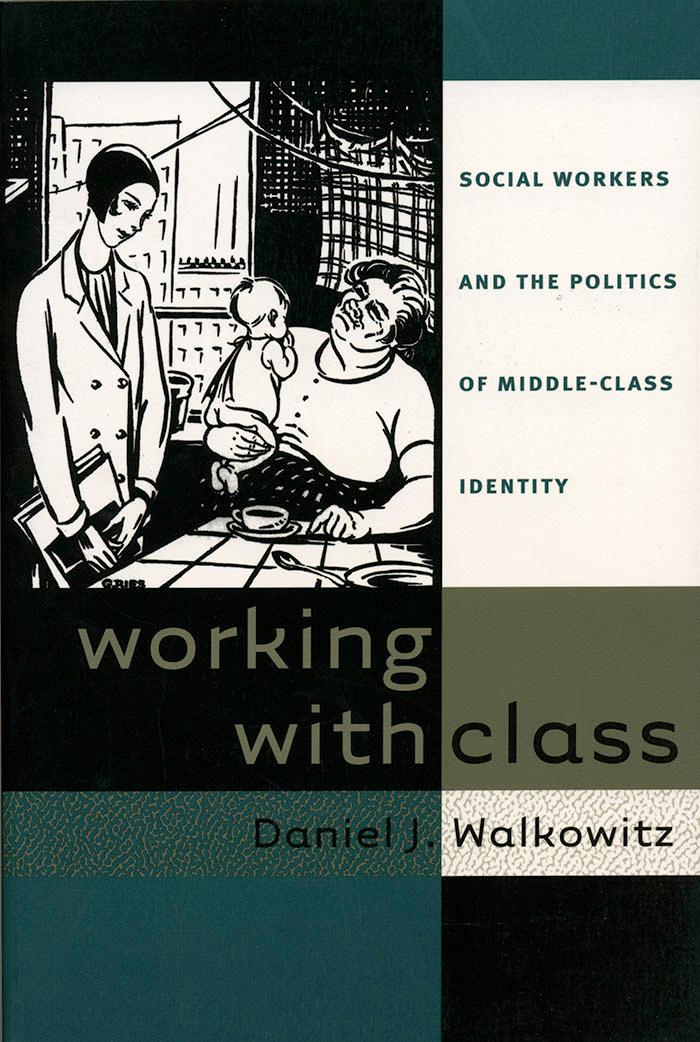
Polls tell us that most Americans — whether they earn $20,000 or $200,000 a year — think of themselves as middle class. As this phenomenon suggests, “middle class” is a category whose definition is not necessarily self-evident. In this book, historian Daniel Walkowitz approaches the question of what it means to be middle class from an innovative angle. Focusing on the history of social workers — who daily patrol the boundaries of class — he examines the changed and contested meaning of the term over the last one hundred years.
Walkowitz uses the study of social workers to explore the interplay of race, ethnicity, and gender with class. He examines the trade union movement within the mostly female field of social work and looks at how a paradigmatic conflict between blacks and Jews in New York City during the 1960s shaped late-twentieth-century social policy concerning work, opportunity, and entitlements. In all, this is a story about the ways race and gender divisions in American society have underlain the confusion about the identity and role of the middle class.
Betal enkelt med kort, Klarna, Apple Pay eller Google Pay. Ikke fornøyd? Du har alltid 14 dagers angrerett. Les mer i våre vilkår. Har du spørsmål, send oss en e-post på hello@memmo.org.
Memmo gjør det enklere å studere – uansett hvor du er i verden. Hos oss samler du pensumbøker og smarte studieverktøy på ett og samme sted: sammendrag, quizer, podkaster og flashcards. Og så Ted, din studiekompis som svarer på alt du lurer på. Over 50 000 studenter studerer allerede her – bygget for at du skal lære raskere og stresse mindre.