
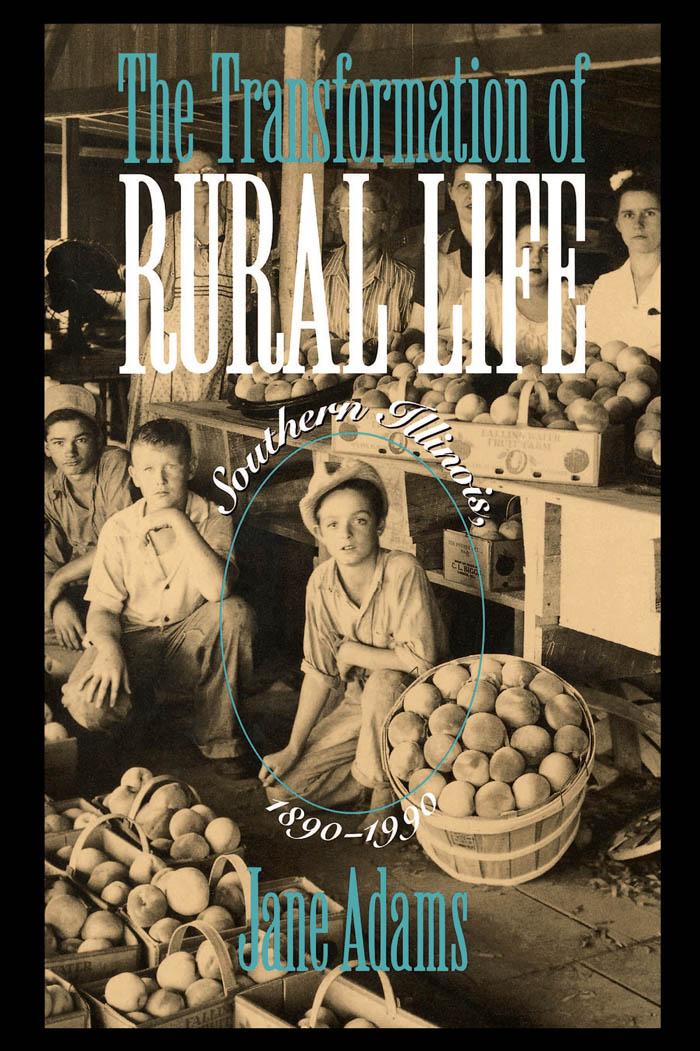
Jane Adams focuses on the transformation of rural life in Union County, Illinois, as she explores the ways in which American farming has been experienced and understood in the twentieth century. Reconstructing the histories of seven farms, she places the details of daily life within the context of political and economic change. Adams identifies contradictions that, on a personal level, influenced relations between children and parents, men and women, and bosses and laborers, and that, more generally, changed structures of power within the larger rural community. In this historical ethnography, Adams traces two contradictory narratives: one stresses plenitude — rich networks of neighbors and kin, the ability to supply families from the farm, the generosity shown to those in need — while the other stresses the acute hardships and oppressive class, gender, and age inequities that characterized farm life. The New Deal and World War II disrupted both patterns, as the increased capital necessary for successful farming forced many to move from agriculture to higher-paid nonfarm work. This shift also changed the structure of the farm household, as homes modernized and women found work off the farm. Adams concludes that large-scale bureaucracies leveled existing class distinctions and that community networks eroded as farmers came to realize an improved standard of living.
Betal enkelt med kort, Klarna, Apple Pay eller Google Pay. Ikke fornøyd? Du har alltid 14 dagers angrerett. Les mer i våre vilkår. Har du spørsmål, send oss en e-post på hello@memmo.org.
Memmo gjør det enklere å studere – uansett hvor du er i verden. Hos oss samler du pensumbøker og smarte studieverktøy på ett og samme sted: sammendrag, quizer, podkaster og flashcards. Og så Ted, din studiekompis som svarer på alt du lurer på. Over 50 000 studenter studerer allerede her – bygget for at du skal lære raskere og stresse mindre.
Du vil kanskje også like
Kjøp boken0