
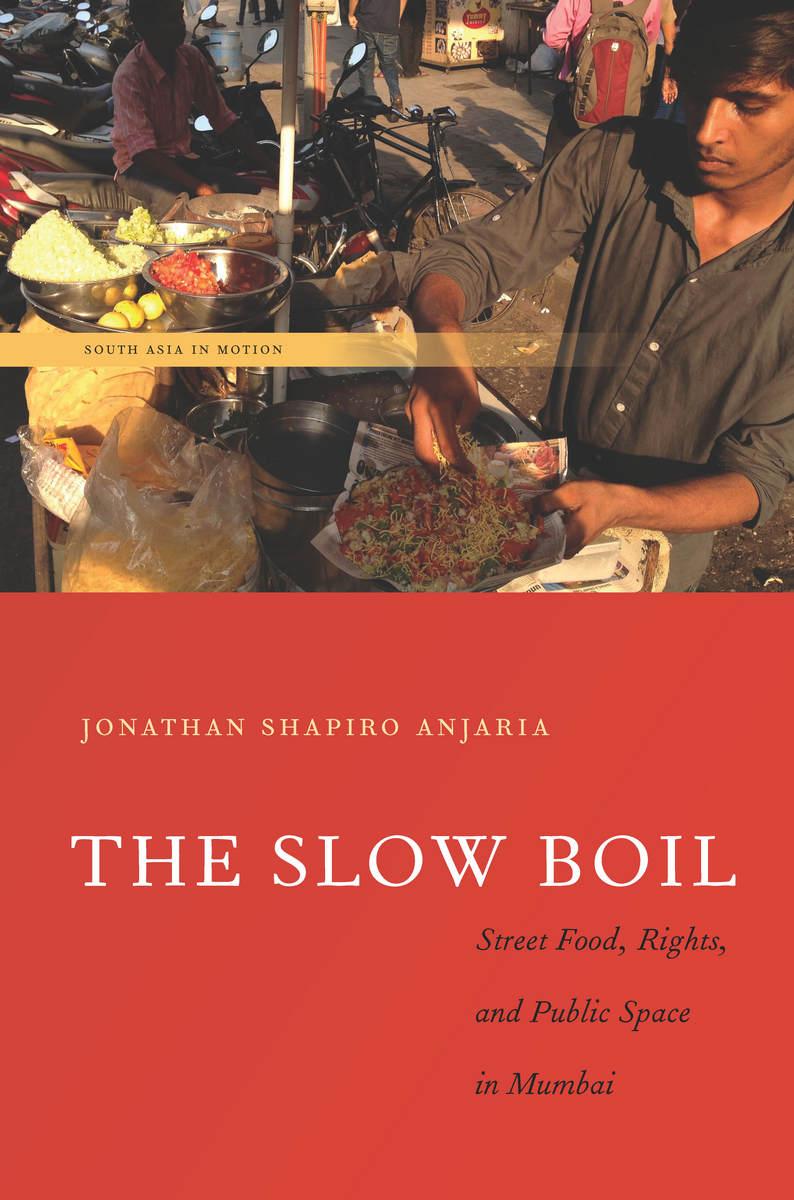
Street food vendors are both a symbol and a scourge of Mumbai: cheap roadside snacks are enjoyed by all, but the people who make them dance on a razor's edge of legality. While neighborhood associations want the vendors off cluttered sidewalks, many Mumbaikers appreciate the convenient bargains they offer. In The Slow Boil, Jonathan Shapiro Anjaria draws on his long-term fieldwork with these vendors to make sense of the paradoxes within the city and, thus, to create a better understanding of urban space in general.
Much urban studies literature paints street vendors either as oppressed and marginalized victims or as inventive premoderns. In contrast, Anjaria acknowledges that diverse political, economic, historic, and symbolic processes create contradictions in the vendors' everday lives, like their illegality and proximity to the state, and their insecurity and permanence. Mumbai's disorderly sidewalks reflect the simmering tensions over livelihood, democracy, and rights that are central to the city but have long been overlooked. In The Slow Boil, these issues are not subsumed into a larger framework, but are explored on their own terms.
Betal enkelt med kort, Klarna, Apple Pay eller Google Pay. Ikke fornøyd? Du har alltid 14 dagers angrerett. Les mer i våre vilkår. Har du spørsmål, send oss en e-post på hello@memmo.org.
Memmo gjør det enklere å studere – uansett hvor du er i verden. Hos oss samler du pensumbøker og smarte studieverktøy på ett og samme sted: sammendrag, quizer, podkaster og flashcards. Og så Ted, din studiekompis som svarer på alt du lurer på. Over 50 000 studenter studerer allerede her – bygget for at du skal lære raskere og stresse mindre.