
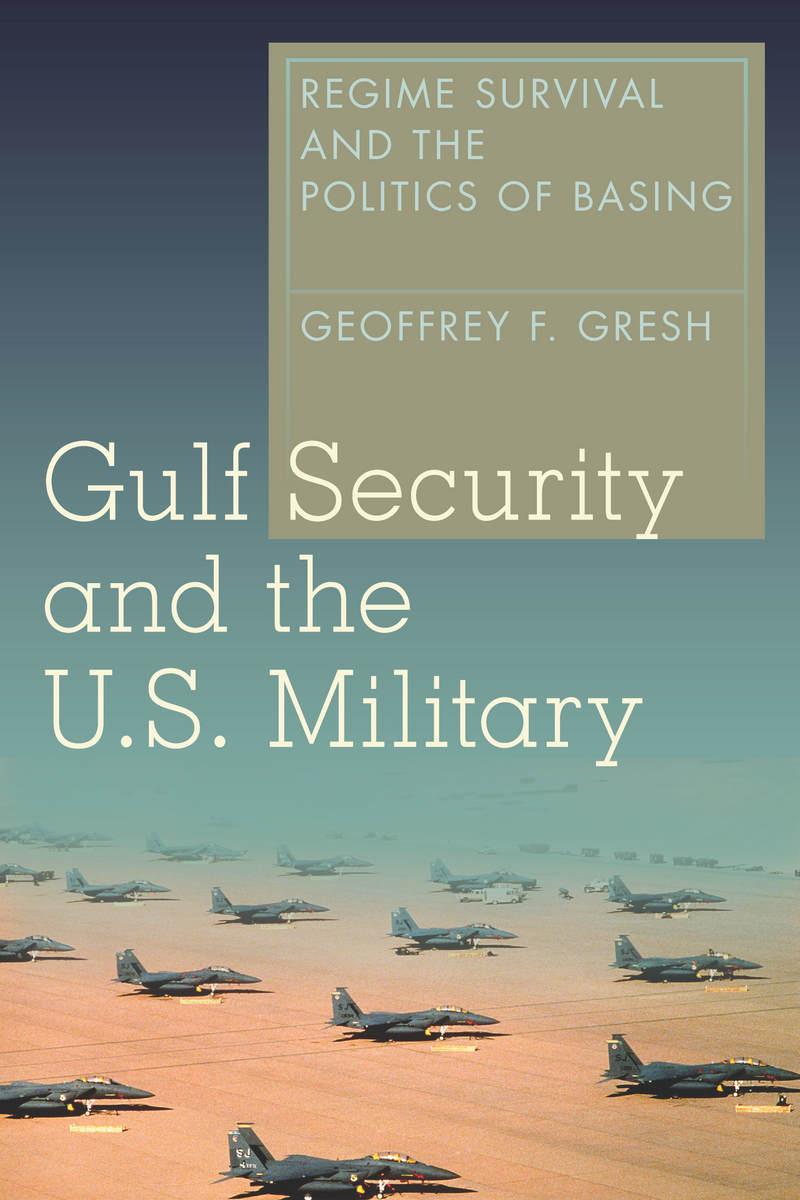
The U.S. military maintains a significant presence across the Arabian Peninsula but it must now confront a new and emerging dynamic as most Gulf Cooperation Council countries have begun to diversify their political, economic, and security partnerships with countries other than the United States—with many turning to ascending powers such as China, Russia, and India. For Gulf Arab monarchies, the choice of security partner is made more complicated by increased domestic and regional instability stemming in part from Iraq, Syria, and a menacing Iran: factors that threaten to alter totally the Middle East security dynamic.
Understanding the dynamics of base politicization in a Gulf host nation—or any other—is therefore vitally important for the U.S. today. Gulf National Security and the U.S. Military examines both Gulf Arab national security and U.S. military basing relations with Gulf Arab monarchy hosts from the Second World War to the present day. Three in-depth country cases—Saudi Arabia, Bahrain, and Oman—help explain the important questions posed by the author regarding when and why a host nation either terminated a U.S. military basing presence or granted U.S. military basing access.
The analysis of the cases offers a fresh perspective on how the United States has adapted to sometimes rapidly shifting Middle East security dynamics and factors that influence a host nation's preference for eviction or renegotiation, based on its perception of internal versus external threats.
Betal enkelt med kort, Klarna, Apple Pay eller Google Pay. Ikke fornøyd? Du har alltid 14 dagers angrerett. Les mer i våre vilkår. Har du spørsmål, send oss en e-post på hello@memmo.org.
Memmo gjør det enklere å studere – uansett hvor du er i verden. Hos oss samler du pensumbøker og smarte studieverktøy på ett og samme sted: sammendrag, quizer, podkaster og flashcards. Og så Ted, din studiekompis som svarer på alt du lurer på. Over 50 000 studenter studerer allerede her – bygget for at du skal lære raskere og stresse mindre.